USA Today bestselling author

Month: May 2019

Animism and petroglyphs

Waterfall

I dropped by Leo petroglyph again Saturday, this time with enough leeway so I could walk the nearby trail.

Leo Petroglyph nature trail

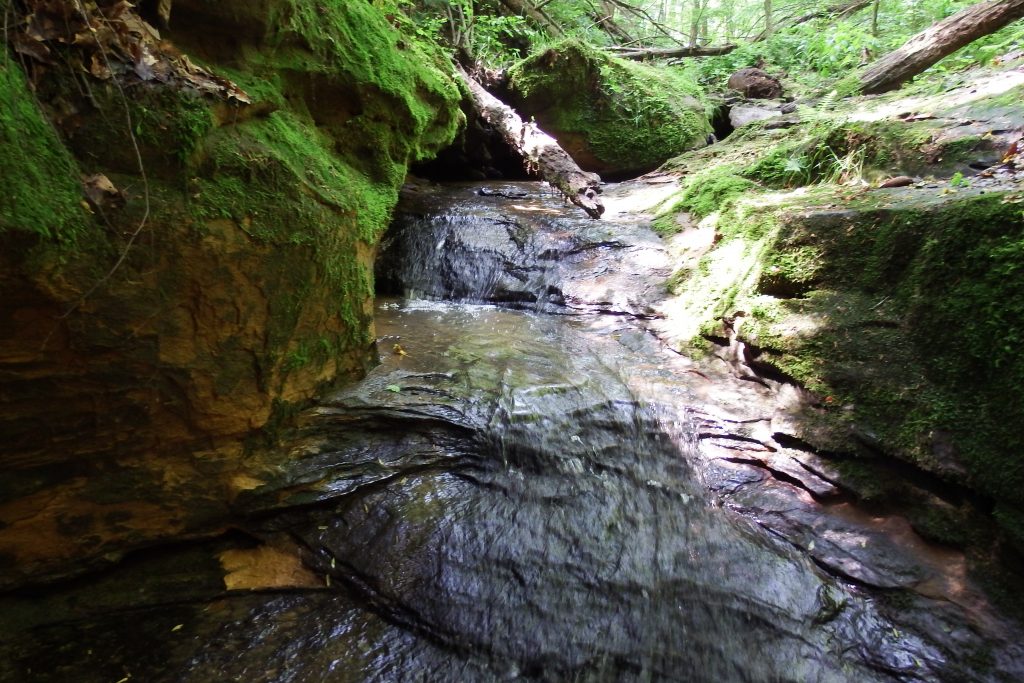
Just below the petroglyph, a stream runs through a stunning gorge full of fascinating rock formations, lichens, mosses, and liverworts.

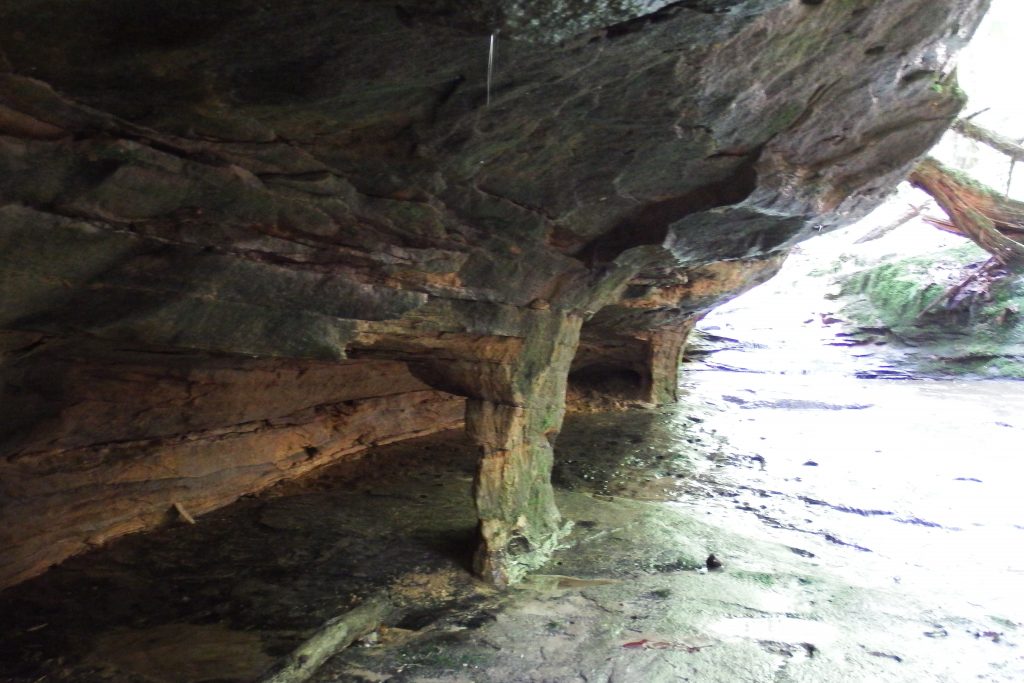
Rock pillar

Which got me thinking — are all of our landscapes as breathtaking when left to their own devices? Or were Native Americans purposefully setting their constructions alongside beauty the same way we erect informational signs at overlooks within national parks?

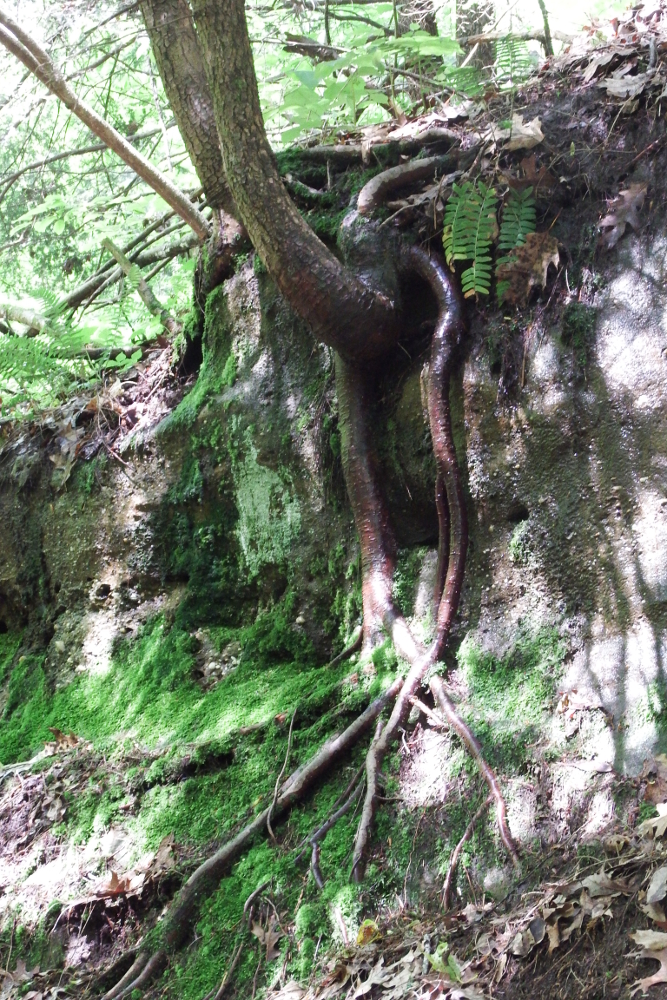
Tree on rock

Animism is the belief — widespread among many native religions — that every tree, rock, and place contains a spiritual essence. Assuming that the people who created Leo petroglyph ascribed to this belief, doesn’t it make sense that they would use their mounds, effigies, and petroglyphs to call out the existing power/beauty of natural spots?

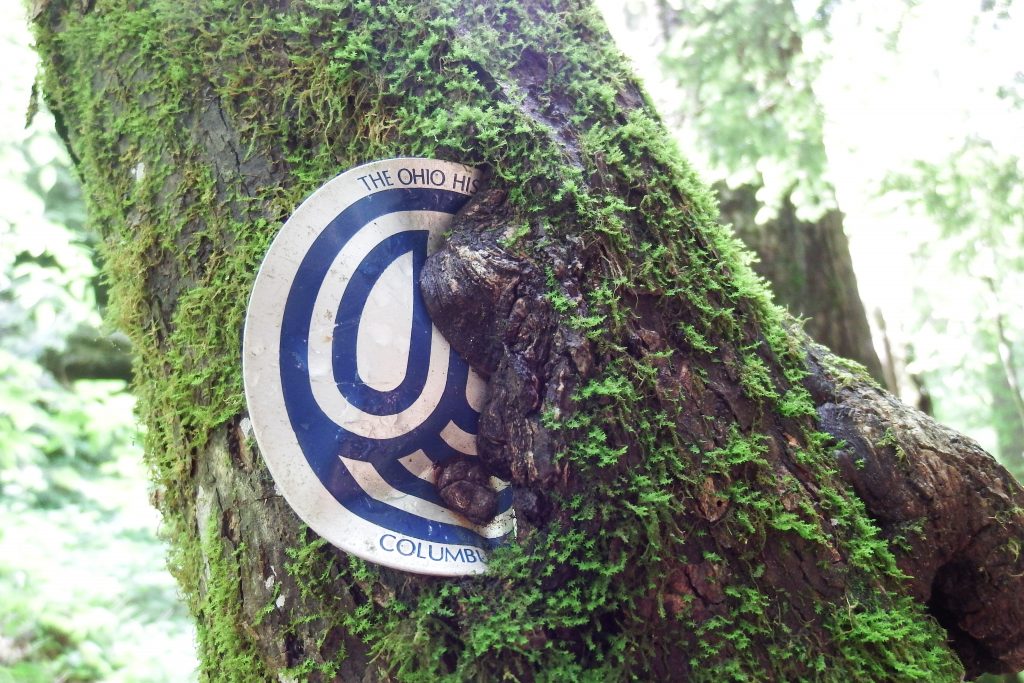
Tree eating sign

When considered this way, our obsession with preserving mounds is a bit like aliens coming to earth, blasting the Grand Canyon, then turning nearby signage into protected monuments. It’s possible we’re missing the point….

Fort Ancient musings

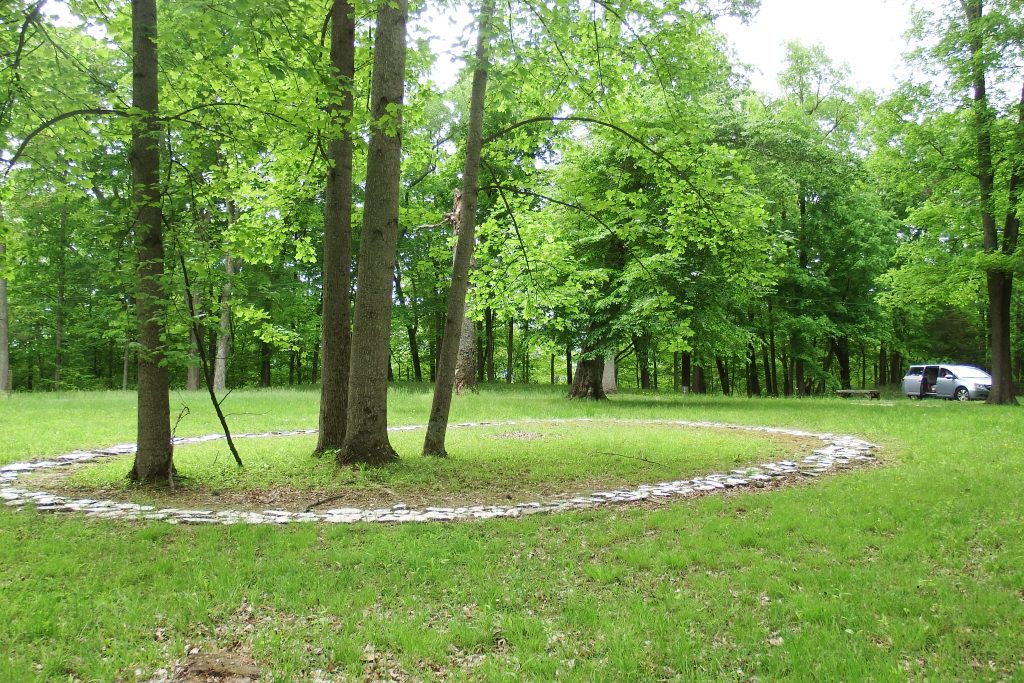
Limestone circle

My husband, my mothers-in-law, and I spent an illuminating afternoon at Fort Ancient yesterday. Unfortunately, our brains grew saturated before we made it halfway through the museum, and we didn’t get to spend nearly enough time walking through the astonishing earthworks either. But I saw enough to get my mind whirring, which will have to do for now!
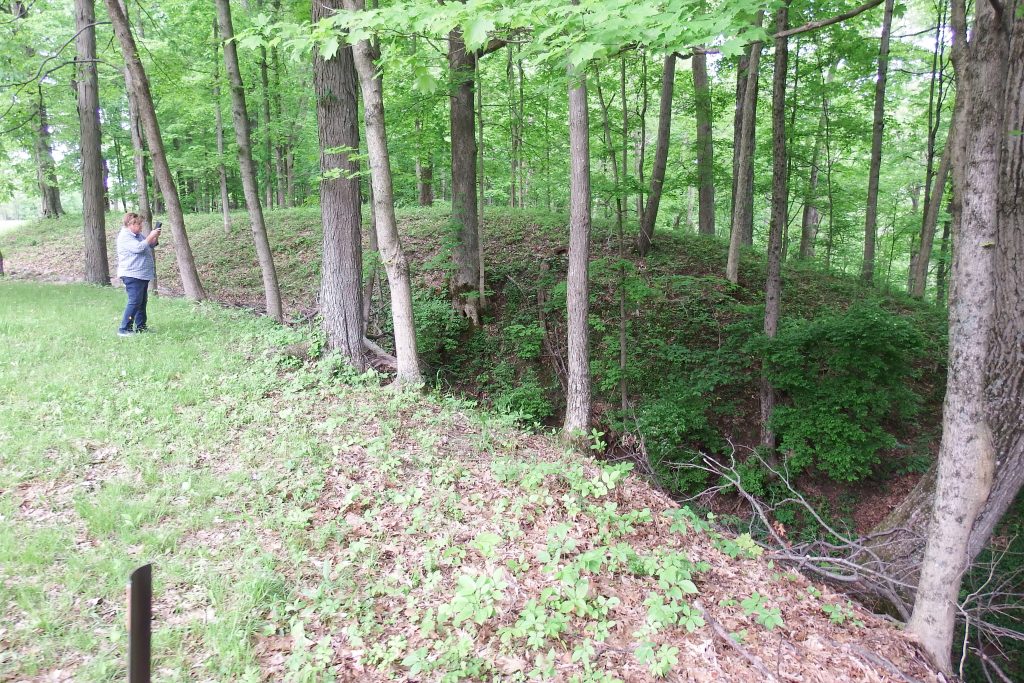
Fort Ancient ravines

This two-thousand-year-old site was created during a 400-year period then was used for another hundred years after that. Up on a bluff above the Little Miami River, the first step in construction involved moving tons of earth to fill in ravines like this one…using hand-woven baskets, elk antlers, deer shoulderblades, clam-shell hoes, and wooden digging sticks.
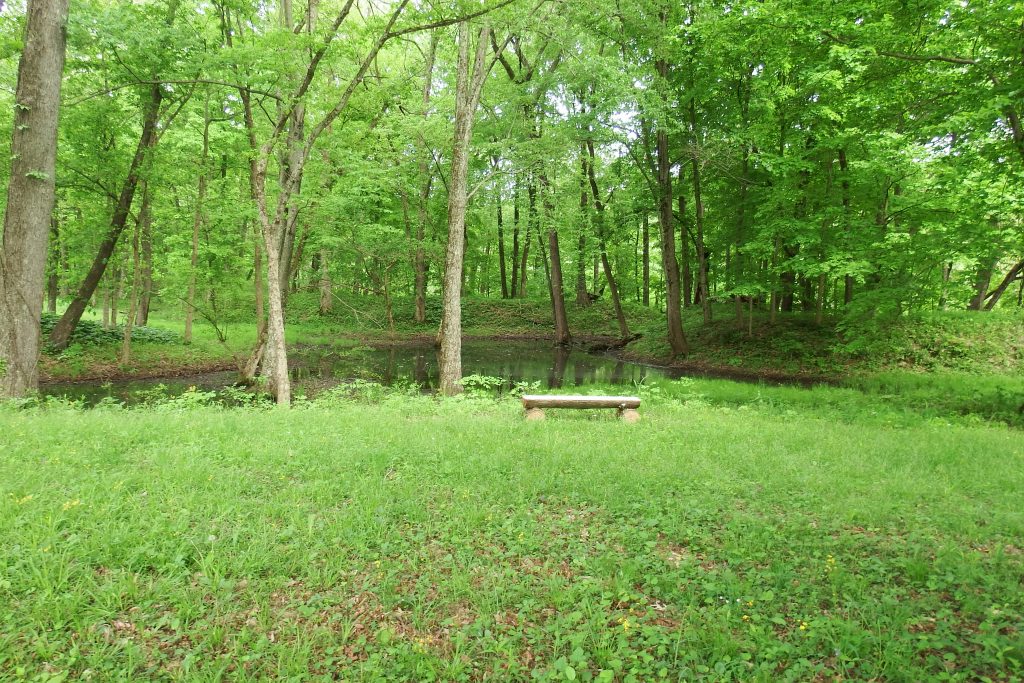
Fort Ancient earthworks

Then a 3.5-mile-long undulating curve of wall was created, along with indented ponds on the inside. To give you an idea of the scale of this endeavor, the amount of earth moved at the Fort Ancient site amounted to 221,000 full-size pickup-truck loads. If construction was ongoing throughout all four seasons every day of the 400 years in question, that amounts to 1.5 pickup-truck loads moved daily. A serious undertaking for a society in which people lived in small family groups!
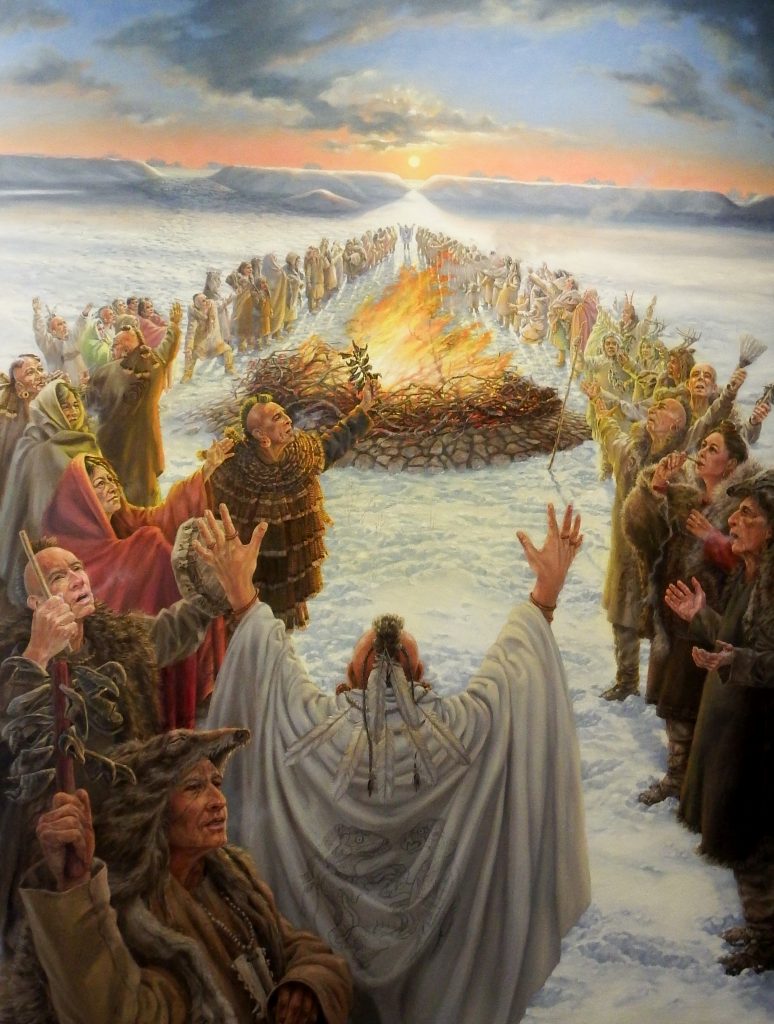
Fire mound ceremony

Early European settlers assumed these walls were fortresses, but scientists now think they may have been sites of religious ceremonies, athletic competitions, or other cultural events. The Calendar Mounds and the newly discovered Moorehead Circle are evidence of one potential use.
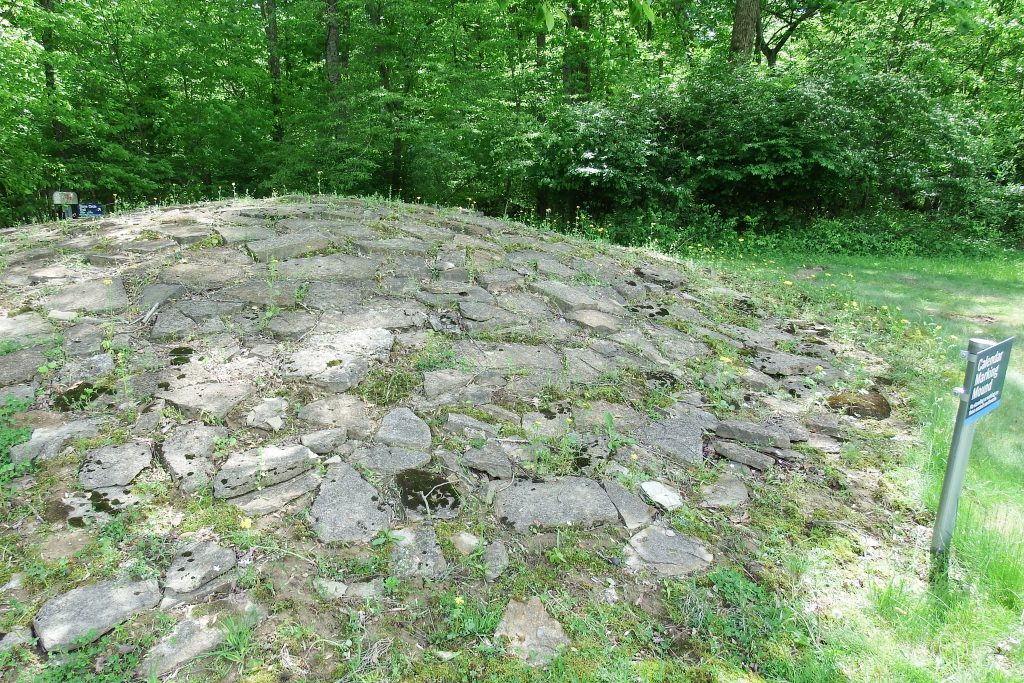
Calendar mound

Used in conjunction with intentional gaps in the encircling earthworks, the Calendar Mounds line up with sunrise at the solstices and with various astronomical events. Archaeological evidence suggests that the Fort Ancient people built bonfires at the site of these mounds, perhaps to create balance with the rising sun. The Moorehead Circle was a woodhenge (like Stonehenge, but built out of wooden posts) that may have had a similar function.
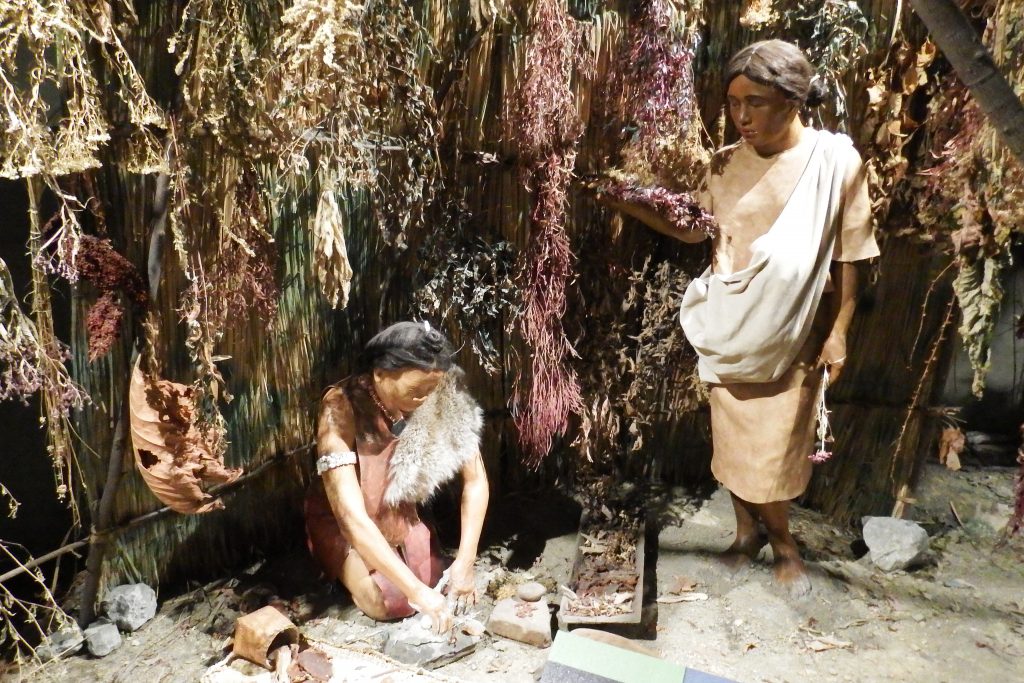
Shaman

Unfortunately, everything we decipher about two-thousand-year-old people who left no written record is guesswork. Could the Fort Ancient earthworks relate to earlier evidence of shamanism in which bear and wolf skulls were carved into ceremonial masks? Were the ponds part of the ceremony or simply inevitable depressions that resulted from moving so much earth? How many people came to Fort Ancient, how often, and why? Why do Fort Ancient’s earthworks take on such an organic shape while contemporaneous sites in valleys enclose perfect circles and squares?
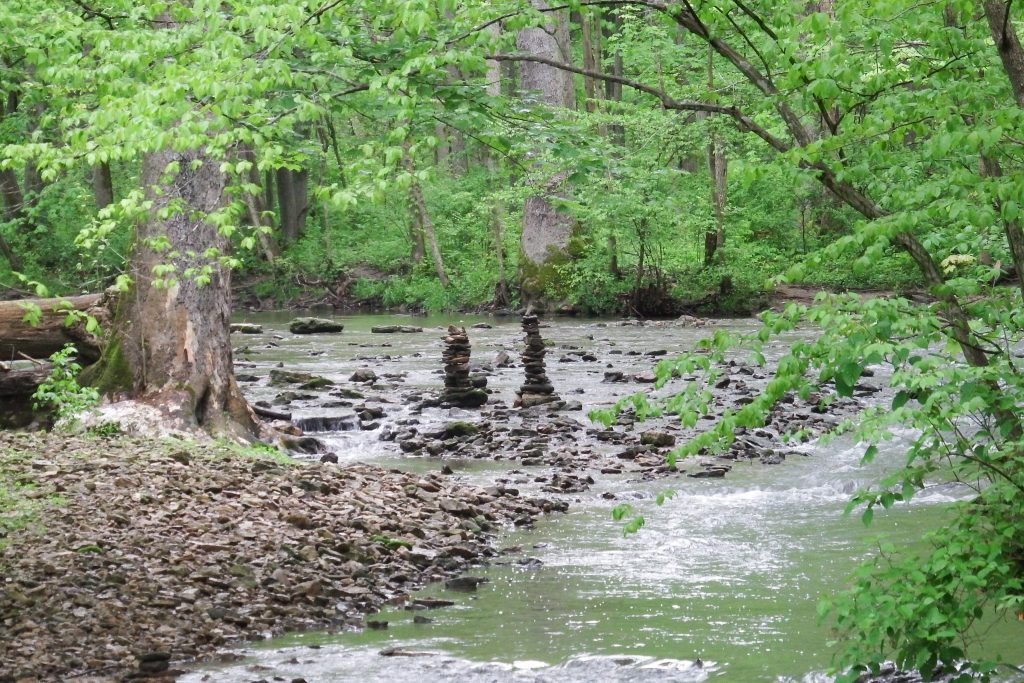
Cairns

It’s easy to ascribe deep spiritual significance to people we will never meet or know. But walking through a different park the next day and coming across modern cairns created by bored college students, I had to wonder how much of the stunning Fort Ancient earthworks is mystical…and how much is simply the result of humans with time on their hands wanting to leave their mark on the landscape.

After all, hunter-gatherers tend to have more leisure time than the average modern American. Without television and facebook to fill that time, did Fort Ancient people naturally gravitate toward building undulating walls and limestone-capped mounds?

Unfortunately, we will likely never know. Still, the Fort Ancient earthworks is well worth a visit…or two, or three!
Six more months of great books

Recommended novellas

There’s something about the tight story structure of a great novella that snags my interest even though short stories often aren’t my cup of tea. Which is a long way of saying — two-thirds of my recommendations this time around are novellas. I hope you like the format as much as I do!

Romancing the Werewolf, How to Marry a Werewolf, and Romancing the Inventor by Gail Carriger are all delightful, but the first one I listed is probably my favorite. These are all set in her steampunk world.

Here There Be Monsters by Meljean Brook is a really fun short set in the Iron Seas world.

Beast by Christine Pope is a very hooky sci-fi romance (and free on Amazon at the time of this post).

Okay, enough of novellas. On to longer works!

Sweep of the Blade

Sweep of the Blade is the fourth book in Ilona Andrews’ Innkeeper Chronicles. If you haven’t read the others, you’ll probably want to start at the beginning (although this book follows a side character and may be understandable anyway). If you have read the others, though, now’s the time to read the newest installment free on their website before they take it down to polish for publication. Spoiler: it is a delight!

Polaris Rising

Polaris Rising by Jessie Mihalik is quite possibly my favorite book of the last six months. It slid right into that sweet spot between space opera and science-fiction romance where you get a happily ever after at the end of a lot of fun adventure. Highly recommended.

Site Unseen

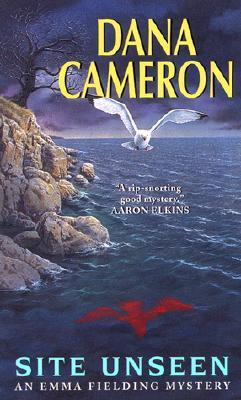
Finally, if my recent release sucked you into archaeological mysteries, here’s a recommendation (although without any fantasy or werewolves, alas!). Site Unseen by Dana Cameron sucked me in…and is currently free with Kindle Unlimited. Enjoy!

Birds of ancient Ohio

Mound City, Chillicothe
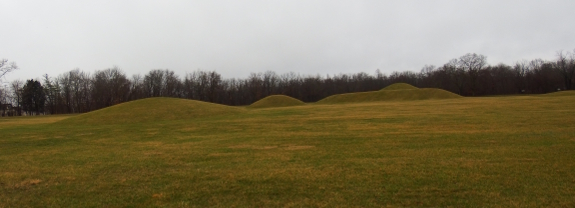
Mound City in Chillicothe, Ohio, is one of the best remaining examples of Hopewell Culture.

One of my favorite things about Ohio is the remnants of Adena and Hopewell cultures protected as parks or just waiting to be stumbled across in the woods. Yes, I’m talking about the 10,000 mounds scattered across the state, all dating from one to three thousand years ago.

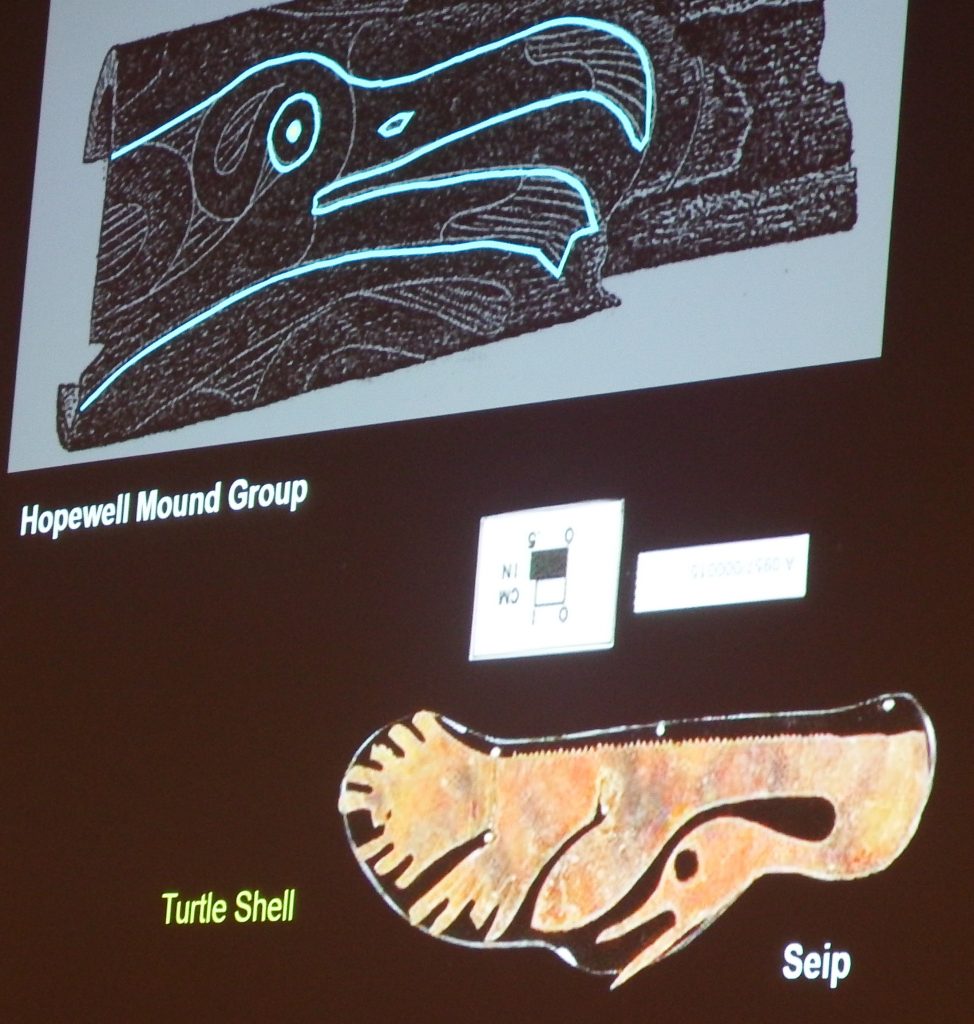
Hopewell bird imagery
Birds were used on everything from pipes, beads, pottery, and copper plates to more unique examples like the human bone (top) and turtle-shell-turned-comb (bottom) shown here.

What we mostly don’t see unless the mound is connected with a museum is the beautiful art hidden beneath the dirt. Mounds cover the sites of ceremonial buildings which in turn cover the sites of cremations…and funerary objects are often cached nearby.

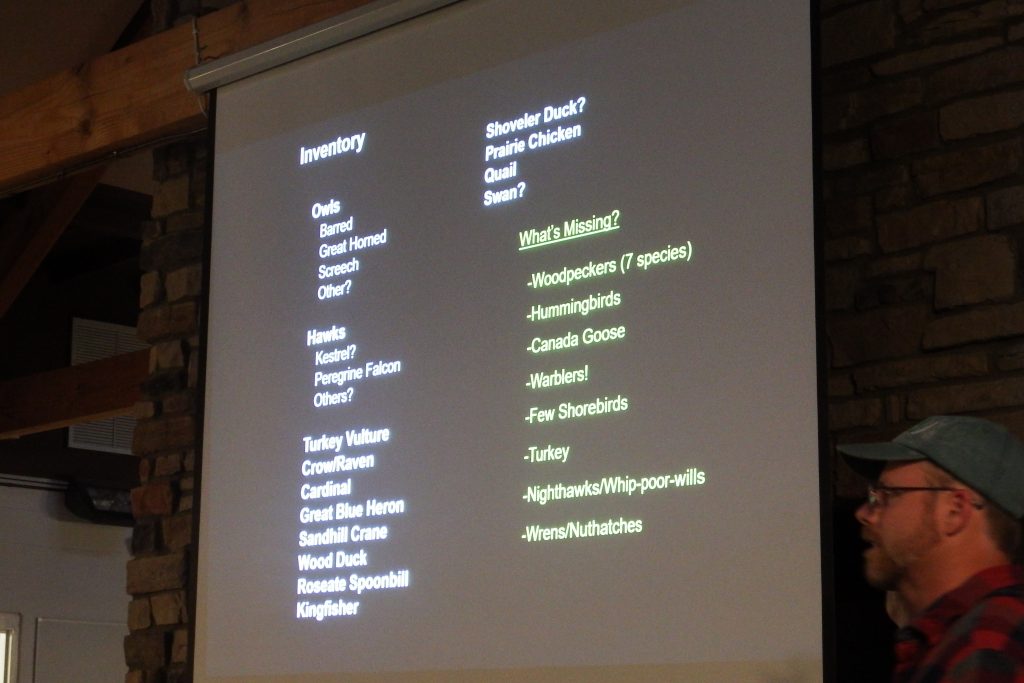
Jarrod Burks speaking about birds in Ohio archaeology
Jarrod Burks finds it interesting that many of Ohio’s most common birds aren’t represented on Hopewell art.

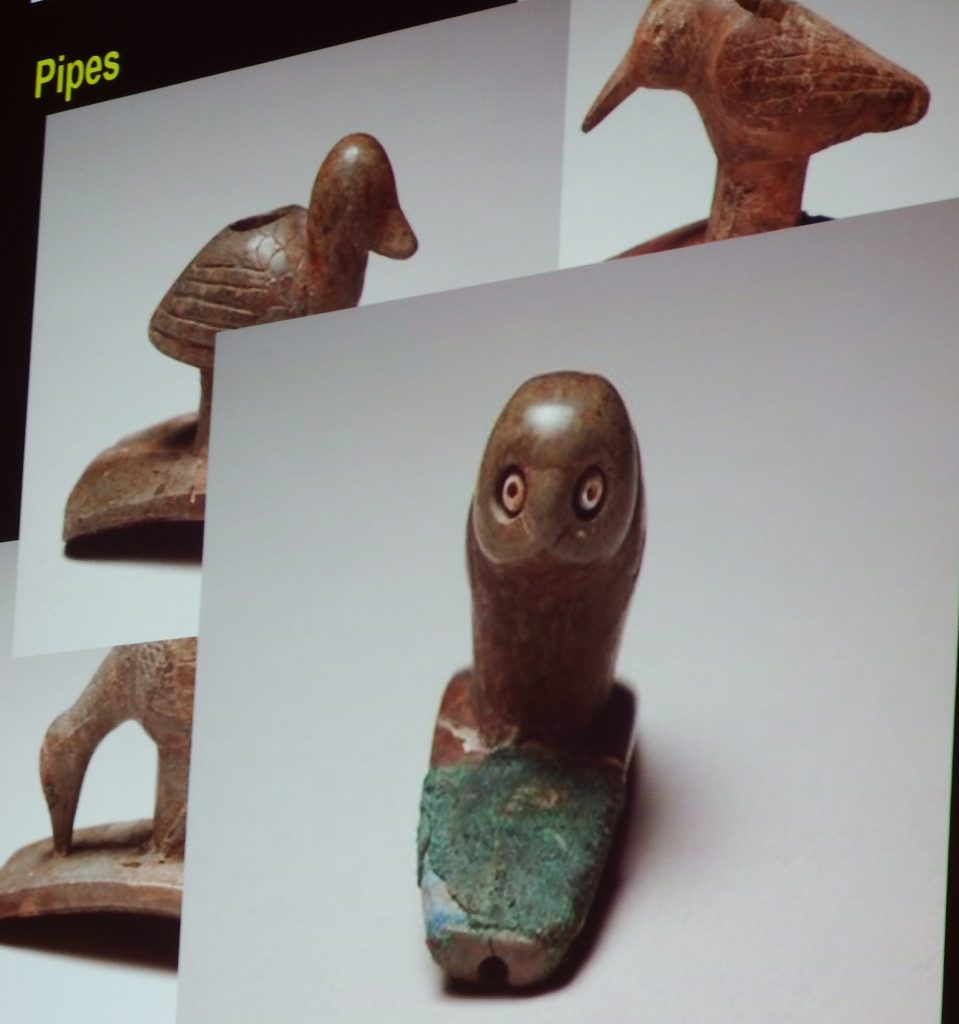
Jarrod Burks of Ohio Valley Archaeology, Inc. was interested in the fact that about half the figures on Hopewell creations were birds. And not just any birds — the species portrayed tend to be large, colorful, and/or powerful like hawks, vultures, and owls.

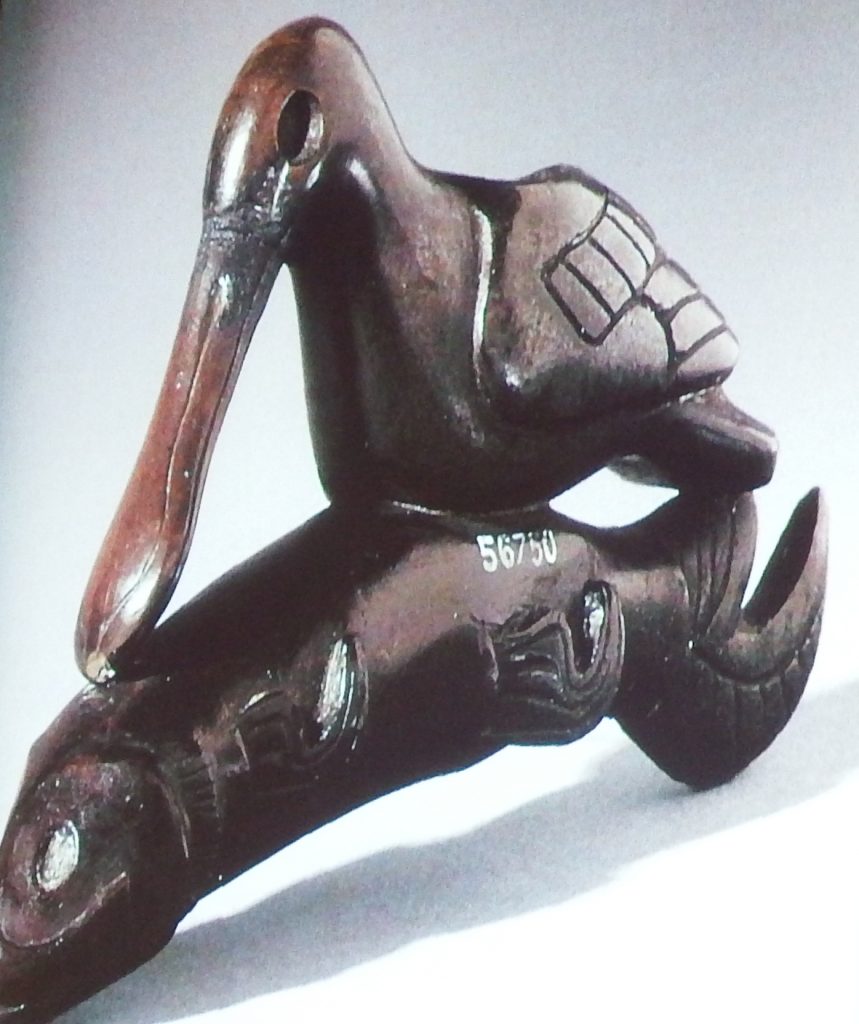
Roseate Spoonbill pipe
The Roseate Spoonbill’s brilliant pink feathers would have been a unique addition to the regalia of Hopewell people. Here, a spoonbill rides a fish on a tobacco-smoking pipe.

Nowhere is this more true than on the tobacco-smoking pipes broken and cached together in two nearby sites — Mound City in Chillicothe and Tremper Mound about thirty miles away.

The two mounds in question were created within one hundred years of each other (which means the pipes could have all been made by the same artist or family). But it’s impossible to know why birds dominate the pipe landscape and why hundreds of pipes were purposefully broken then buried beneath a newly formed mound.

Owl pipe
The beautiful artistry of these pipes was combined with other features denoting their importance. This owl has pearls for eyes, and the base has been mended with copper.

Archaeologists can guess, of course. They think that birds might have been revered because of their ability to visit the heavens, a realm humans can’t reach. Specifically, they suspect the many different types of birds portrayed on the Hopewell pipes were personal power symbols — a totem spirit that you’d peer at every time you smoked tobacco during a ceremony.

And why would everyone’s spirit animals be ceremonially smashed and buried at the same time? Your guess is as good as mine!

© 2026 Aimee Easterling

Theme by Anders NorenUp ↑