USA Today bestselling author

Month: January 2021

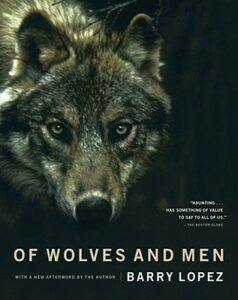
Of Wolves and Men

Of Wolves and MenOf Wolves and Men was written shortly before I was born, and small parts of it are dated. However, the overall theme of the historical human relationship with wolves stands the test of time.

My favorite sections involved the intersection of Native American and wolf culture. Both two-legged and four-legged hunters would stalk antelopes in Wyoming by lying low in tall grasses, twitching their tails to draw in curious prey animals. Elsewhere, both wolves and people hunted bison by chasing them out onto lake ice where they’d slide around and become easy to kill. And Lopez suggested that deer responded similarly to both wolf and human territories, sticking to the disputed space along borders where neither hunter was likely to go.

Another favorite part of the book was when the author recounted an experience tracking a wolf and a fox. The former had made a kill alone and was preparing to cache the meat it couldn’t cram into its stomach for later, but the wolf knew a fox was hanging around waiting for scraps. So the wolf traveled in crazy loops, hopping through puddles and generally going to great lengths to hide its trail before digging a super-secret cache.

The fox got the meat anyway.

Other tidbits: I was intrigued to learn that the metal spikes on dog collars were originally envisioned as protecting dogs against wolves. And howls may be used, among other things, as a “mood-synchronizing activity.”

I’ll let you dig deeper into the book yourself but will provide one warning. The third section is about human attempts to eradicate wolves and it’s a tough read. You might skip straight over that and head into the folklore near the end.
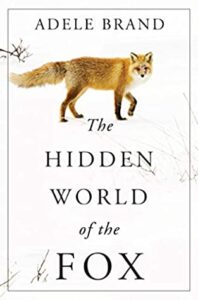
The Hidden World of the Fox

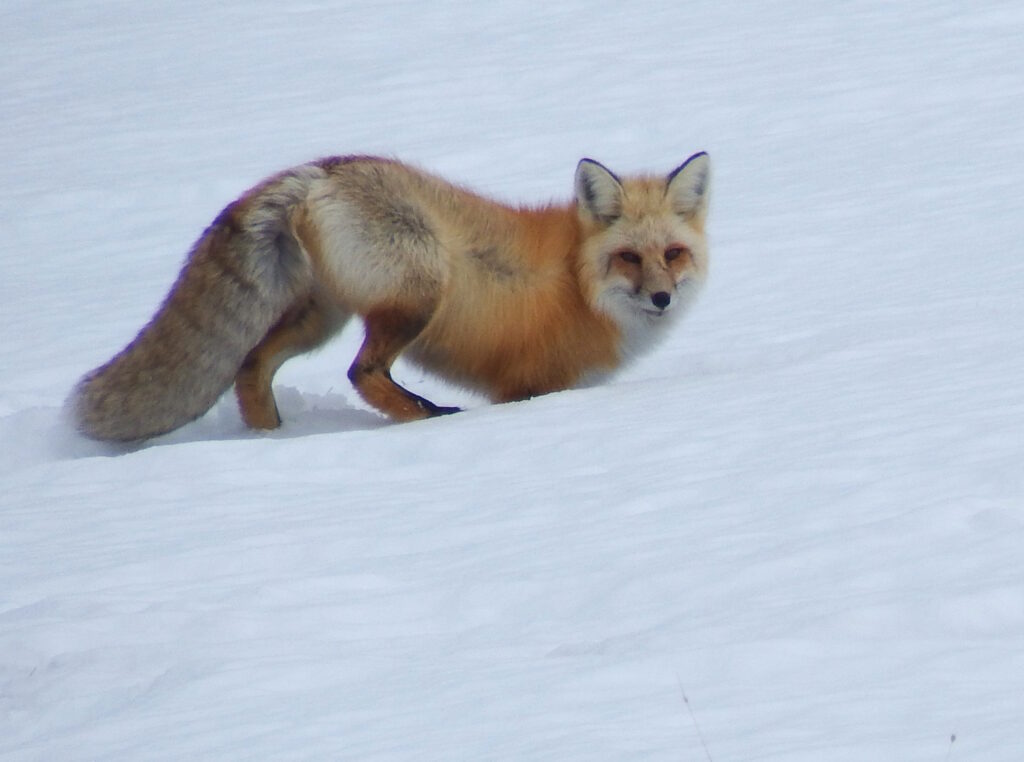
The Hidden World of the FoxAdele Brand’s book is a lovingly written, easy to read, but far from exhaustive window into the red fox’s world. Most the text is about the European foxes the author has had personal experiences with (which she notes are considered by some to be a different species than the North American red fox). Here are some of my favorite takeaways:

I hadn’t realized that red foxes in Britain have been folded into not-so-wild areas, both living wild in cities and fed in backyards the way Americans feed birds. (A different source suggests urban foxes are evolving to be more doglike than their rural counterparts, which is an intriguing corollary). This actually matches up with my anecdotal survey of fox populations in the U.S. — I smell them regularly during my woodland hikes while very rarely seeing them, but a suburban friend says they’re pretty common where she lives.

How (other than smell) do you know foxes are present? My friend often hears them (probably most frequently in midwinter when they’re mating) and sees them as roadkill. And while we think of foxes as nocturnal, Brand notes that they’ve just learned to be leery of humans and move their activity to night when we’re around. All of that said, game cameras will dramatically increase your odds of seeing a fox. Set the camera up about a foot and a half off the ground, pointing up a game trail (rather than across).

hunting fox

Brand goes on to explain that a fox requires “nine voles or one rat daily – or one double cheeseburger with fries.” A mother fox will need to add on two additional voles a day per cub. And since their stomachs are small, foxes can’t go long periods like wolves do between meals. Instead, they need to snack often, sometimes on earthworms or carrion (although rodents are their main prey).

The experienced viewer can tell male and female foxes apart by the shape of their faces. Vixens (females) have narrower faces while dogfoxes (males) have broader cheekbones that make their faces look W-shaped.

Brand writes: “Territories are really the construct of male foxes; a vixen, rather like a Victorian woman, holds property only as a proxy of her mate.” A fox territory is often home to a breeding pair, subordinate females who usually don’t breed, cubs from the previous year (usually female), and possibly a transient male or two.

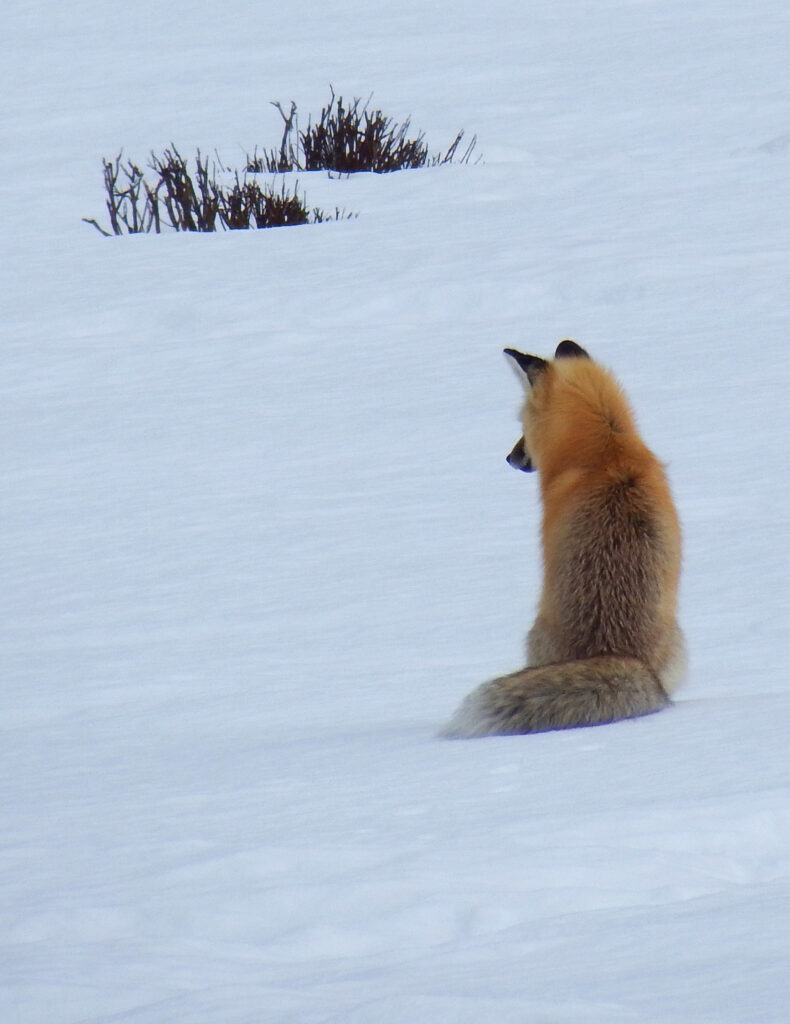
Sitting fox

Finally, I’ll end with an absolutely crazy story Brand told about a German fox who “gathered shoes to a fantastically obsessive level. For over a year, steel-capped workmen’s boots, wellingtons, and slippers all vanished from doorsteps. When a forestry worker stumbled upon her den, an astonishing 86 shoes were stashed around it. Another 32 were found nearby in a quarry. The count of the town duly had laid them out in his palace for their owners to collect – and put out a gentle advisory to keep footwear indoors at night.”

Intrigued? There’s plenty more where that came from, but you’ll need to read the book for the rest. Alternatively, you can read my far-more-fantastical take on foxes in the city in the free book Wolf’s Bane.

Reading week

Aimee Easterling in collegeTwenty-five years ago, when I first showed up at college, I immediately pored over the academic calendar. “Reading week!” I exclaimed, imagining seven solid days of curtailed classes and assignments. We’d all sit around on bean bag chairs, sipping hot chocolate, gorging on pizza, and reading silently. Now and then one of us would share an amusing tidbit, then we’d all return to our books.

Unfortunately, the reality was very different. First of all, reading “week” was only two or three days long. Second, the period occurred right before finals, so our time was spent frantically poring over class notes while reciting our school’s unofficial mantra under our breath. “Anywhere else it would have been an A….”

Fast forward ahead to the present, and I sent Charmed Wolf off to the beta reader last week. Pre-pandemic, I used to spend those two weeks filling my brain with different ideas via travel before starting to brainstorm the subject matter of my next book.

Travel isn’t currently advisable, but reading — especially the non-fiction that tends to pile up on my shelf waiting for my attention — can transport me while feeding the bubbling soup of my imagination. So I decided to recreate the Reading Week that naive frosh imagined in 1996.

To that end, I’ll be curled up on the couch each morning this week, in front of our wood stove with zero to two cats plus some dark-chocolate-covered almonds and clementines (my current snacks of choice). I’ll fall into my kindle and, when something interesting jumps out at me, I’ll come over here and share tidbits on my blog. Stay tuned!

© 2026 Aimee Easterling

Theme by Anders NorenUp ↑