USA Today bestselling author

Category: The Growth of an Author

Reading week

Aimee Easterling in collegeTwenty-five years ago, when I first showed up at college, I immediately pored over the academic calendar. “Reading week!” I exclaimed, imagining seven solid days of curtailed classes and assignments. We’d all sit around on bean bag chairs, sipping hot chocolate, gorging on pizza, and reading silently. Now and then one of us would share an amusing tidbit, then we’d all return to our books.

Unfortunately, the reality was very different. First of all, reading “week” was only two or three days long. Second, the period occurred right before finals, so our time was spent frantically poring over class notes while reciting our school’s unofficial mantra under our breath. “Anywhere else it would have been an A….”

Fast forward ahead to the present, and I sent Charmed Wolf off to the beta reader last week. Pre-pandemic, I used to spend those two weeks filling my brain with different ideas via travel before starting to brainstorm the subject matter of my next book.

Travel isn’t currently advisable, but reading — especially the non-fiction that tends to pile up on my shelf waiting for my attention — can transport me while feeding the bubbling soup of my imagination. So I decided to recreate the Reading Week that naive frosh imagined in 1996.

To that end, I’ll be curled up on the couch each morning this week, in front of our wood stove with zero to two cats plus some dark-chocolate-covered almonds and clementines (my current snacks of choice). I’ll fall into my kindle and, when something interesting jumps out at me, I’ll come over here and share tidbits on my blog. Stay tuned!
Become a Writer: Step 2 Market

While I strongly believe that you need to become good at your craft to succeed as an author, very few people will actually see your perfectly honed book unless you put in the time to get the book in front of the public’s hungry eyes. So part two of my series for aspiring authors covers the flip side of the coin — marketing your work.


Marketing books

Listing a book for sale

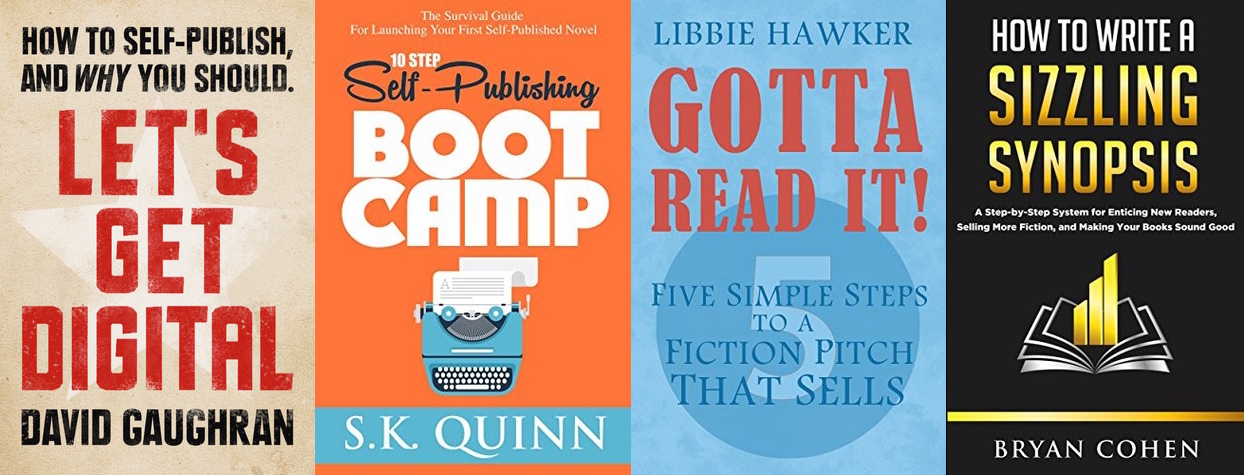
If you have no clue how to take the file on your computer and turn it into a book available to be bought, these titles provide a good place to start.

  • Let’s Get Digital — This title covers why it’s probably better to self-publish rather than querying agents and publishers if you want to make a living at this gig.
  • 10 Step Self-Publishing Boot Camp — I highly recommend this book for the beginning author since it walks you through many of the current best practices to turn your manuscript into a book-for-sale.
  • Gotta Read It and How to Write a Sizzling Synopsis are both great books for polishing a blurb. (Read them in that order!)


Intermediate marketing books

Marketing basics

Next up are the basic recommended practices for taking that book-for-sale and turning into a book that’s actually selling.

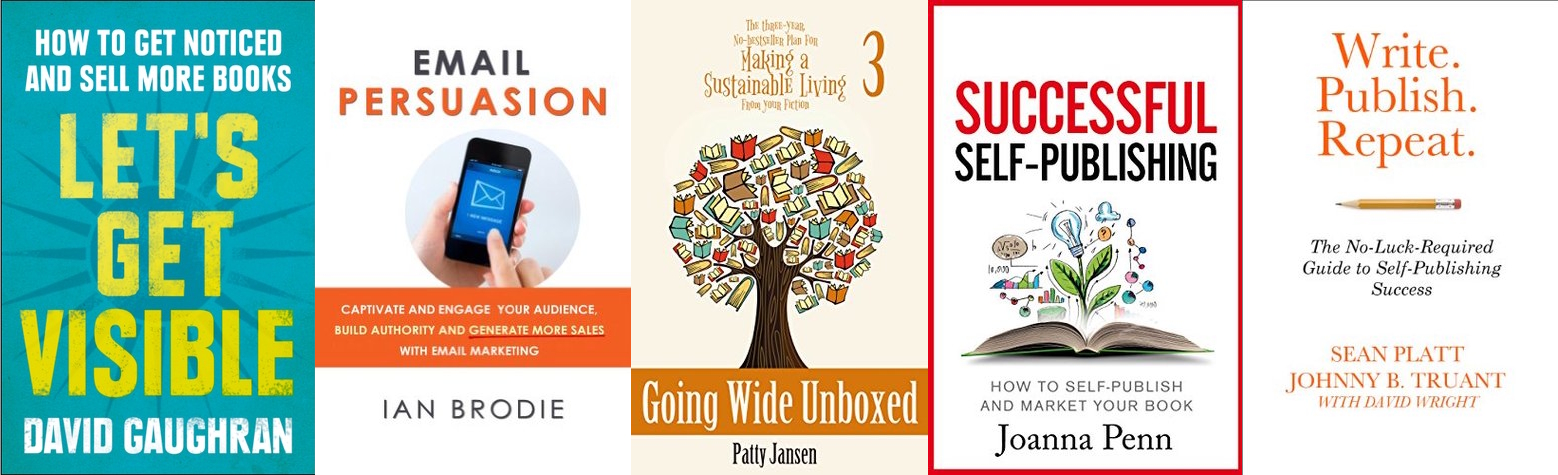
  • Lets Get Visible — This is probably the first book I’d recommend for understanding bestseller lists and basic ebook marketing.
  • Write. Publish. Repeat. — If you’ve heard people talk about perma-free, series, and similar methods of building up your reader base quickly, then you’ll want to get these details straight from the horse’s mouth.
  • Successful Self Publishing — This is another good beginner marketing book for authors, with more of an emphasis on extroverted activities like speaking in public and podcasts.
  • Your First 1000 Copies — This book covers that integral method of keeping fans engaged — the email list. (If you want to move on to an intermediate text on this subject, I recommend Email Persuasion.)
  • Going Wide Unboxed — Although I recommend that beginning authors get their feet wet in KDP Select (staying exclusive to Amazon), this title will help you if you instead begin wide (selling not only on Amazon but also on Nook, Google, Apple, Kobo, Smashwords, etc.).


Advanced marketing books

Diving in deeper

Okay, now you have a mailing list, understand how and when to put your book on sale and book ads to promote the price promotion, and have decided whether to stick to Amazon or go wide. What’s next?

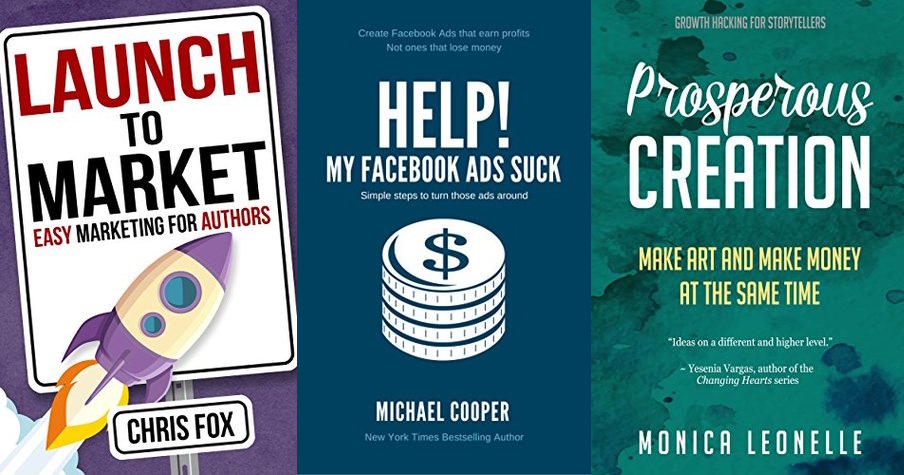
  • Chris Fox’s Write Smarter, Write Faster series is particularly good at helping you analyze how your book fits into the broader market and how to tweak subsequent books to better fit into their niche.
  • Prosperous Creation — The beginning of this book turned me off, but there’s good stuff later on about how to turn your writing income into less of a boom-and-bust cycle.
  • Help! My Facebook Ads Suck — If you hang around in author circles, you’ve likely considered signing up for Mark Dawson’s extremely pricey facebook ads course. I tested out both the course and this book and preferred this book. On the other hand, if you need a lot of handholding and prefer to learn in a video and forum format, Mark Dawson does have a FREE three-video starter course available on his website if you sign up for his email list.

How about you? Are there other marketing books (or courses) that have really floated your boat? If so, I hope you’ll click on the facebook link and comment below!


Become a writer: Step 1 Write

I have a feeling that, deep down inside, everyone who reads dreams of someday cranking out their own book. Just in case that’s a new year’s resolution of yours, I thought I’d run a series of posts over the next few weeks containing reviews of books and courses that helped take me from dreamer to full-time writer.

This week, I’ll start off with the most important part — learning to write! Without further ado, here are some great resources to help take you from scribbler to novelist.


Books about story structure

Start with structure

Even if you’re a pantser (someone who writes books by the seat of your pants) rather than a plotter (someone who writes outlines), understanding basic story structure is key. Great starter books include:

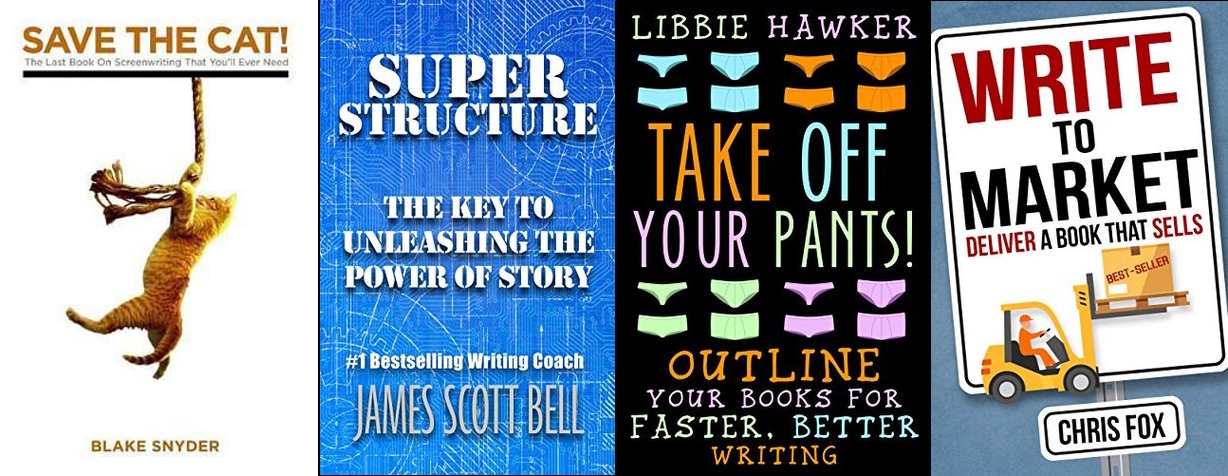
  • Save the Cat — Excellent worksheets and basics to get you started. (Don’t be scared off by the “Screenwriting” part of the subtitle.)
  • Take off your Pants — In addition to the catchy title, this book provides a very character-based way of structuring your novel that really helped my writing grow.
  • Super Structure — This is a good book to read when you’re at a more intermediate stage. I learned some good tips on pacing and signposting therein.
  • Write to Market — In some ways, this book should be in a separate category (marketing). But it’s important to understand what kind of books readers are looking for before you even start, so I stand by including this title here.


Writing books

Leveling up with details

Once you’ve written your first novel and are no longer daunted by the idea of making a story hang together from beginning to end, you’ll be ready to level up with some of these more laser-focused writing books. Here are the ones that have helped me grow over the years:

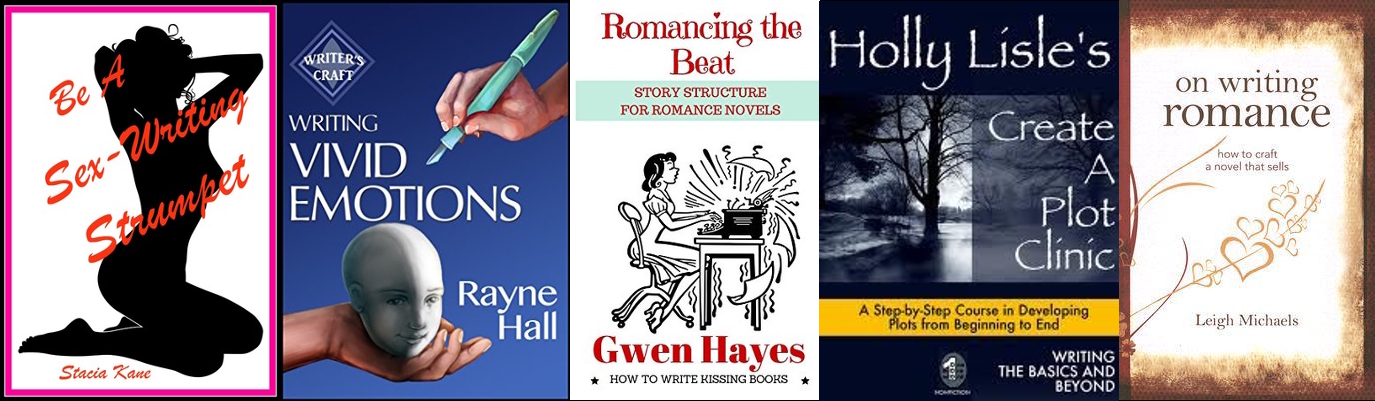
  • Various courses/books by Holly Lisle. You can get many of these as ebooks on Amazon, but I recommend buying directly through her site both to support the author and to download extras and participate in student forums. Specifically, her flash fiction course (FREE) taught me to write short stories in a few short sessions, her create a plot clinic is a really awesome brainstorming guide, and her how to write a series (much more expensive) turned my fourth series into my best by far.
  • Romancing the Beat — This is an excellent, short and easy-to-read romance-novel primer. It’s basically Save The Cat twisted around to match the romance novel.
  • Be a Sex-Writing Strumpet — This book got me over the hurdle of being afraid to include sex scenes in my books.
  • Writing Vivid Emotions — An excellent, short tutorial on how to mix emotional cues into a story more subtly. I haven’t read this author’s entire (long!) series, but can also recommend Writing Short Stories to Promote Your Novel.
  • On Writing Romance — This text feels a little old school in places but has some good tips in the middle on the actual craft of building a romance.


Editing books

Edit down to a polished draft

Finally, the part that is taking me the longest to learn — editing. While I do use a proofreader to catch those last few thorny mistakes and sometimes pay a developmental editor/beta reader to catch big-picture flaws, an author really needs to know how to do at least some of this herself. A couple of books that really helped me out here are:

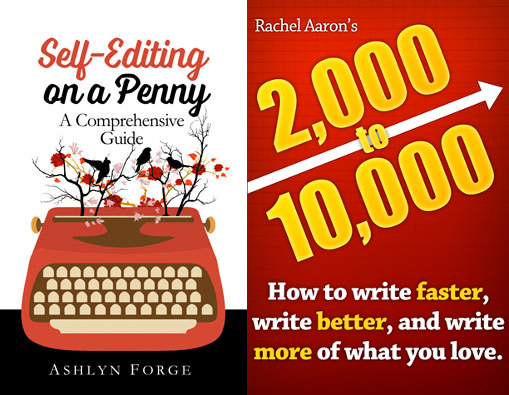
  • 2k to 10k — Despite the focus of the book’s title on productivity, it was the editing section that did the most for me. (Plus, I love her fiction books, so I know this author comes from a place of good storytelling.)
  • Self-Editing on a Penny — This is a good starter book for those of you just beginning to edit your own work.

Actually, as I look at the two measly books included in this section, I can see why editing still gives me fits — I need to do more reading on the subject! I hope you’ll use the link to facebook below to comment on what other books or courses you recommend.

Happy writing!

Who am I?

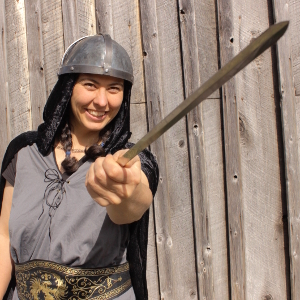
Aimee EasterlingEver since letting the cat out of the bag that Aimee Easterling is the fiction-writing pen name of non-fiction author and homesteader Anna Hess, I’ve been pondering adding an actual photo to my bio. As a recovering camera-phobe, though, coming up with a shot that captured my fantastical side took some serious work.
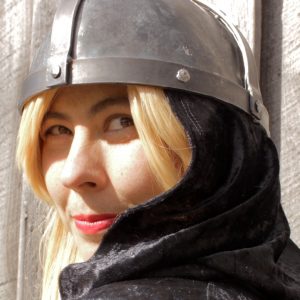
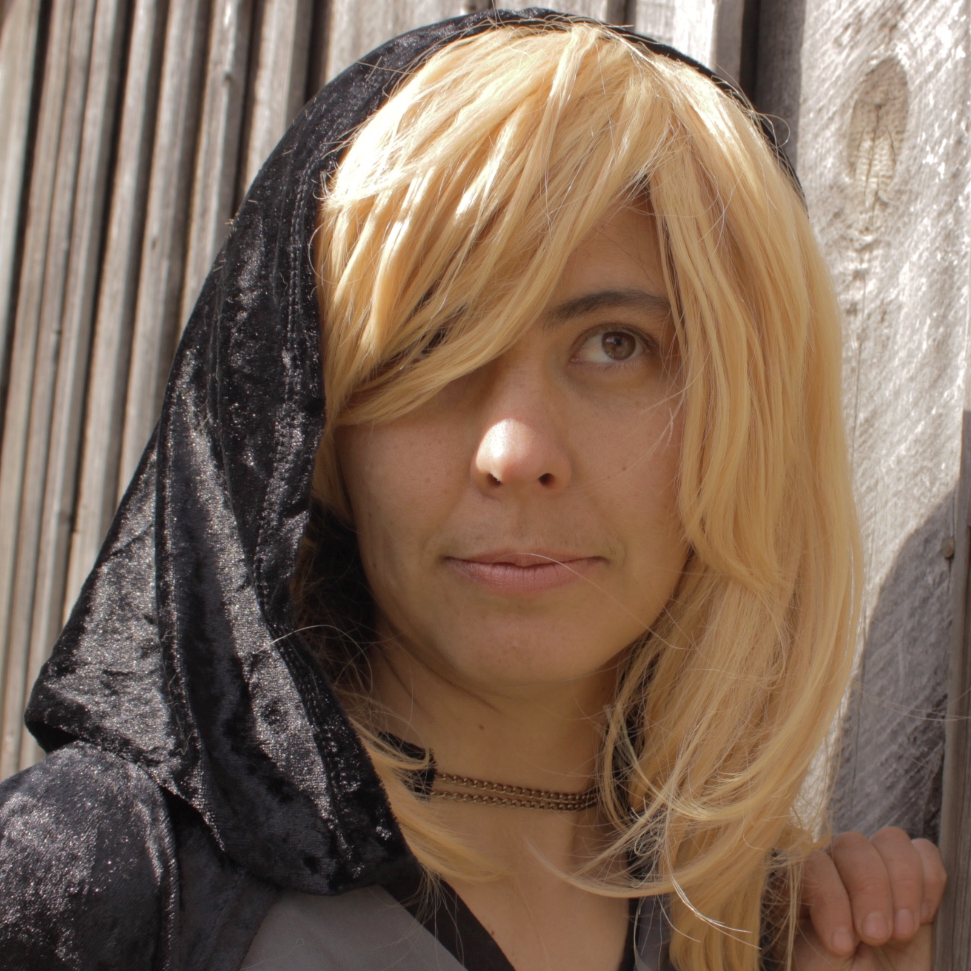
Aimee EasterlingAdd in some props plus friends with costumery skills I sorely lack, though, and we were back in business. The final products harkened back to my days hanging out in a college SF/F club and jaunting over to Renn Faires on the weekends. Just like reading fantasy, it’s fun to spend the afternoon pretending to be someone else!
Aimee Easterling

Here’s my updated bio to go along with the glamour shots:

Homesteader by day and werewolf…ahem, *teller of werewolf tales*…by night, Aimee Easterling is a USA Today Bestselling author writing on the boundary between urban fantasy and paranormal romance.

She heats her house with hand-split firewood, writes on an ultra-geeky Linux box, and generally does her best to confuse all reasonable assumptions.

Studying biology and spending a year backpacking around the world have both informed Aimee’s writing, but she’s quite willing to let reality slide in favor of a good story. You can learn more at www.aimeeeasterling.com

What do you think?

Wolf Landing preview

Pretty soon, I’ll be posting the first chapter of Wolf Landing to get those digestive juices flowing. But, for now, I thought you might enjoy seeing shots of a few of the settings from the upcoming book.

There are no spoilers for Wolf Landing in this post, but I’m assuming you’ve read the previous books in the Alpha Underground series. If not, what are you waiting for? Read them now! The final installment is coming your way very soon.

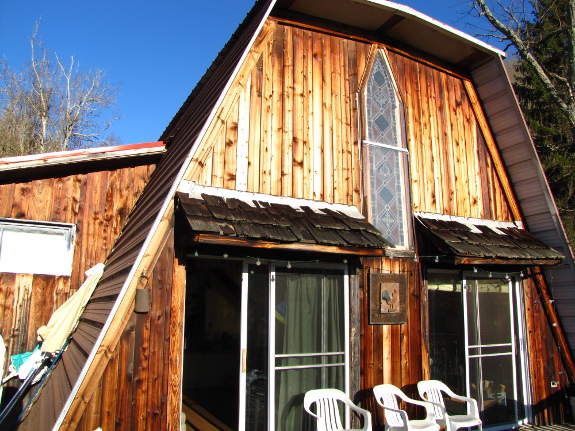
Wolf Landing

I based Wolf Landing’s community building on the A-frame gathering space of an intentional community near me. I probably expanded the interior a bit, though, to make room for all those wolves.

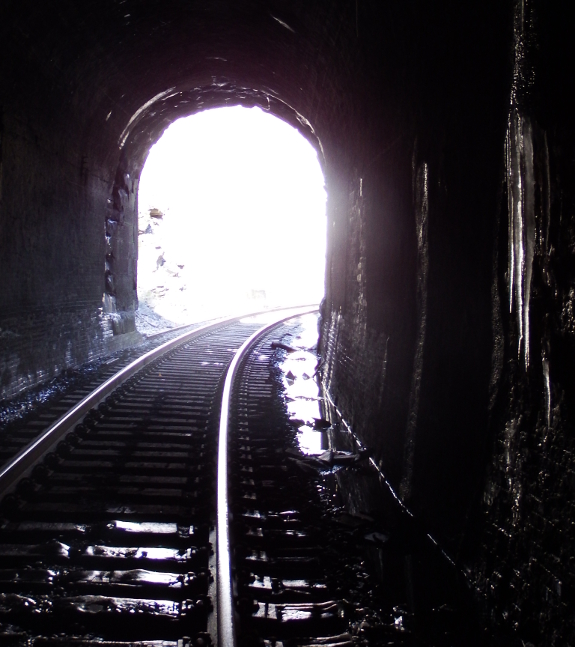
Train Tunnel

Dark and scary things happen here. No, I’m not going to tell you what — that would be a spoiler! In real life, this is a train tunnel through the side of Sugar Hill, Virginia.

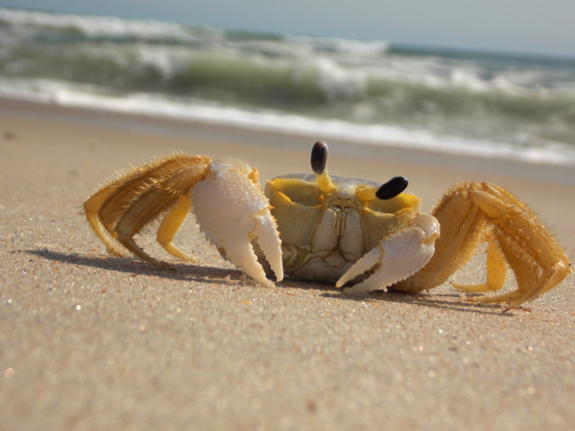
Crab on the beach

The grand finale of Wolf Landing takes place in the Outer Banks of North Carolina. No — there are no crabs involved. Is that a spoiler?

My family went on a summer camping trip on Ocracoke every year when I was kid, so I’ve spent about four months of my life on the sand. I thought Fen deserved a similar vacation…although I have to admit she didn’t really get one.

Teased enough? Stay tuned for the first chapter, coming your way soon!

Two tips for aspiring writers

Facebook request

Now that I’ve entered the digital age and joined facebook, I’m fielding a lot of questions from new and aspiring writers. Actually, some days seems like every one of my readers has a manuscript stashed away in their closet…which I shouldn’t find entirely surprising given the fact that my voracious reading habit is what made me want to write in the first place. If that sounds like you as well, here are a couple of answers to frequently asked questions to help steer you in the right direction.

Question #1: Will you read my unpublished book and give me advice?

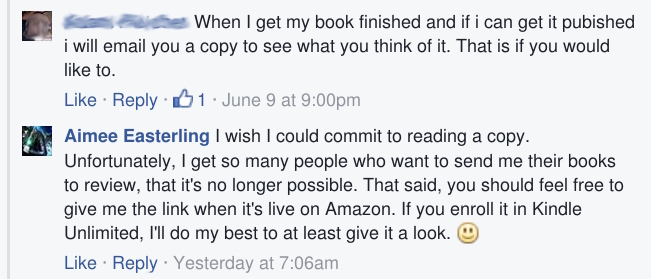
First of all, I’m thrilled to hear you’re writing! That is definitely the best way to make your literary dreams come true. However, I’m afraid the sheer quantity of these requests has made me unable to check out anyone’s unpublished manuscripts. Instead, I recommend seeking out a writer’s group in your area or joining an online group like Critters.org.

That said, if you comment below with the link to your book once it’s live on Amazon, I’ll take a quick look if it’s enrolled in the Kindle Unlimited program. I’m a tough reader, but if your book floats my boat I’ll review it and share it just like I would any other title I truly enjoy. (If I don’t like it, I’ll probably quit on page two and will tell no one.)

Question #2: I’ve recently published my first book and am shocked by how hard it is to get visibility. Can you give me any advice on helping my labor of love see the light of day?

When you self-publish, you become a publisher as well as an author. The best resource I’ve found for learning that new skill set is Kboards Writer’s Cafe forum. Read the posts there for about a month and you’ll know most of what I know…then try it all out and see what works for you and your books. Good luck! It’s a slow uphill slog at first, but the payoff is worth it if you stick to your guns.

Do you have other questions about writing and publishing in the modern age? Comment below and I’ll do my best to answer. Thanks for reading!

Open acknowledgments

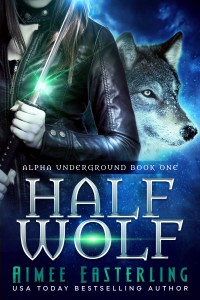
Half WolfI generally don’t include an acknowledgements section in my books because I figure the average reader doesn’t particularly care how well my husband manages my pre-release meltdowns (“Everyone’s going to hate my baby! The sky is falling!”) and how ably my father hides his disdain of genre fiction when he picks apart plot holes in my second drafts (“That’s why you got an MA in English. Right?”). But I figured a blog post on the topic wouldn’t hurt — that way if you’re bored, you can skip it.

In addition to my ever-supportive friends and family, Half Wolf had an astonishing number of both enthusiastic volunteers and professionals helping turn my buggy manuscript into the (hopefully) polished product you might have downloaded to your e-reader this past weekend. First and foremost, I want to thank all of my early readers…and specifically Mel who found a typo that all of the professionals missed. Second, the enthusiasm and kindness of everyone who tried a copy of my book, told their friends, or left a review really helped me see that the sky wasn’t falling after all.

Next on my list — the blurb. Blurb-writing is an art that I’ve been practicing, but it still took several writing buddies and about a week to polish those all-important 160 words. Specifically, David J. Normoyle and Sylvia Frost‘s sentences actually ended up on the Amazon page, while Lindsay Loucks asked just the question I needed to make the blurb (finally!) veer off in the right direction. Everyone else’s feedback wasRebecca Frank's covershelpful too! (Yes, I did really have more writers that I can easily name in a single blog post look over those four short paragraphs.)
Finally, I’d be remiss if I didn’t thank the pros who turned my homemade story into a polished product. Chereese at Grammar Rules A to Z is always willing to slide my manuscript in at a moment’s notice for a thorough polish and Rebecca Frank is definitely the world’s best cover artist. If you’re a writer in need of some professional assistance, I can’t recommend these two ladies highly enough.

Still here? Then I want to thank you as well for reading all the way to the end and giving me the impetus I need to open up my laptop every day. You are why I write.

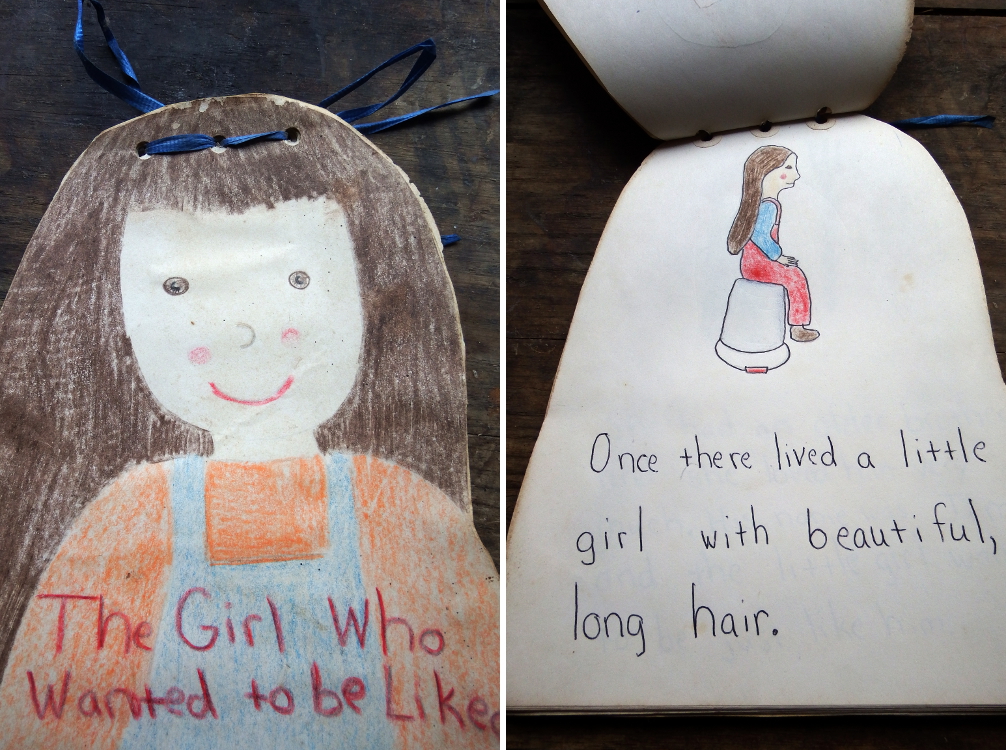
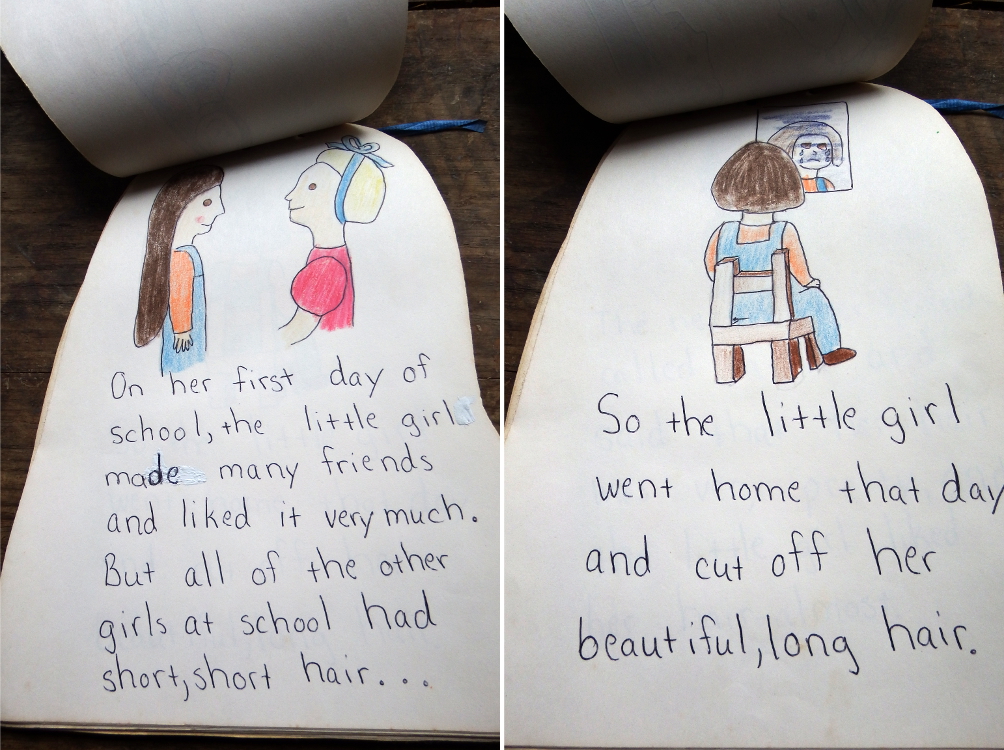
The Girl Who Wanted to Be Liked

The Girl Who Wanted to Be Liked

Some writers enter the field in adulthood. Not so for me. Both of my parents came out of college with English degrees, and our house was filled with books. I learned to read at four (and did such a good job my kindergarten teacher brought me to read to my brother’s second-grade class — my first triumph!). After that, I spent long hours of my childhood lost in fantasy worlds.

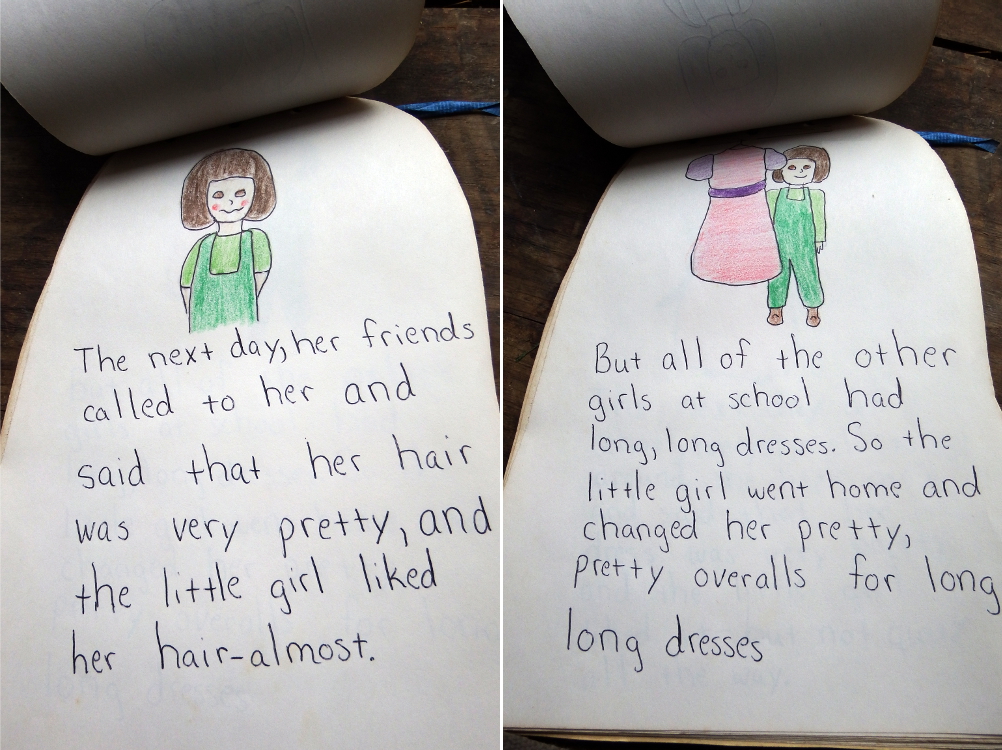
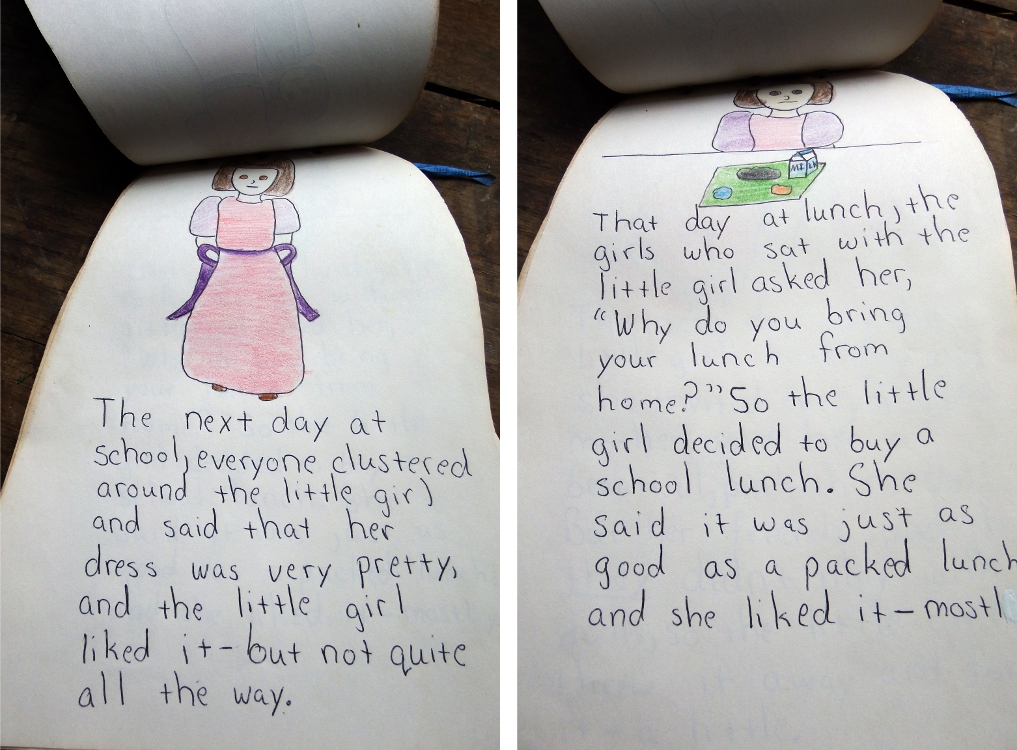
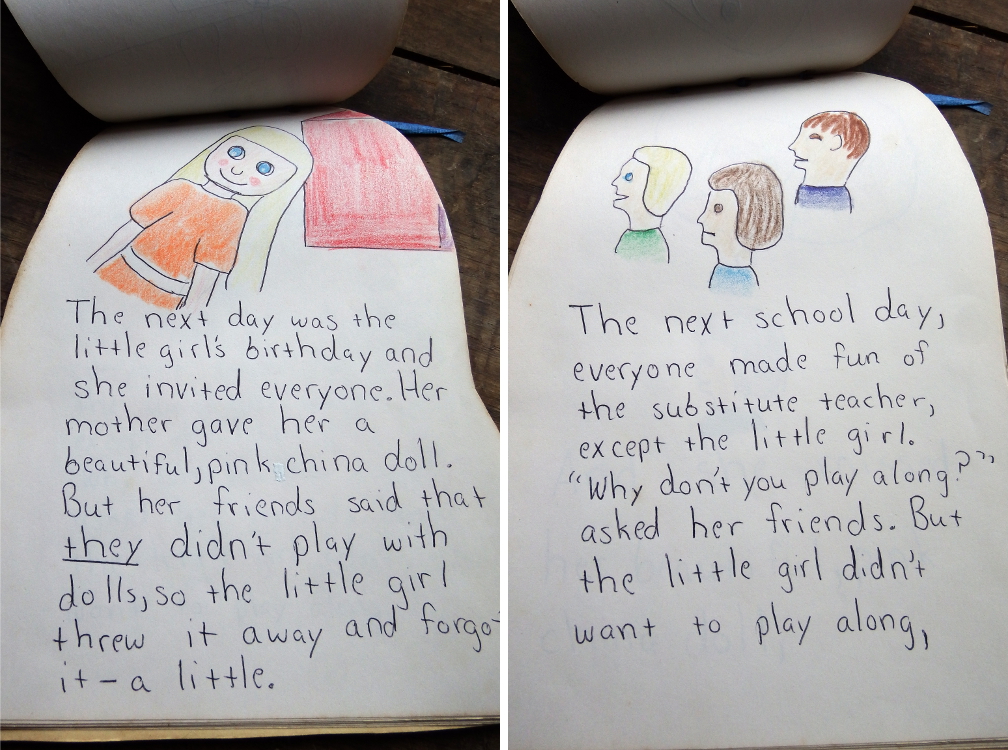
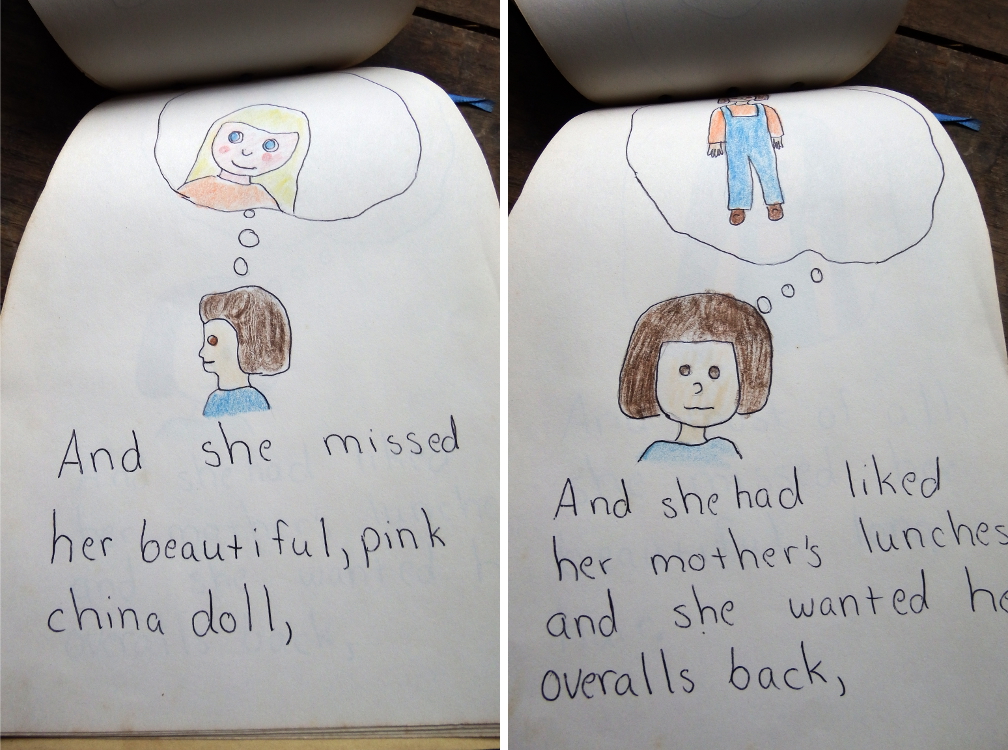
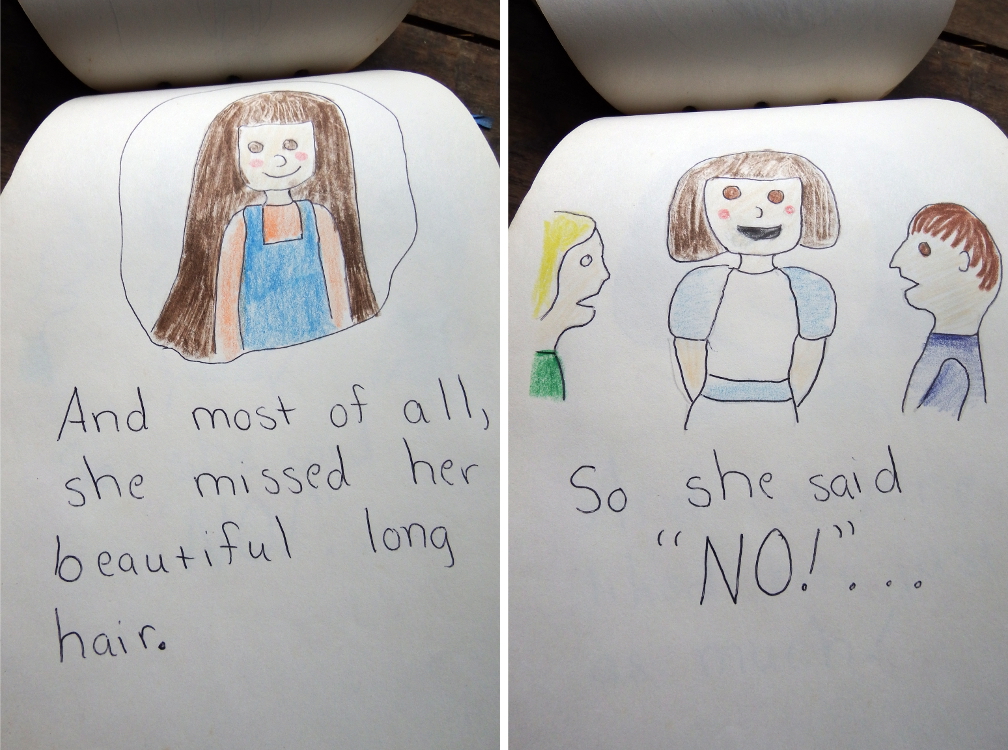
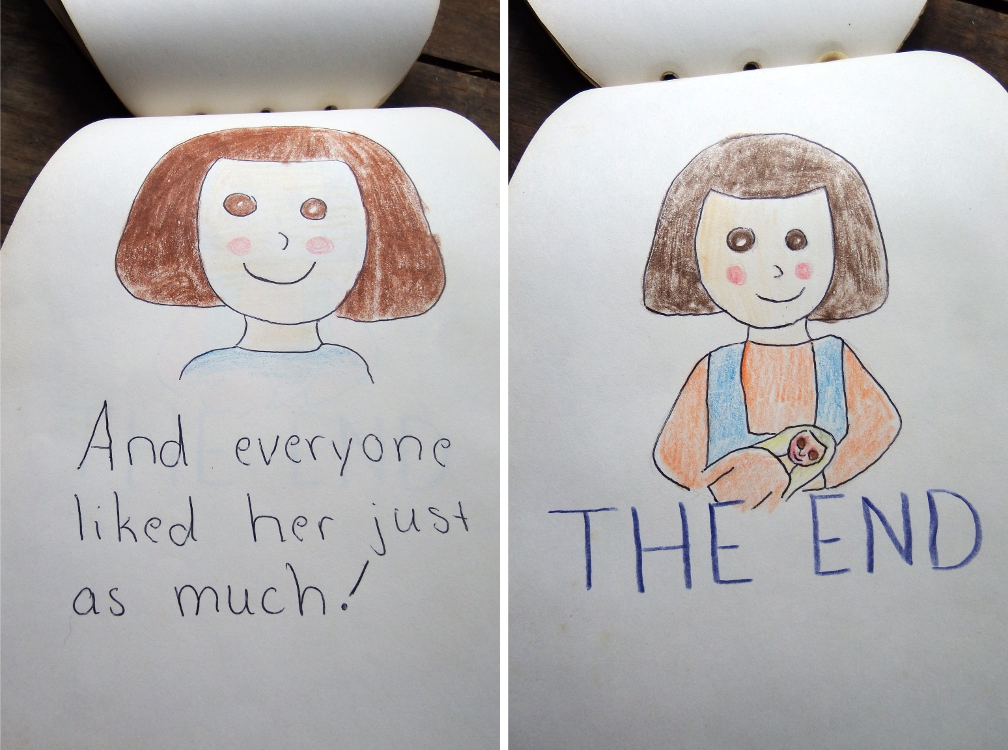
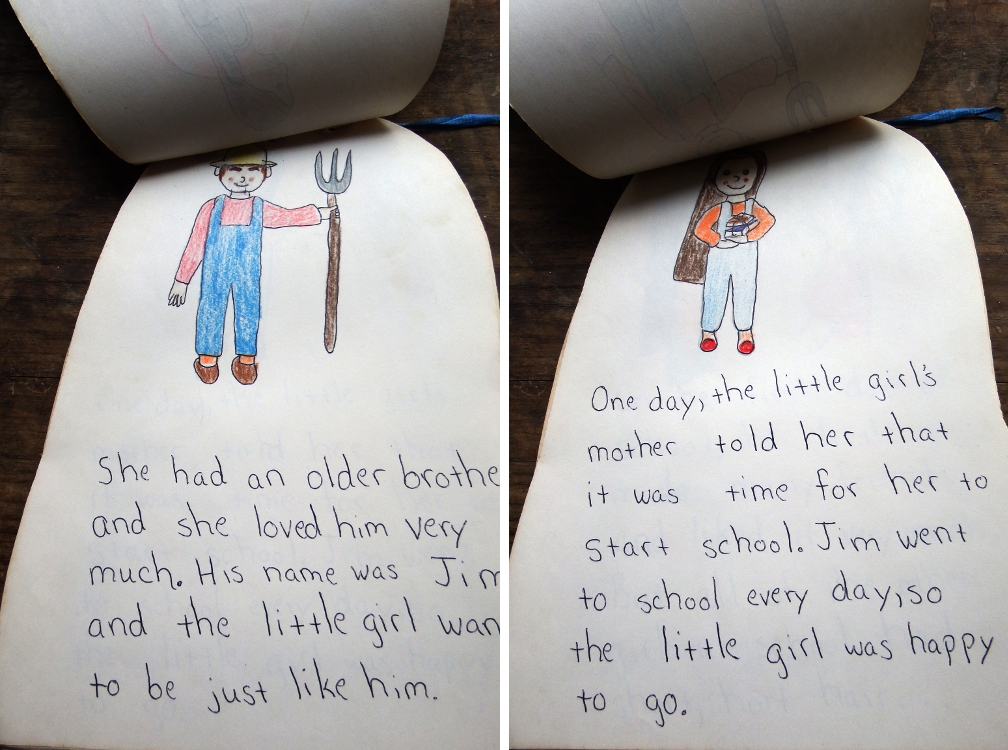
I started writing in elementary school too, so by the time I hit ninth grade and was told to write a children’s book, I was ready to go. I thought you might enjoy this early attempt, which showcases a common thread that remains in my stories to this day — the outsider.

Children's book

Children's book

Children's book

Children's book

Children's book

Children's book

Children's book

Children's book

My adult literary analysis — good story arc, but she needs to lose more than her hair at the end and there’s too much wording repetition. Oh well, what can I say — I was only 13!

© 2026 Aimee Easterling

Theme by Anders NorenUp ↑