USA Today bestselling author

Month: March 2019

The power of pack

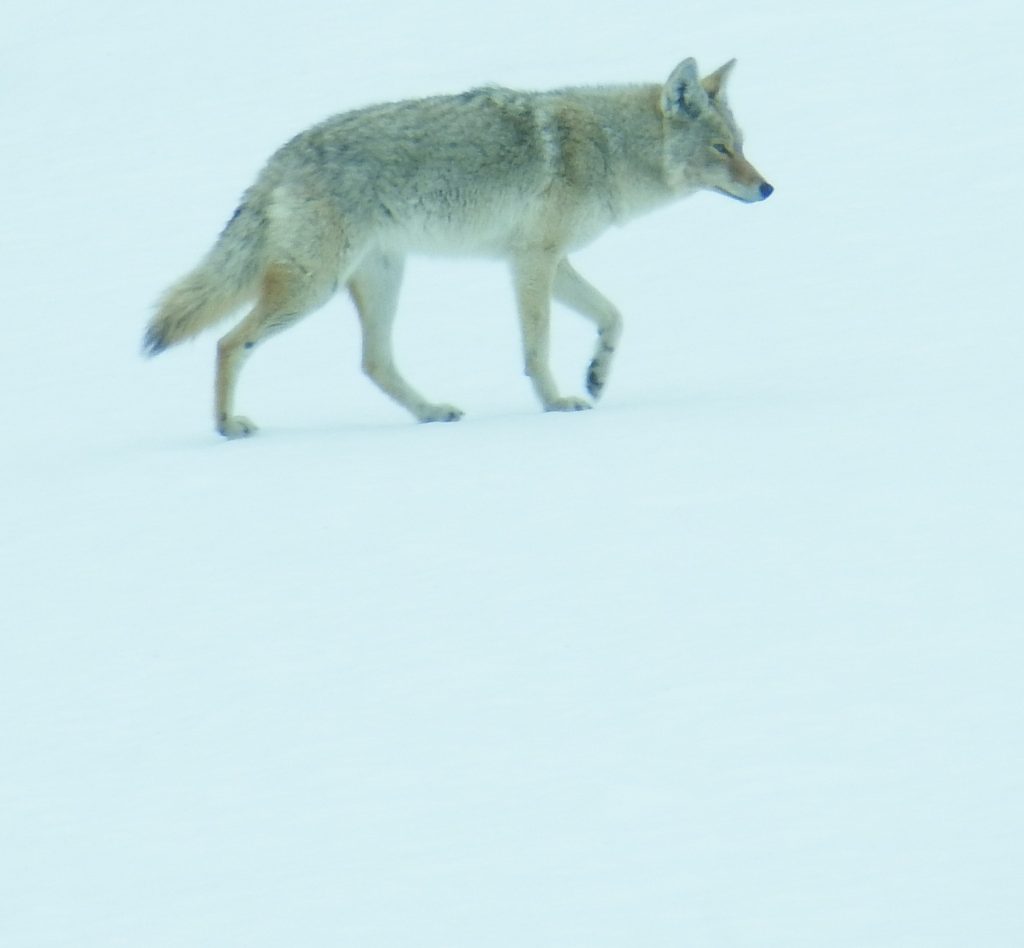
Coyote against white snow

A lone wolf, a wolf family, three coyotes, and a grizzly bear taught me an important lesson on the power of pack last week. Perhaps you’d like to share in the excitement?
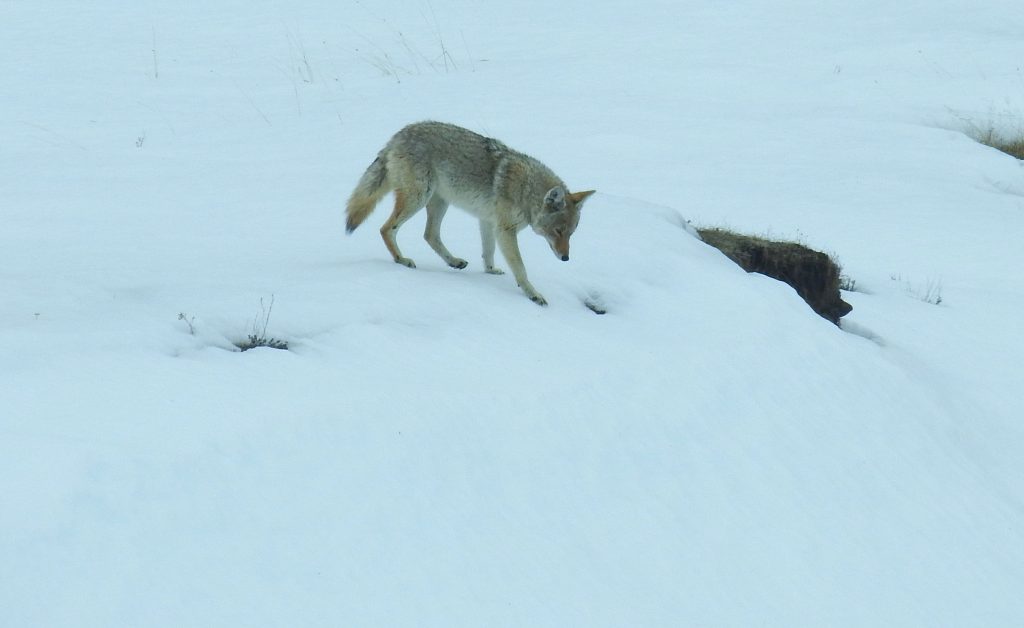
Coyote in the snow

Before I continue, I should warn you that all of the closeup photos in this post are from a different place and time. I was so riveted by the action (and the characters were so far away) that I couldn’t take my eye off the scope long enough to pull out the camera. So, please consider the photos here more an imagination boost than anything else.
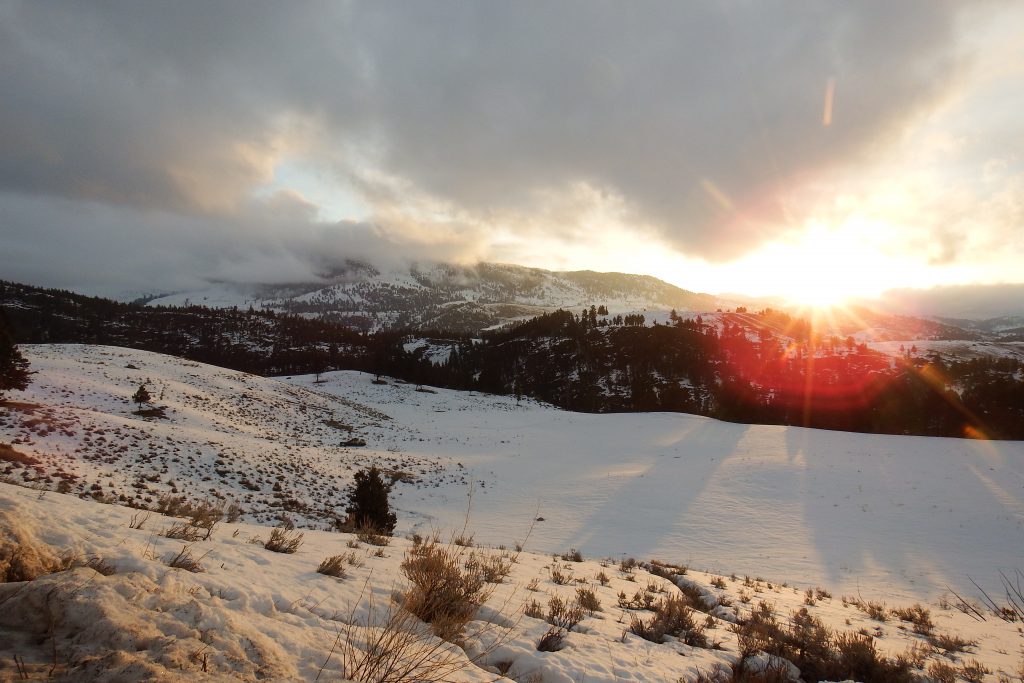
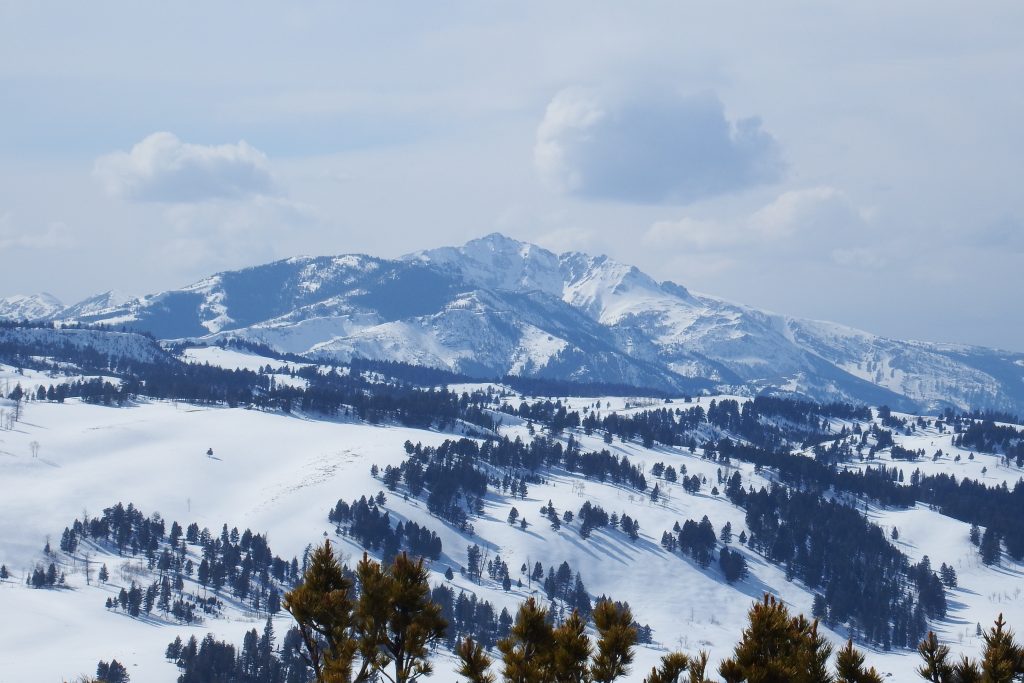
Winter dawn in Yellowstone

That caveat aside, my story starts at dawn in the North Range of Yellowstone. A bit to the right of the sun in the photo above, the Junction Butte pack was hanging out around a bull elk carcass that they’d taken during the night.
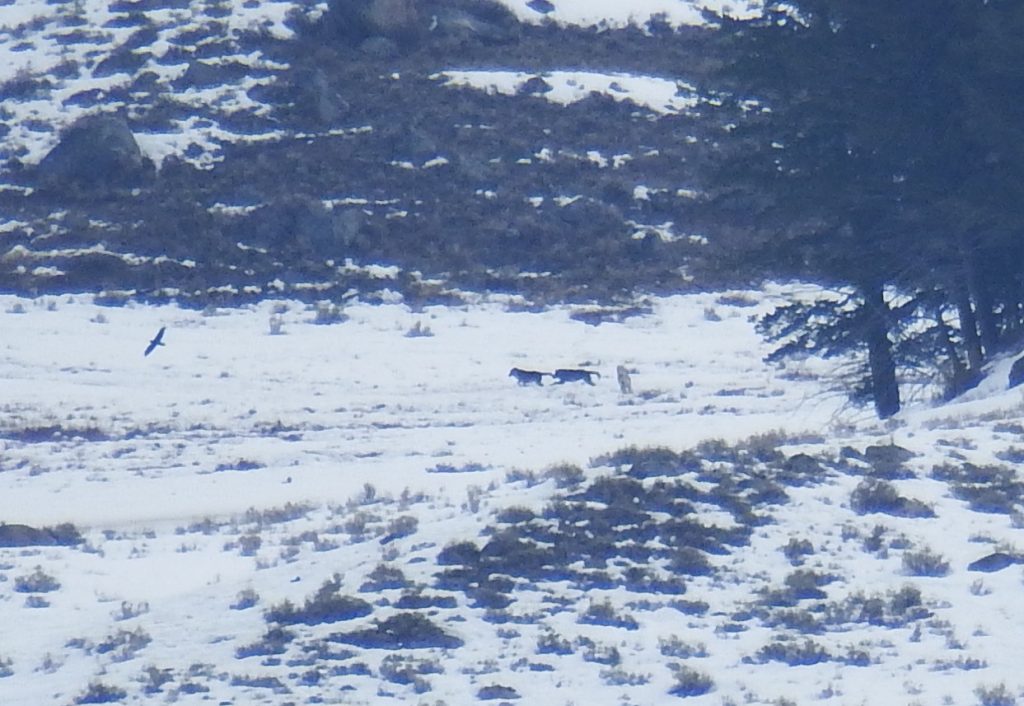
Playing wolf pups

The eleven-month-old pups were playing. The adults were sleeping.
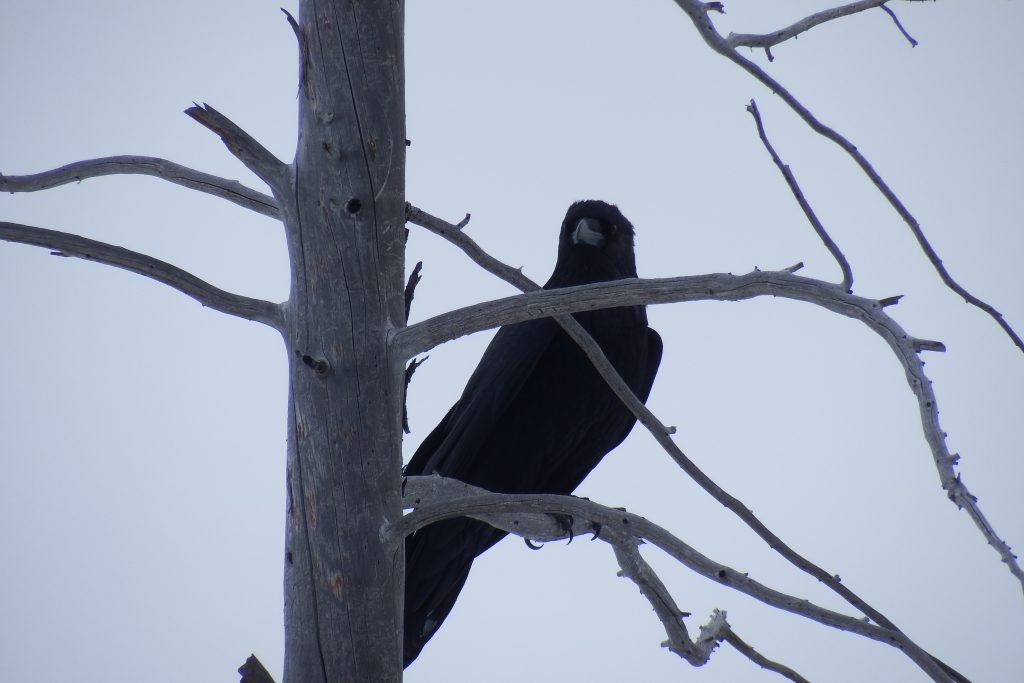
Raven on a dead tree

Ravens were sneaking in to steal bites. And, at various spots along the road, wolf watchers had set up their scopes to watch the action unfold.
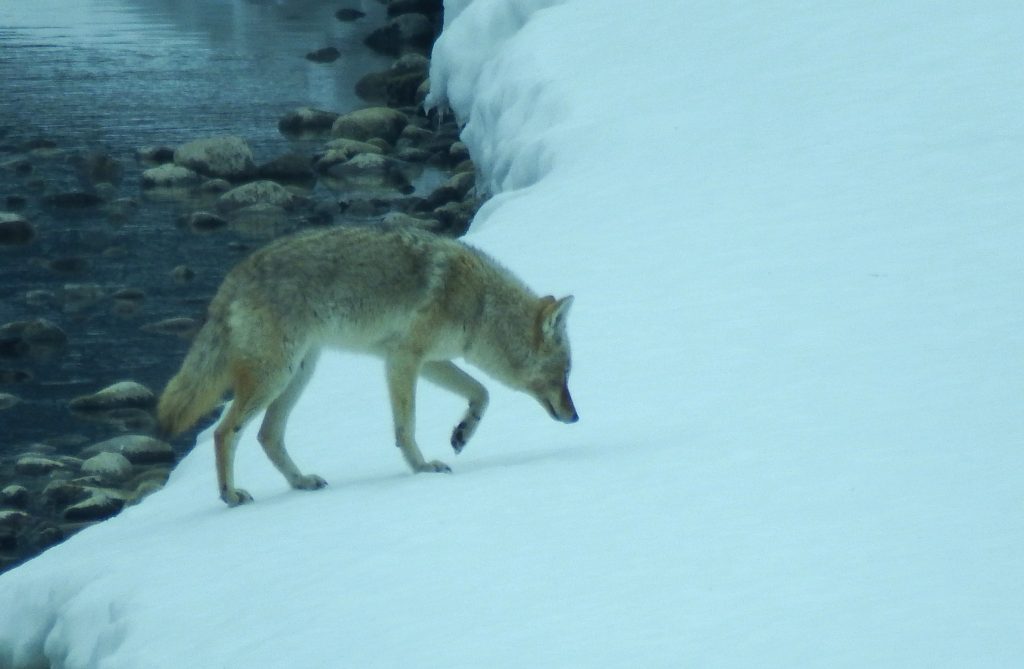
Coyote smelling the ground

There wasn’t much action though, once you got over the cuteness of the pup play. So, when we heard coyotes yipping perhaps halfway between us and the kill site, many folks moved our scopes over to Yancey’s Hole to check out the wolves’ smaller relatives.

Coyotes, as you may or may not know, have a social structure a bit like that of wolves…but different. Weighing in at a third the mass of wolves, coyotes go for small prey and generally hunt solo. They do defend territories from other coyotes, and they do bed down together once hunting time is done. But even the full pack is usually just a handful of animals — a mated pair plus maybe a few youngsters from last year.
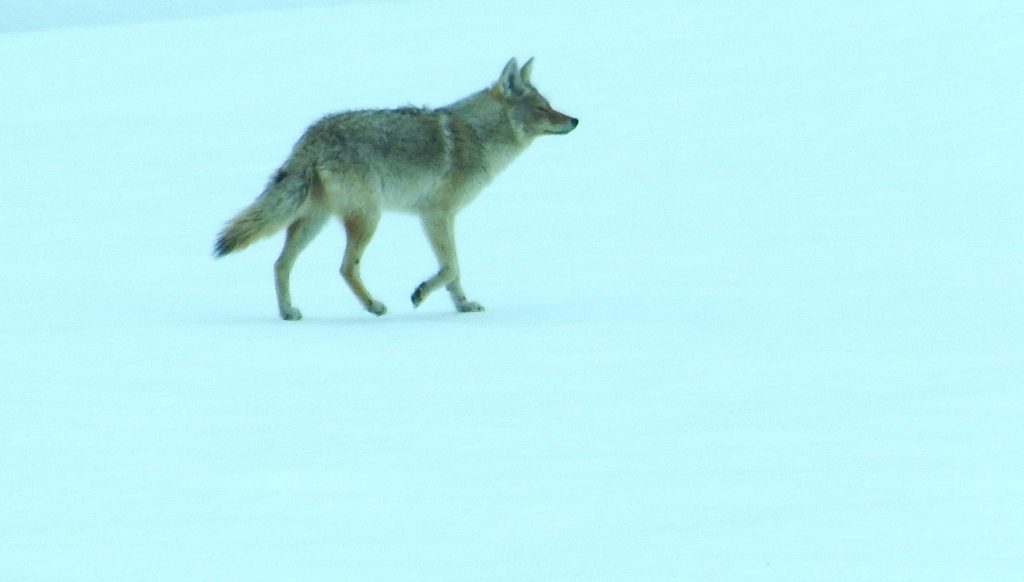
Alert coyote

In this case, there were three coyotes on the frozen ice…and all of them were looking to the left. Smart guides know that when groups of animals all peer in the same direction, you should look that way too. Sure enough, off to the left was:
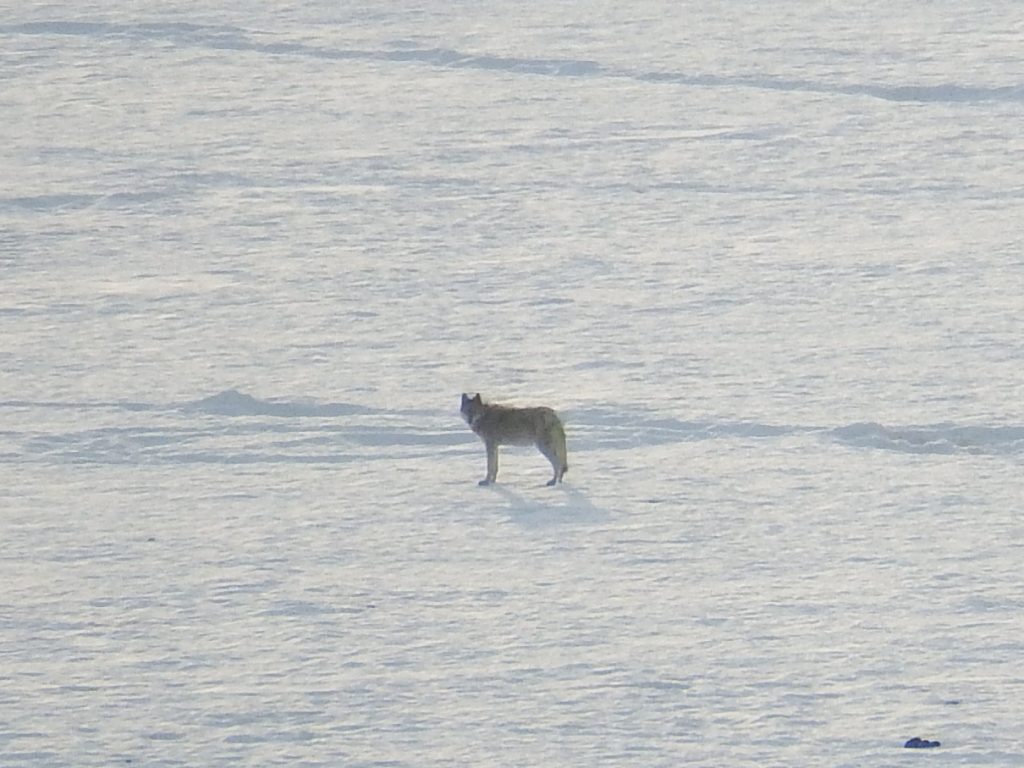
Wolf on the ice

…a lone wolf! (Yes, this is my very best wolf photo of the entire trip.)

The books tell me that a wolf is always the winner in a coyote-wolf interaction. That’s why, soon after wolf reintroduction to Yellowstone, coyote numbers declined dramatically (and fox numbers actually went up since coyotes, in turn, kill their own smaller relation).

What the books don’t say is that a pack trumps a lone animal any day of the week.
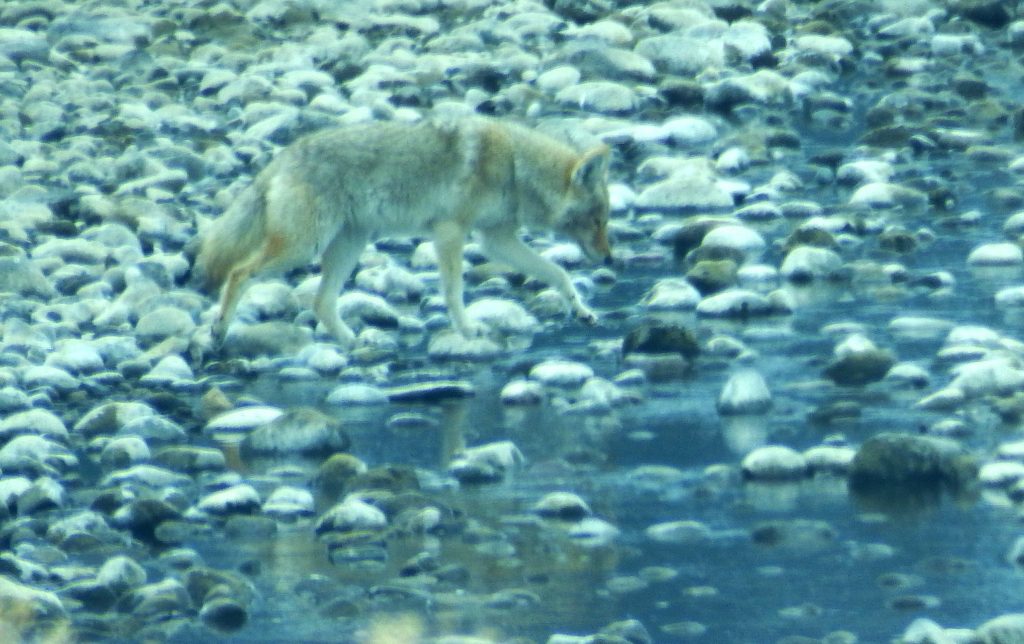
Coyote by a stream

In this case, the wolf initially looked like it might be able to wander through coyote territory unscathed. But it was three against one, and before we knew it the coyotes were driving their larger relative up off the ice and into the snow.
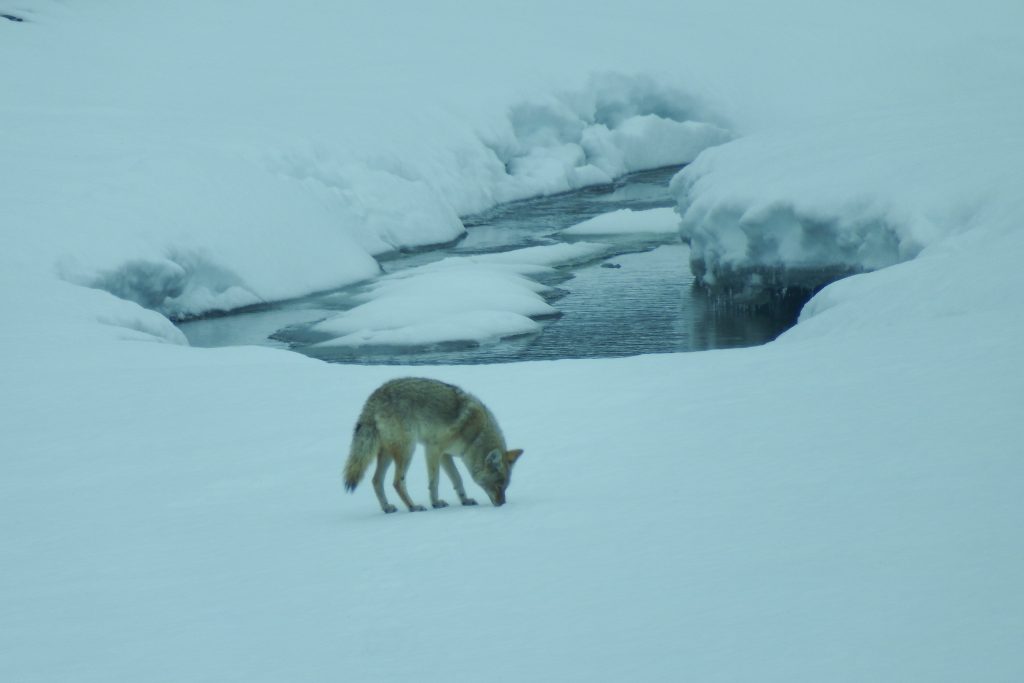
Coyote beside icy pond

The story became more poignant when our guide clued us in to the lone wolf’s likely identity. Leo Leckie knows each wolf in the park by number and ancestry and can tell you in great detail about the soap-opera drama of mating, fighting, and hunting in which the packs engage.

In this case, Leo had two guesses about the uncollared lone wolf’s identity. The most likely scenario, he told us, is that this was a youngster who used to be part of the Crevice Creek Pack before said grouping splintered and failed. It all began when yet another pack lost their alpha male to a hunter outside the park boundaries, leaving the females without their patriarch. Their hunt for a solution was as bloody as the initial problem — they drove the alpha female out of the Crevice Lake Pack and stole her males, leaving this pup alone in the cold.

Life is tough for a lone wolf, as I soon discovered. But he was lucky to run into coyotes — less bloodthirsty — rather into than another wolf. In this case, the smaller canines just got the wolf’s attention, then they escorted him out of their territory in one long line running along the top of a hill. First came a coyote, then the wolf in the middle, then two more coyotes bringing up the rear.

They were running so fast I could barely keep up through my scope. Then, a shout from the side of the parking area:

“Grizzly bear!”
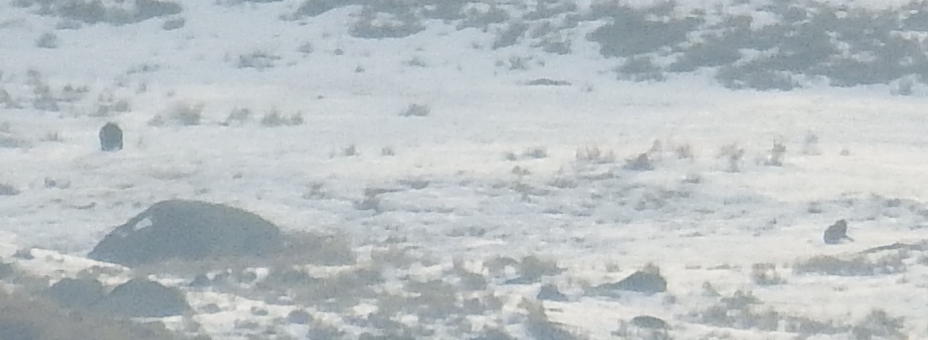
Grizzly bear and wolf

As a unit, every one of the wolf watchers whipped our optics back up to the more distant carcass site, leaving that lone pup to escape on his own. Because grizzlies were just coming out of hibernation, so seeing one at that time of year was considerably rarer than a wolf sighting. But sure enough, there the bear was, lumbering toward the site of the bull-elk kill.

(In the sad photo above, the grizzly is on the far left and a wolf is on the far right for scale.)

Now, once again, let me start with book learning. Grizzly bears are tremendous compared to a wolf, so it’s no surprise that they steal wolf kills left and right. In fact, some naturalists have reported that grizzlies follow the scent of wolves, looking for a dinner to steal rather than taking down their own prey. I fully expected the Junction Butte pack to lose their dinner and have to move on.
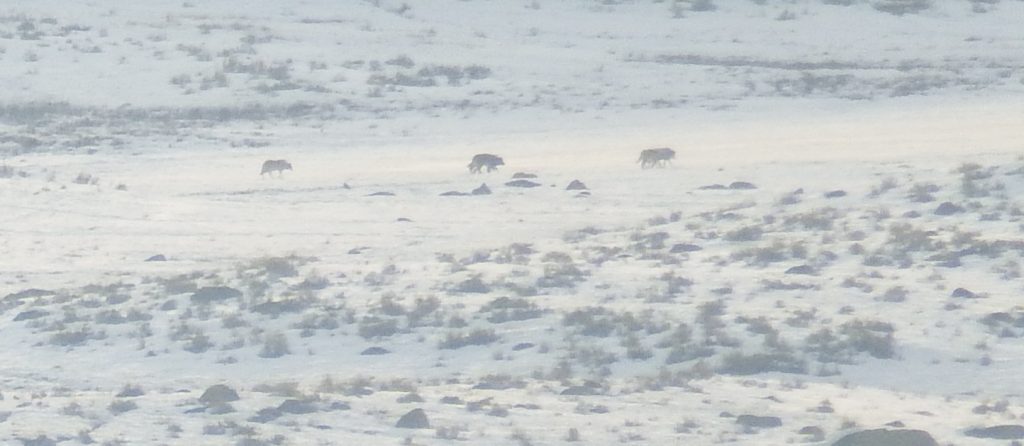
Wolf pack at carcass

But this post, as you may recall, is about the power of the pack. Five or six wolves were on that bear by the time I got my scope refocused. They mobbed the larger animal, jumping and biting…and within seconds it was the grizzly rather than the wolves who headed away.

And, okay, so the grizzly didn’t run scared like the lone pup had in the face of coyotes. Instead, the bear ambled, a bit like my cat when I shoo him off the counter. “I didn’t want that carcass anyway,” I could almost hear the grizzly say.

But the wolves did want the carcass…and they kept it. And that, many scientists suspect, is why wolves live in packs.

What do you think? I hope you’ll share your thoughts via facebook:
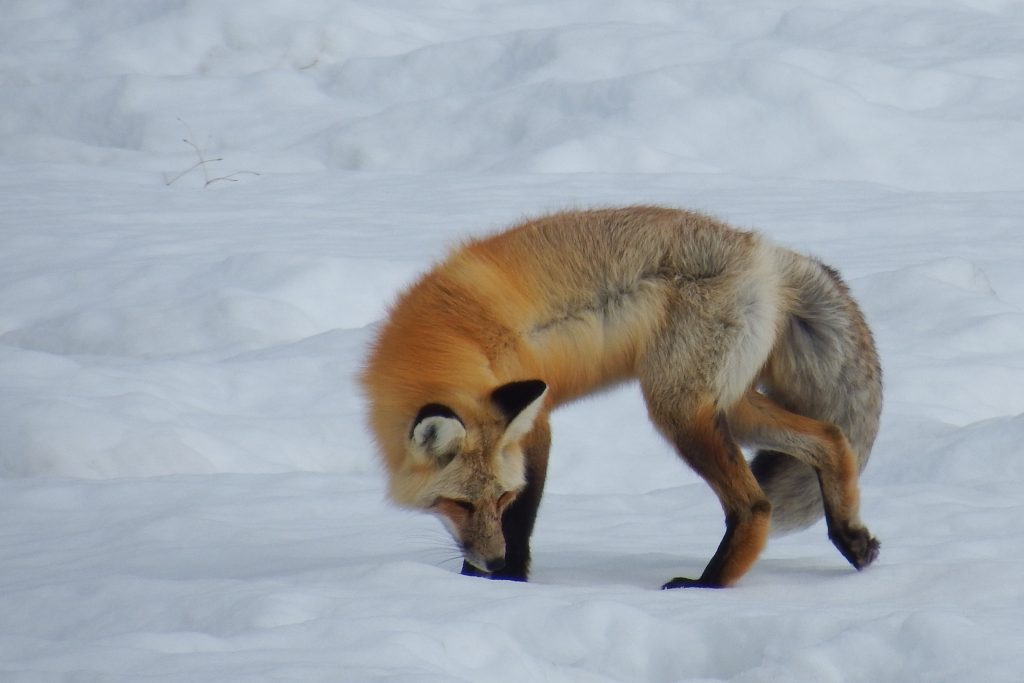
A kitsune teaches me to hunt voles

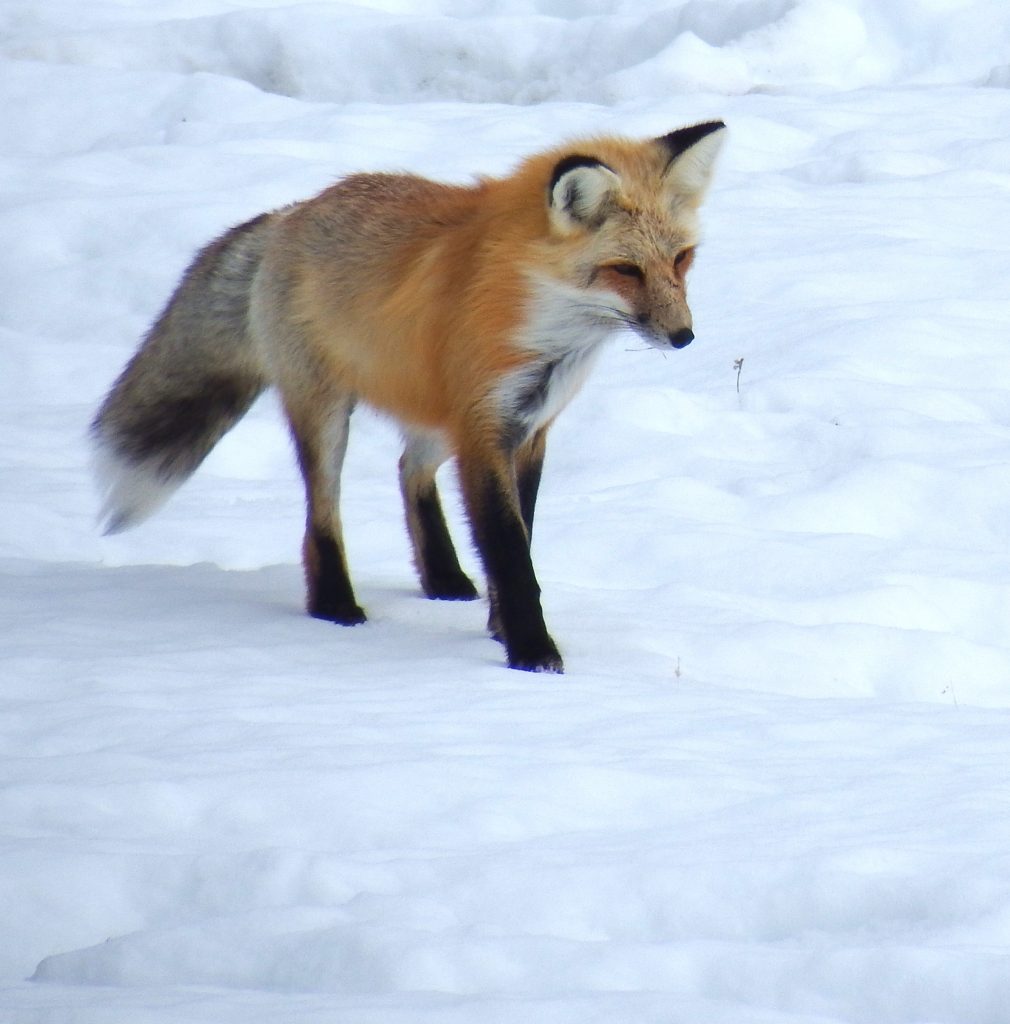
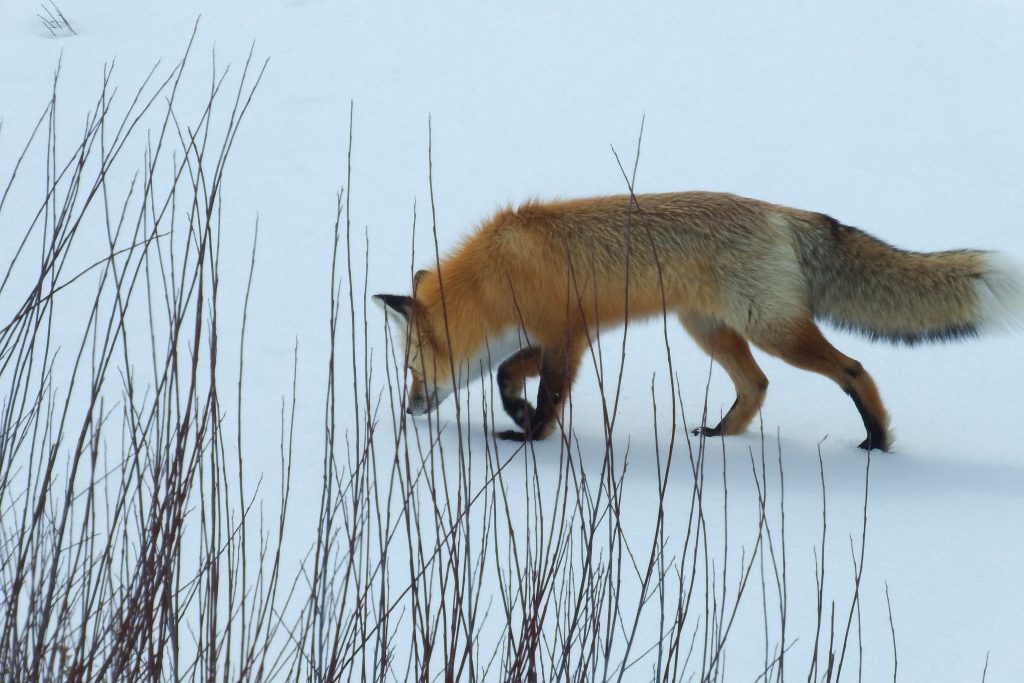
Red fox in the wind

I have 700 photos and 20 pages of notes to pore over, so I almost didn’t know where to start. How about a snack to tide you over while I wait for dawn?

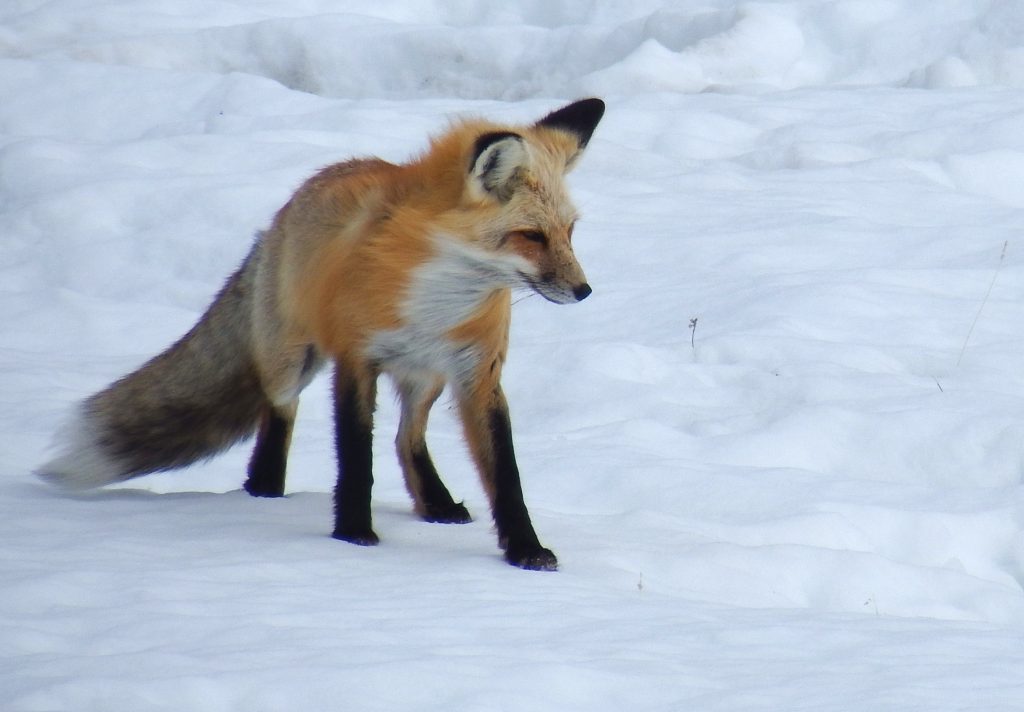
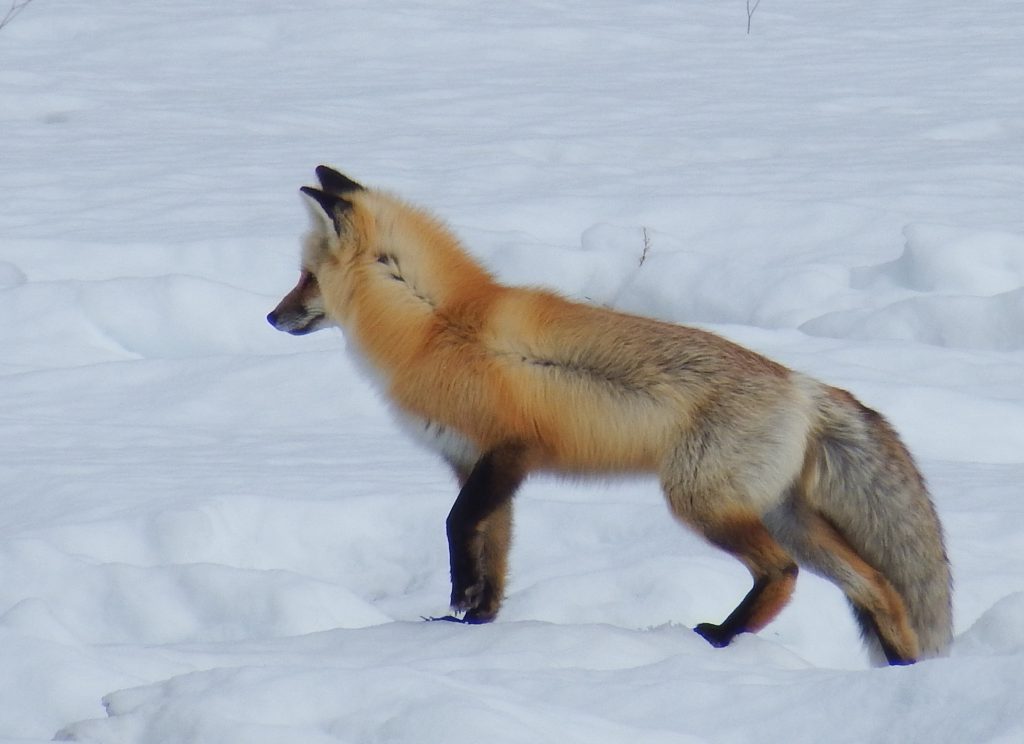
Listening fox

My group was treated to extended viewings of three species of “dogs” during our three full days touring Yellowstone. And all three shared one behavior — mousing.

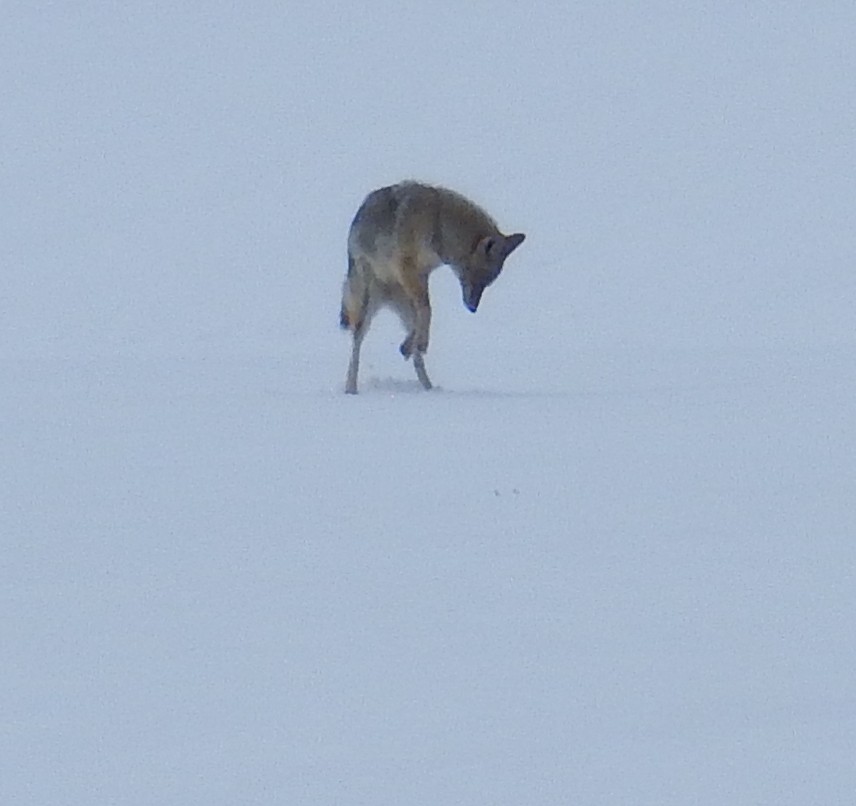
Mousing coyote

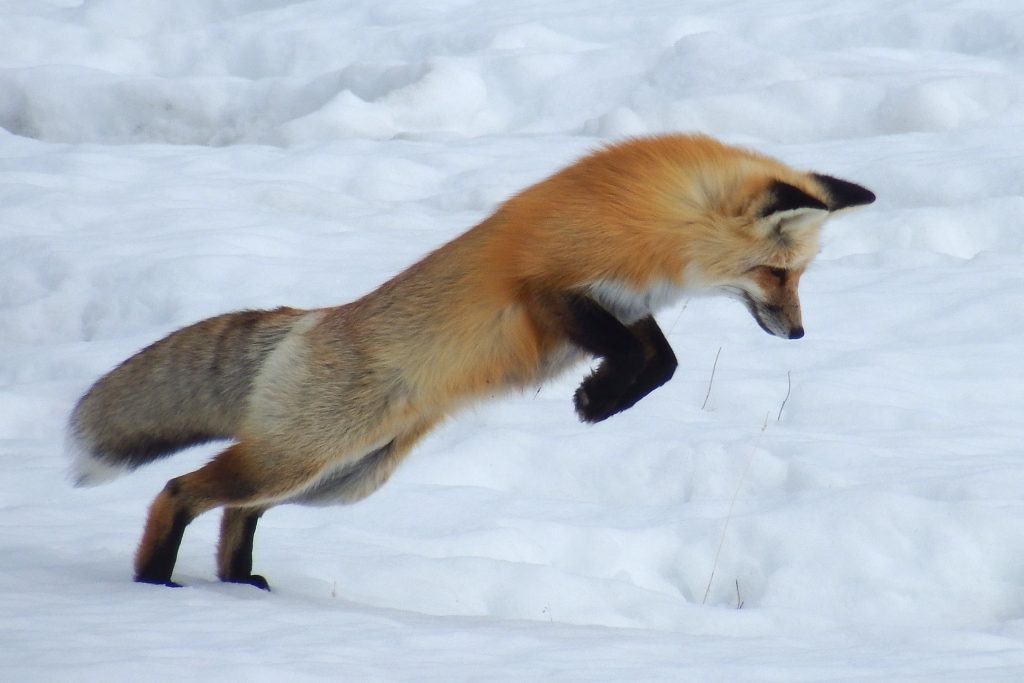
Wolves were playful about it, with only pups taking part (and often doing so together). The coyote we watched (shown here) was intent and focused. But the fox was pure elegance…so I guess I should let Kira teach us how to take out voles.

Laughing fox

Kira: The first thing I do is find a nice, broad expanse of snow beside a road. In fur form, I’m absolutely stunning and bound to stop traffic. Gotta go with your strengths.

A fox braced against the wind

Me: Okay, Kira. That’s helpful advice. But I think what folks what to hear about is how you figure out the location of a mouse-sized rodent a foot or more beneath the surface of crusty snow while the wind is blowing and your nostril hairs are freezing together.


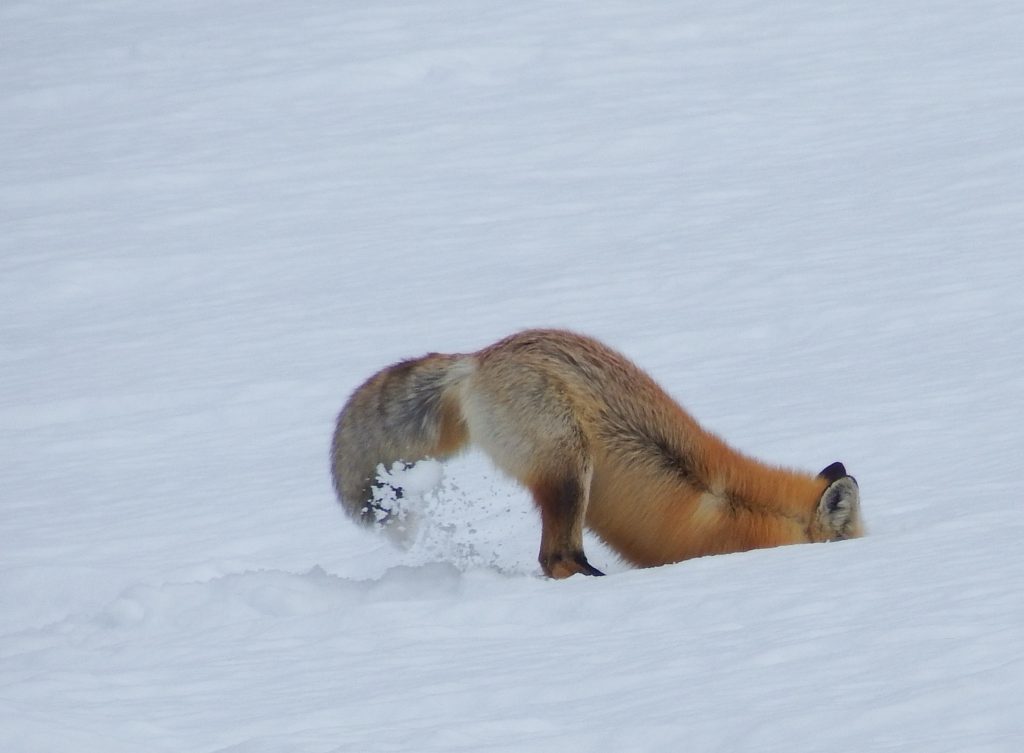
Digging fox

Me: Do you dig?

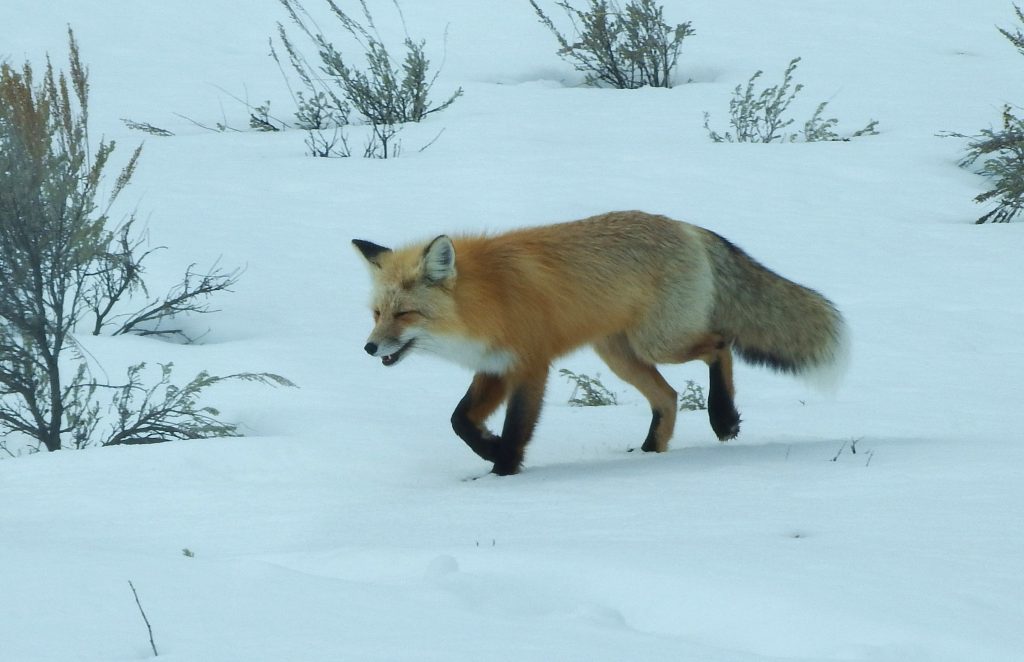
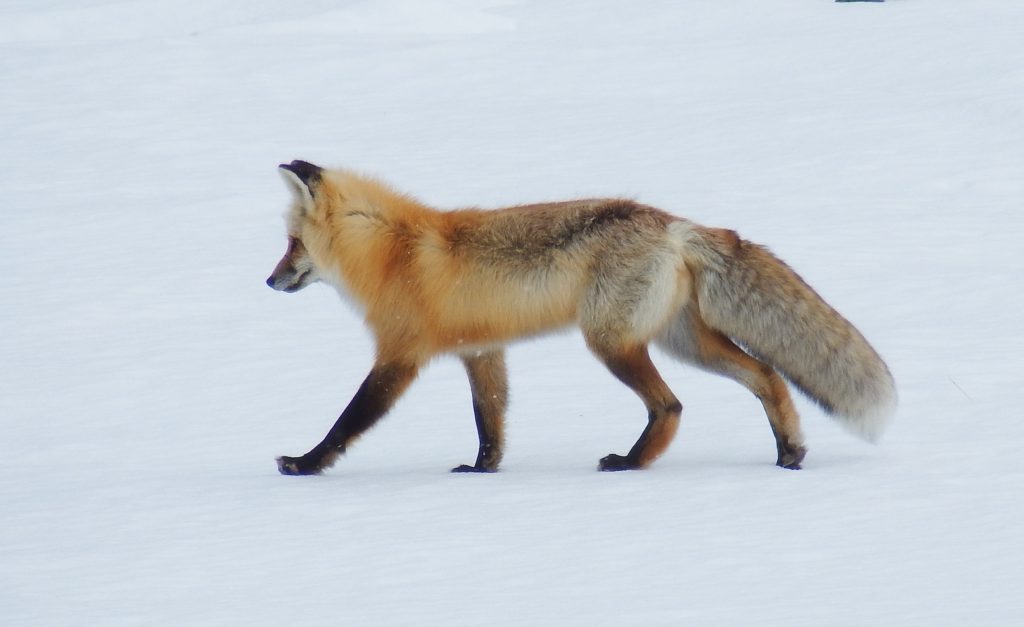
Walking fox

Kira: If you really want to make it hard for yourself, you can dig. But that’s pretty boring. I like to use my ears and my pounce.

Listening fox

Kira: Fox ears are pretty awesome things. All you have to do is walk around on the crusty surface, listening, and soon you hear that first little scratch.

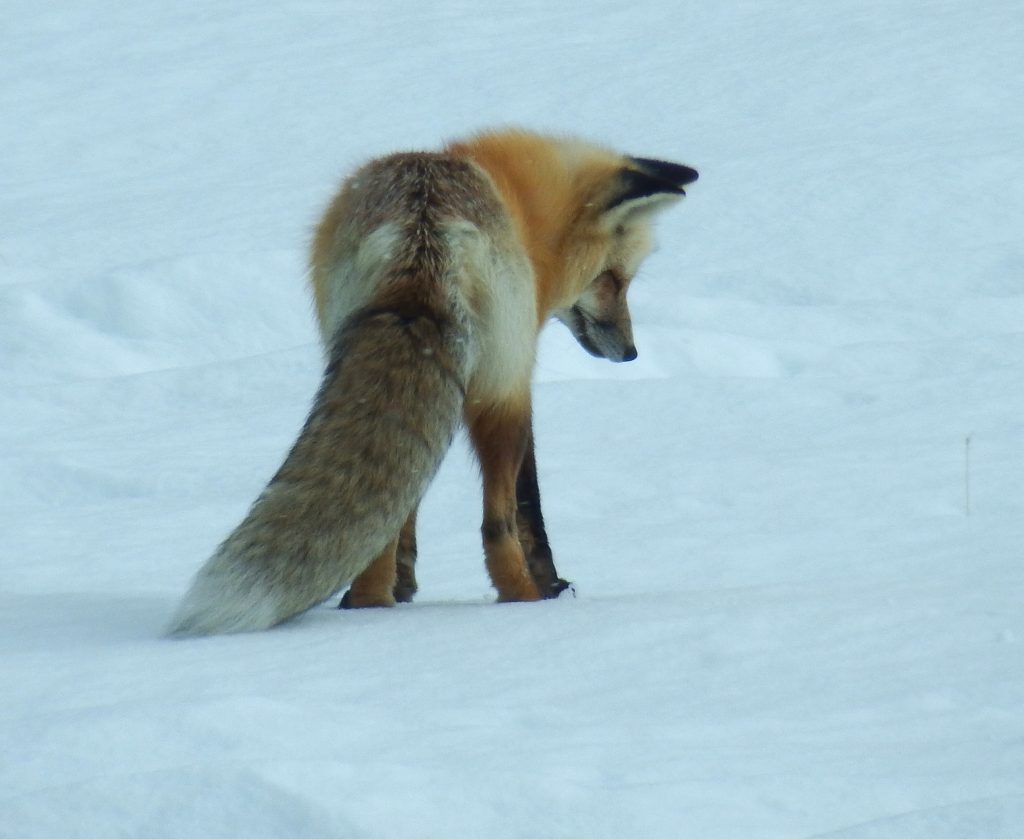
Fox looking at the ground

Kira: Sometimes it’s handy to triangulate. You know, walk back and forth a bit getting your audience excited while also pinpointing the location of the gnawer underneath.

Pouncing fox

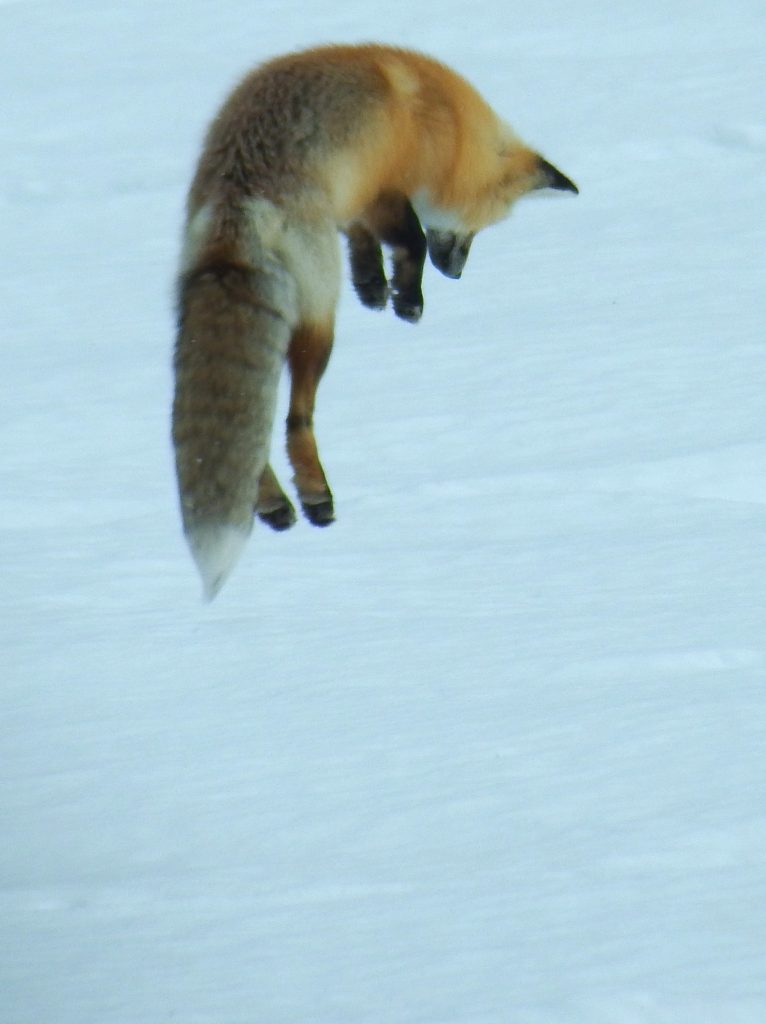
Kira: Then, when you’re ready, you leap…

Leaping fox

Kira: …up…

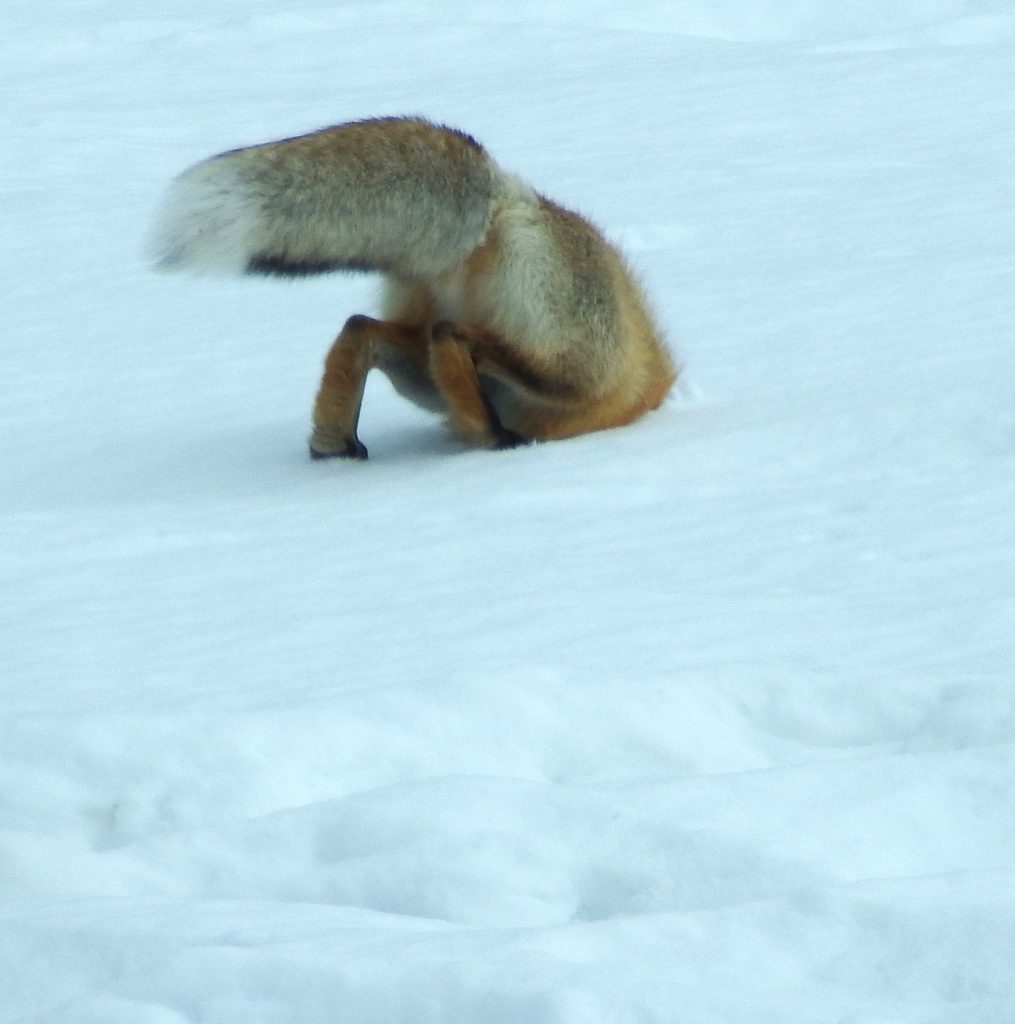
Fox in a hole

Kira: …and down…

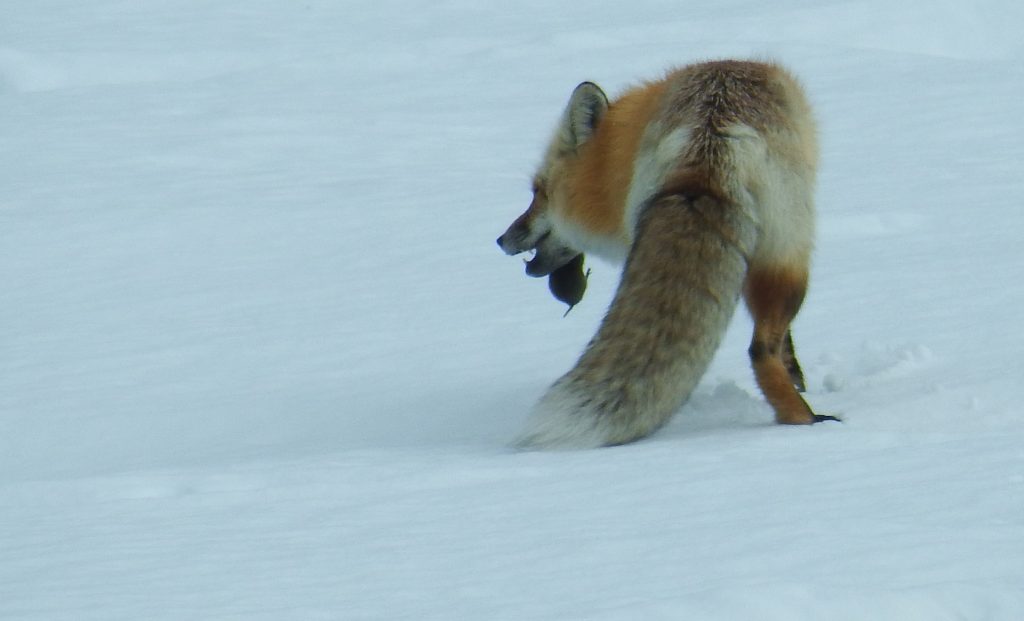
Fox eating a vole

Kira: …and grab it in your teeth. Three voles in twenty minutes. Score!

A fox in the willows

And that is the story of how a fox catches a vole. Stay tuned for more excitement as I delve deeper into my notes in the days to come!

Wanna chime in? I’d love to hear your comments on facebook:
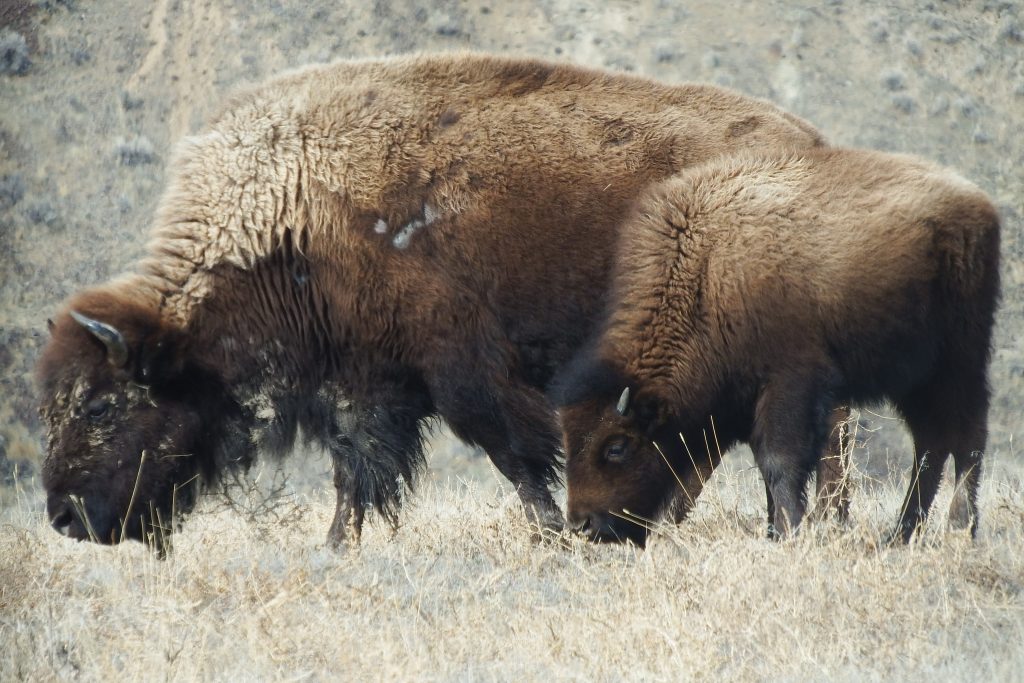
Finding wild wolves in Yellowstone

Yellowstone National Park

Today was our first full day in the park and we were on a mission — finding wolves. On the surface, this sounds utterly impossible. Currently, there are between 80 and 100 wolves living in the 3,741 square mile park. And, okay, so half of the eight packs live in the north range where we planned to be looking. Still — when we headed up into the mountains at dawn, the task felt reminiscent of seeking a needle in a haystack.

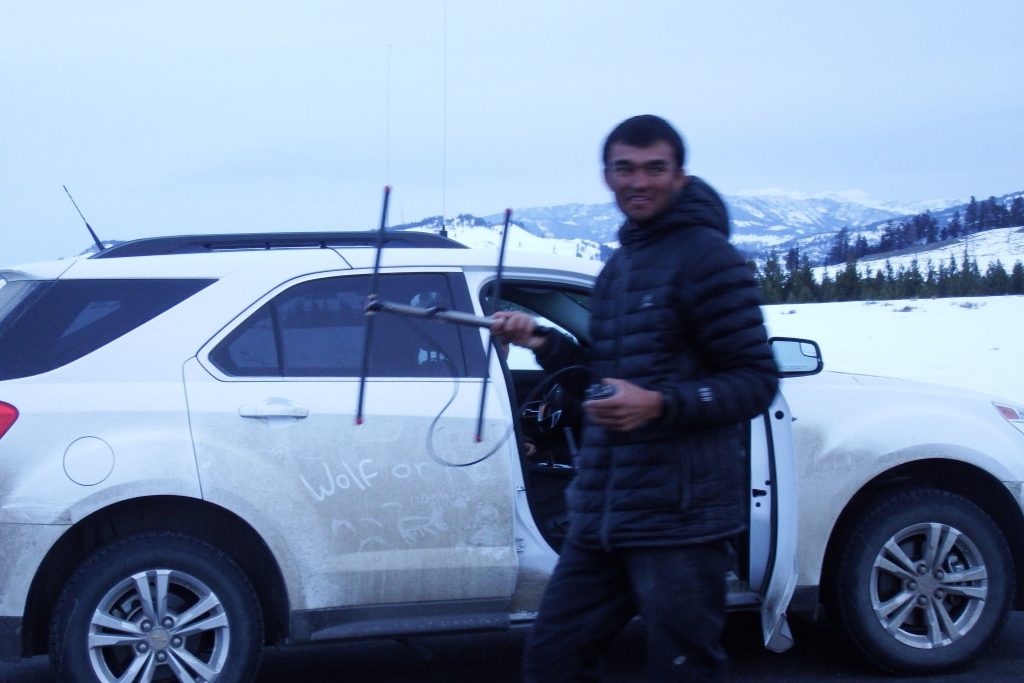
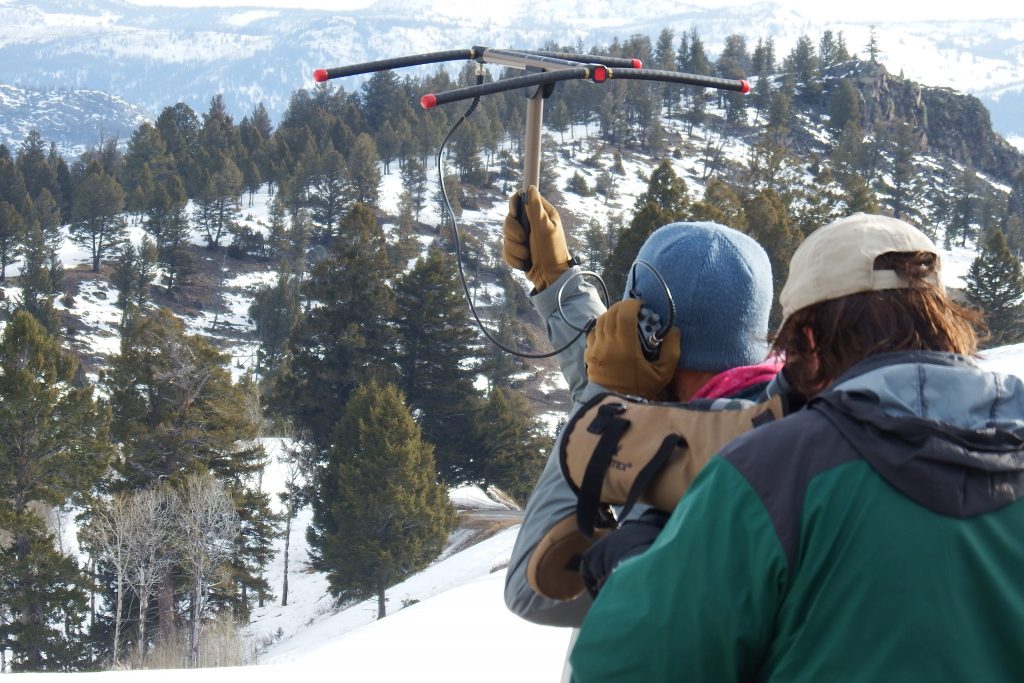
Tracking wolf radio signals

Enter the Wolf Project — a team of hard-core scientists who spend every daylight hour at this time of year tracking Yellowstone’s wolves. At least two wolves per pack wear radio collars that can be picked up as far as five miles away if the terrain is in your favor. On the other hand, if the wolves are hiding down in a ravine, you might not get a signal even if you’re only a mile out.

Yellowstone Wolf Project

Wolf Project did get a signal pretty quickly…but the wolves (Junction Butte Pack) were hiding in the trees. After hours of hopping from spot to spot on the road, setting up scopes, and seeing nothing, our fearless leader caught a glimpse of a lone gray wolf running across the snow…and then the wolf was gone before any of us could find it with eyes, binoculars, or scopes.

Dressed for winter wolf watching

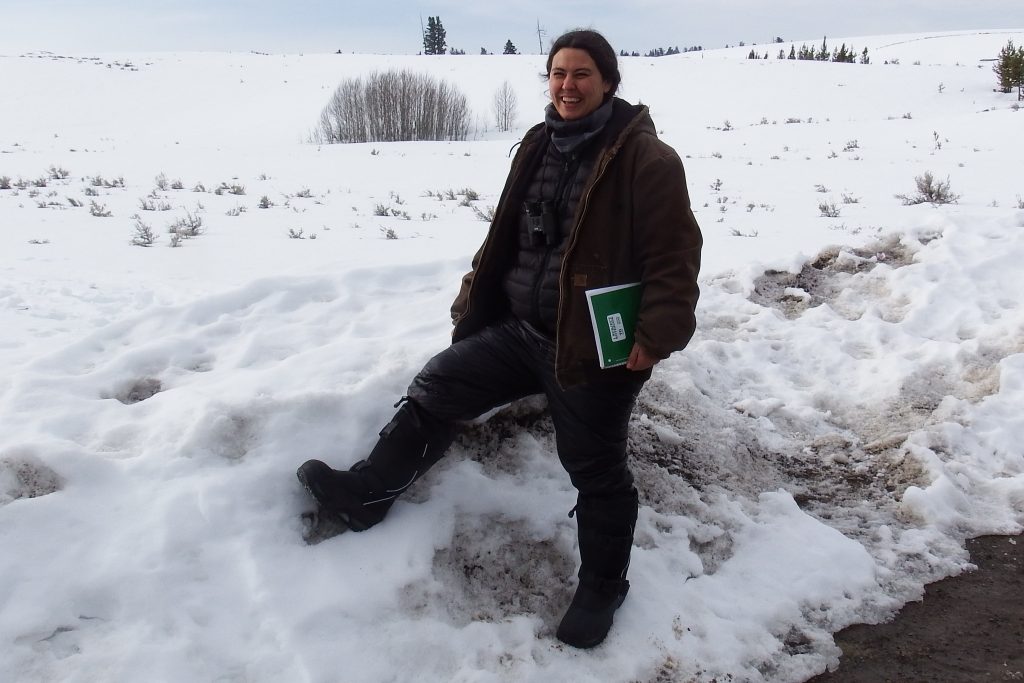
I’ll admit to feeling a bit discouraged at this point. I was overdressed, having packed everything on the recommended list and worn two-thirds of it. Wool socks beneath -100 F boots. Long johns beneath down pants. Six layers on my torso and two on my hands. I was too hot for a hat even though others were stomping their feet at 19 degrees.

Buffalo drinking from a puddle

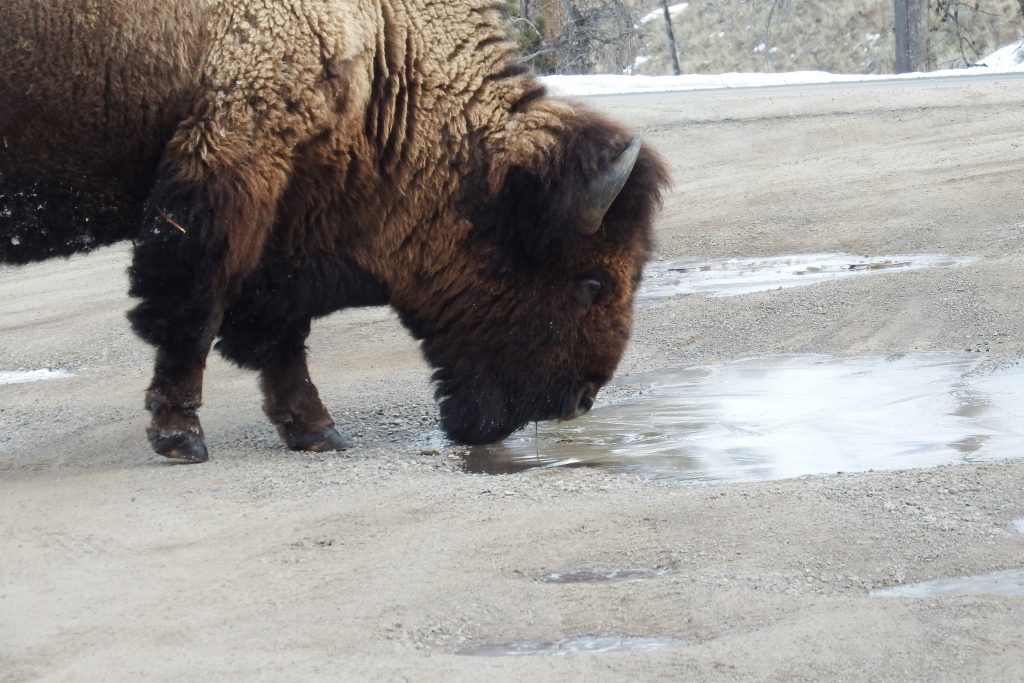
A bison reminded me how good I had it. He took a side trip into a parking area in search of water, breaking through the ice with his nose before drinking long and deep. Afterwards, perhaps spooked by our proximity, he left the pavement and sunk hip deep into the snow, struggling to move either forward or back.

Mini snow man

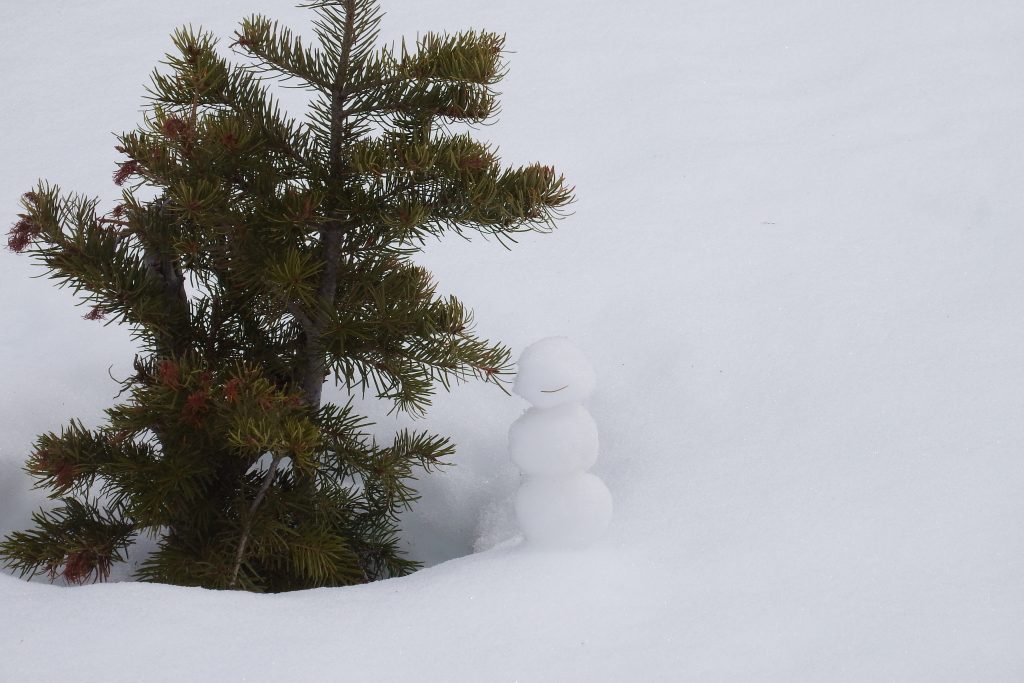
Yes, this is foreshadowing. Pay attention.

Yellowstone lichen

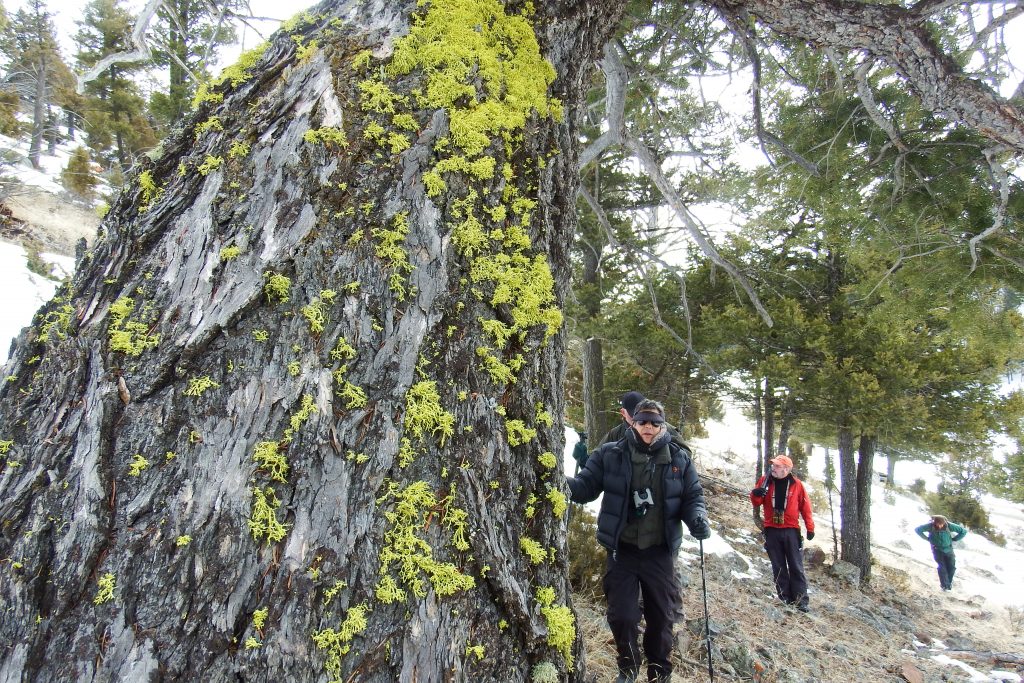
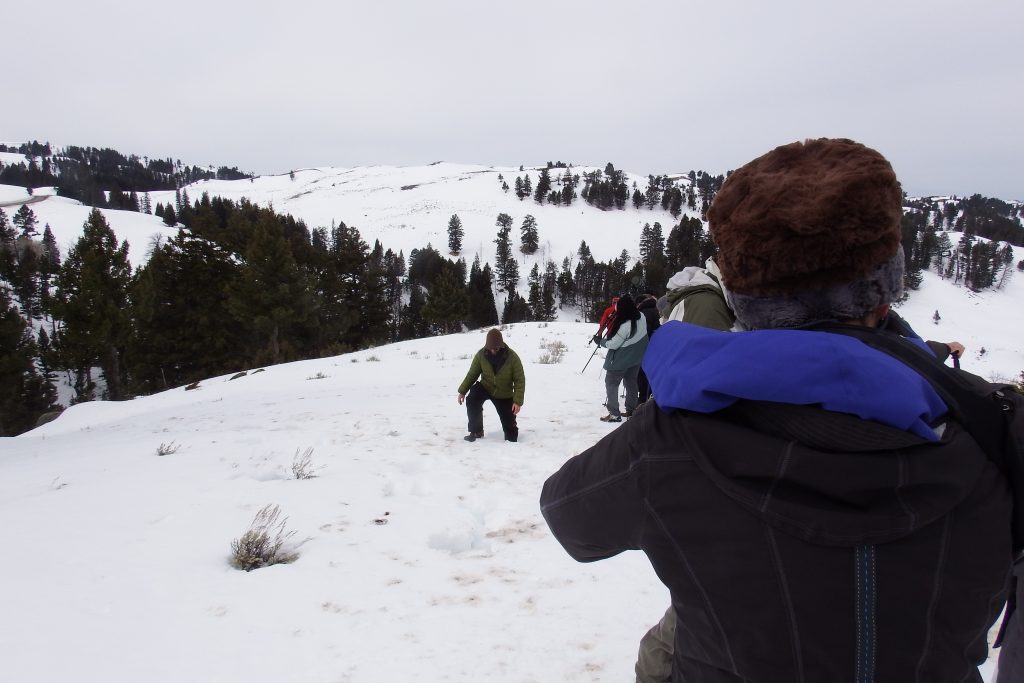
Anyway, back on the trail of the wolf we decided to leave the road and do a little postholing. What’s postholing, you ask?

Post holing

It’s when you walk on a crust of snow that occasionally drops you through into a knee-deep post hole. Then you’re faced with clawing your way out without disrupting the surface so much your other leg breaks through as well.

Suffice it to say, postholing is nothing like ambling down my usual woodland trails!

Magpie

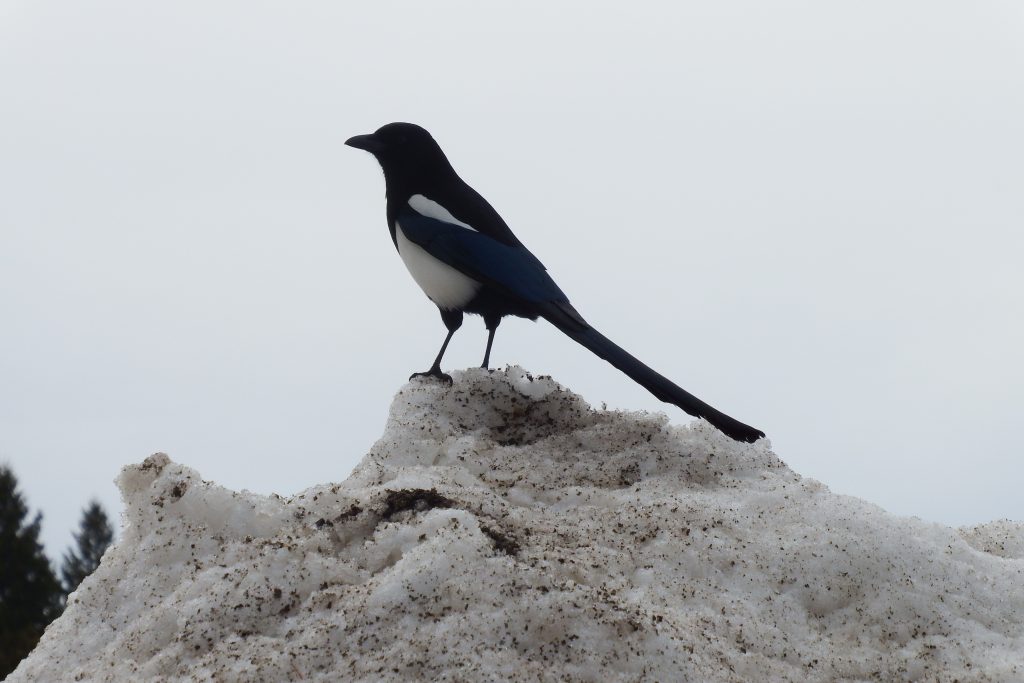
Despite a bit of postholing, I thoroughly enjoyed our off-road excursion…but the wolves still refused to show. So we headed back to Mammoth for a delicious lunch and a bit of bird watching. This magpie is the picture my travel computer feels like posting, but we were also treated to magnificent views of a sleeping male great horned owl and his mate hidden deep in a nest of witch’s broom.

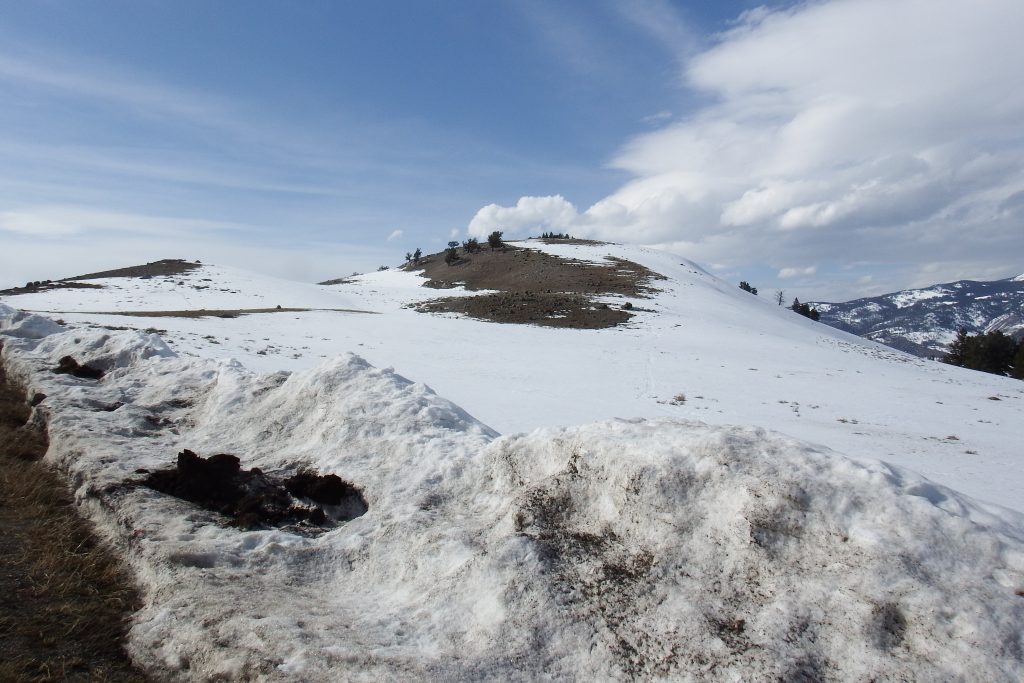
North Butte from a distance

So, yes, there was lots of beauty and wildlife…but I wasn’t the only one who wanted to see wolves. So when our leader came to us with a decision — the 8 Mile Pack was on a kill and we could see it if we walked through a mile of rock and snow — I jumped at the chance to take part.

I was so gung-ho, in fact, that Mary (another wolf watcher) and I set out up the road toward North Butte before our trip leaders had finished handing out scopes and trekking poles. Only after we’d crested the little hill on the left did we look back…and realize the rest of the group was waving at us. We were headed the wrong way.

No problem. We’d cut across the snow to meet them. But the snow was deep — up to our hips in spots. And postholing was happening right and left.

One of my pack mates has a photo I may manage to add later. Taken from a distance, Mary and I are both waving our arms wildly as we attempt not to sink into the snow. But I have one leg submerged and she’s going down to.

Yes, this is why this section of the blog post has no photos. I was far to intent on survival to pull out the camera!

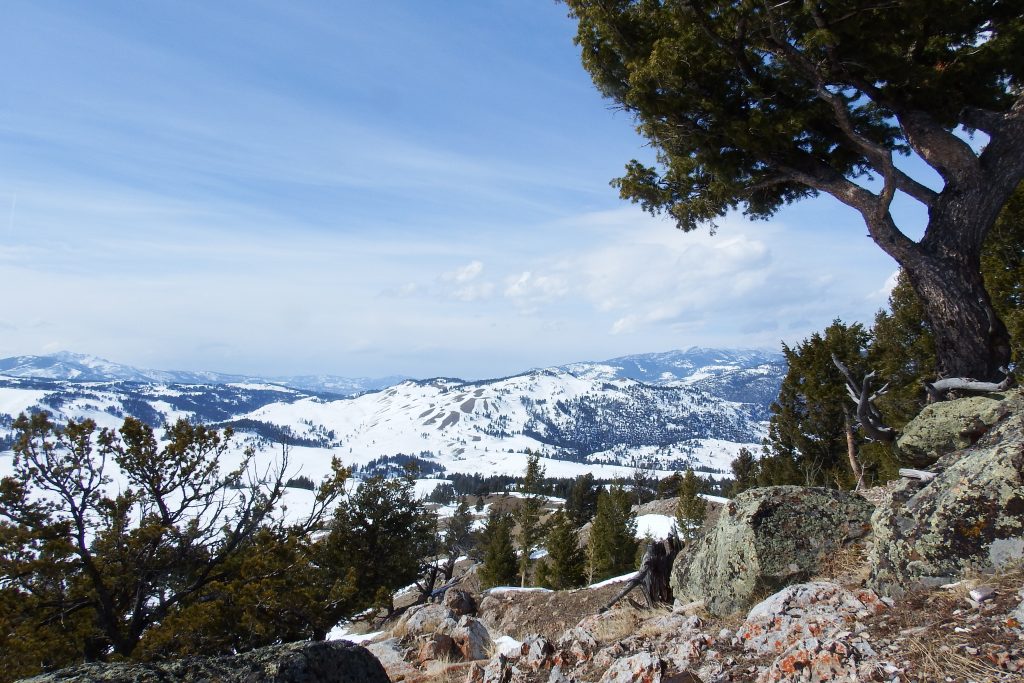
North Butte

At one point, I tried following a bison trail…but apparently I weigh more than a bison. Still, Mary and I pressed on, not smart enough to take turns breaking trail the way wolves do but instead spreading out in our own separate struggle.

Eventually, huffing and puffing, we caught up to the group and continued climbing up the hill, through thin high elevation air, hoping the wolves weren’t gone.


Sleeping wolf pack

They weren’t! At the top, we set up scopes and found them, four black and two gray wolves lounging three hundred feet or so from the elk carcass they’d gorged upon that morning. Through binoculars, they looked like specks. Through the scopes, they looked like lumps.

Then one raised its head…and imagination filled in the blanks. The wolf was real and wild, seeming to peer across the mile of snowy ground that separated our two packs.

“Follow your alpha next time,” I imagined the wolf admonishing me and Mary. Nodding sagely, I lay back and listened to the wind rushing through the pine trees while soaking up my first wild wolf sighting.

And on the way back, Mary and I let our tour guide break trail.

Wanna chime in? I’d love to hear your comments on facebook:
Wolf Watching in Yellowstone: Day 1, charismatic megafauna

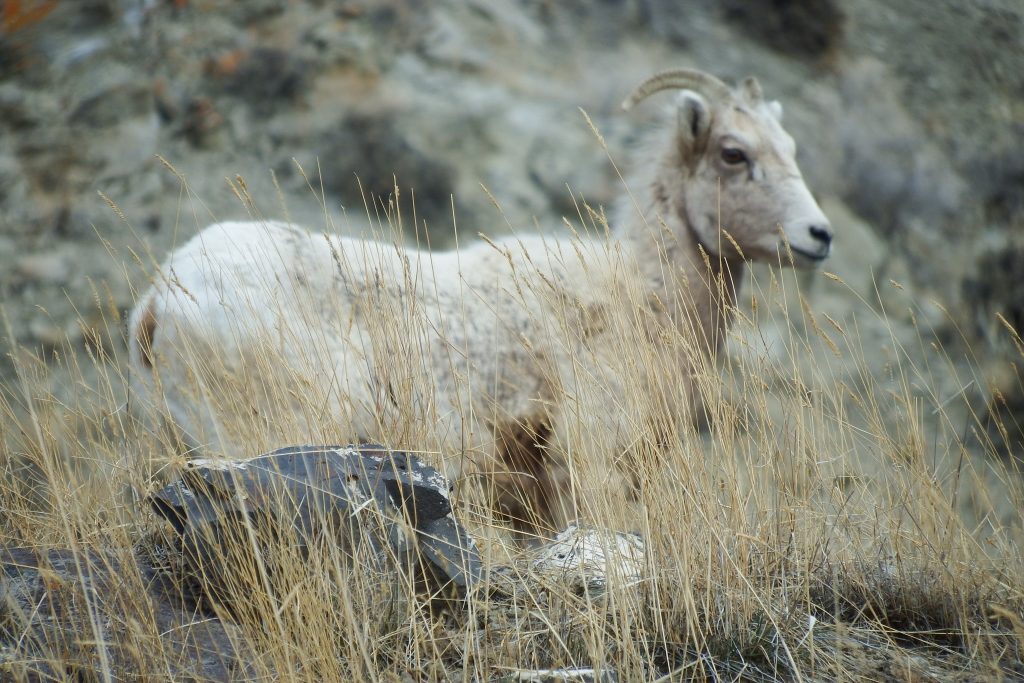
Bighorn sheep

I’m currently enjoying a once-in-a-lifetime adventure — a wolf-watching tour in Yellowstone National Park! I’d planned to save up a week’s worth of thoughts and photos and compile them into several thoughtful blog posts. But the truth is that at the end of day one, I’m just too excited not to share! So, come along with me on this afternoon’s cruise along Yellowstone River on the northwest corner of the park.

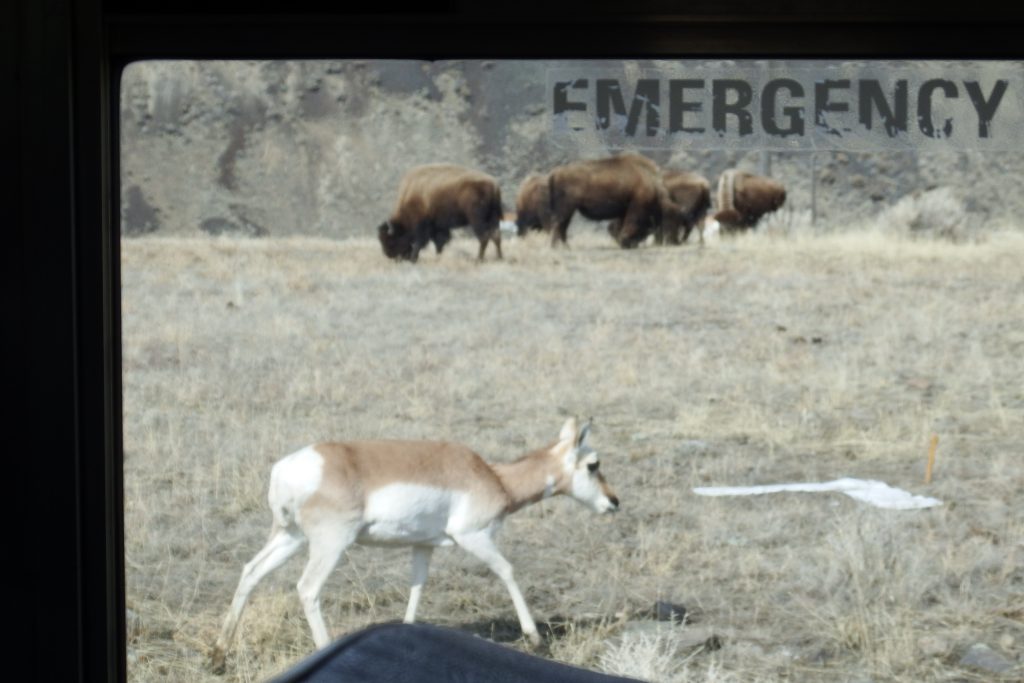
Pronghorn antelope and bison

If you had to guess which of the two species in this subpar photo (taken through the bus window) is considered lunch by wolves, which would it be? Bison or pronghorn antelope?

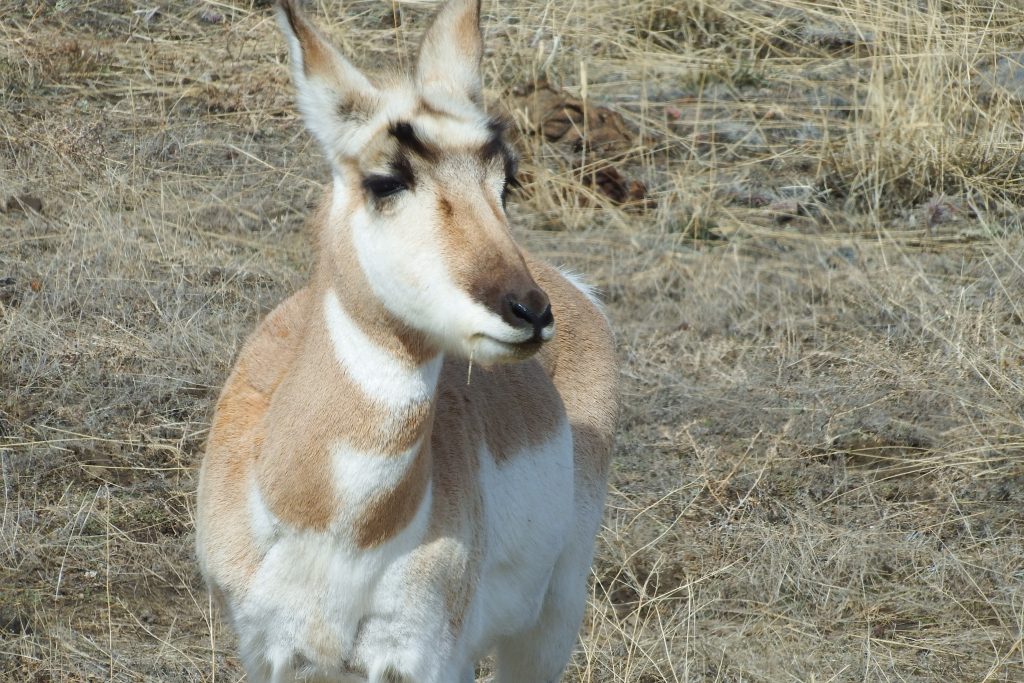
Pronghorn antelope

If you guessed the antelope, you were taken in by these ungulates’ mild appearance. Pronghorns co-evolved with a cheetah-like cat, and now that the ancient felines have bitten the dust nobody can outrun them. That’s right — pronghorn antelopes are too fast for wolves, capable of running up to 50 miles per hour and clocking in as North America’s fastest living land mammal. In contrast, wolves tend to top out in the high 30s mph.

Bison

Bison, on the other hand, can be taken by wolves, especially if a pack can drive the lumbering beasts into dense snow. In fact, there have been sightings of single wolves taking down a bison, although it can be a multiple-hour-long battle. Sometimes it’s better to be fast than big.

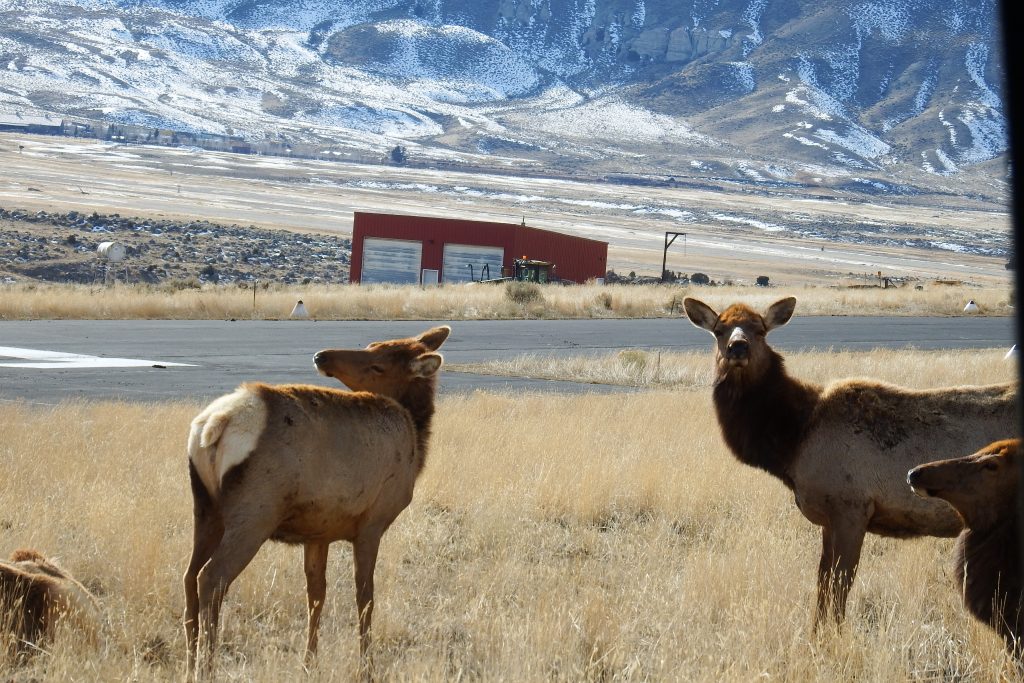
Elk

Of course, a wolf’s favorite food is neither of those species. Here in Yellowstone, a happy wolf is a wolf with access to elk. Given that there are only 80 to 100 wolves in Yellowstone at the moment but approximately 7,000 to 8,000 elk, the packs have a pretty good shot at finding dinner.

Ravens on a carcass

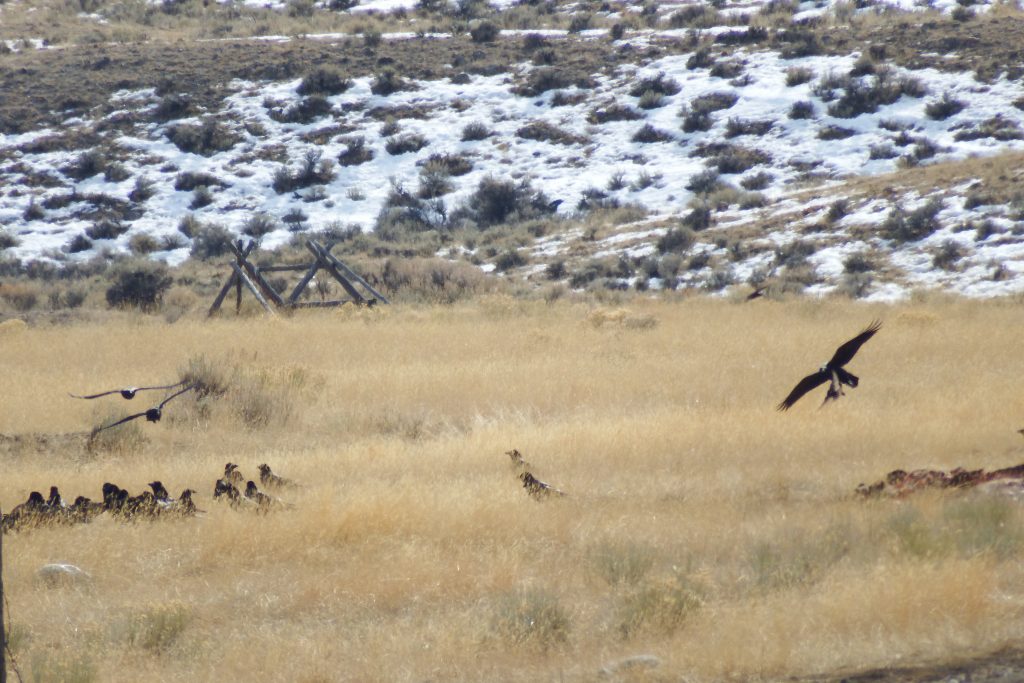
Or rather, breakfast. We arrived far too late in the day to get a chance at spotting wolves on day one, although we did see some of their frequent companions — ravens — nibbling on a human-killed bison carcass. Did you know that some scientists think ravens lead wolves to sick or dead animals, hoping for help ripping through tough hides so both can feast together?

Mountain Bluebirds

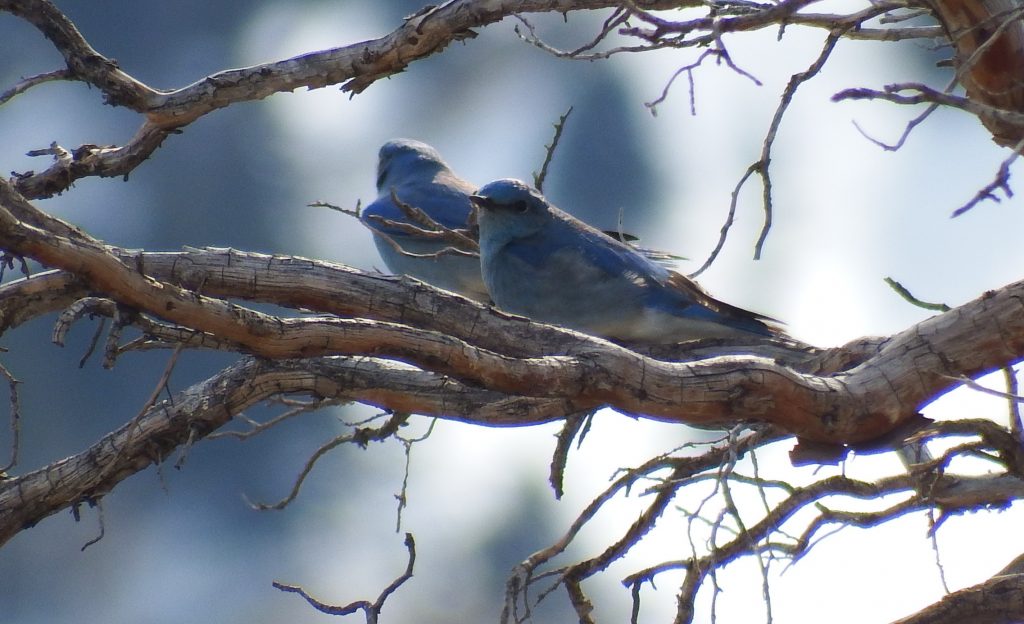
Tomorrow, I hope, there will be more beauty — like these Mountain Bluebirds — and also our first sighting of wolves. Fingers crossed!

Wanna chime in? I’d love to hear your comments on facebook!

© 2026 Aimee Easterling

Theme by Anders NorenUp ↑