USA Today bestselling author

Category: Aimee Easterling’s Inspiration (Page 1 of 5)

Visualizing fantasy worlds

Werewolf worlds

As an author, I build worlds out of words. Outside my mind’s eye, I only see these characters and events when my cover designer waves her magic wand.

Until now, that is.

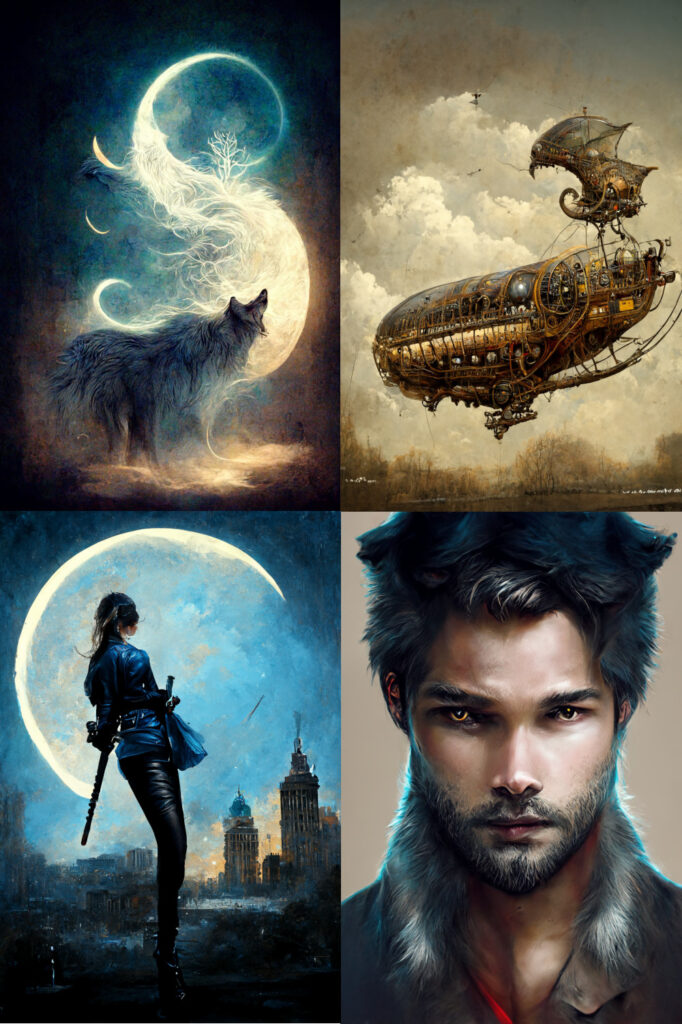
Midjourney is art-creation engine that takes the images in my head and brings them to life…not always with two arms per person and faces on the fronts of heads, but sometimes even better than what I would have imagined. I spent a couple of days immersed in scenes from my various characters’ worlds and ended up with a couple dozen digital paintings that I felt captured the mood I was going for.

Newsletter subscribers get to download the result as part of my Shifter Secrets Extras file. Or, if you’re not keen on hearing from me every other week, you can follow my new instagram account and see images doled out one or two per week.

Either way, I hope you’ll email me at aimee@wetknee.com and let me know what you think. If enough people love the AI-generated art, I’ll definitely make more!

Ideas for celebrating Samhain

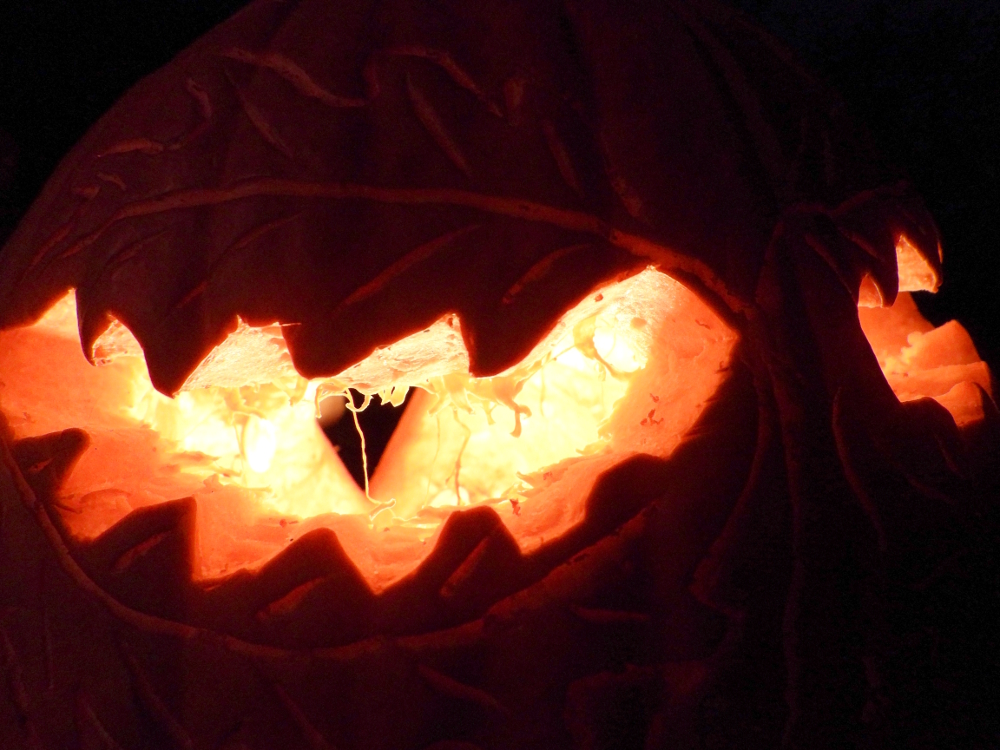
Jack o lantern

Halloween was second only to Christmas as my favorite childhood holiday. (Yes, even though my family didn’t eat sugar, so I had to give away all of the candy I collected.) Dressing up as something else and carving jack-o-lanterns scratched the same creative itch I now pour into my books.


No wonder adult me was intrigued to discover Samhain — the Gaelic festival that Halloween sprang from. The flip side of the Imbolc coin, Samhain is a cross-quarter day marking the coming of the dark instead of the light.


Celebrated on sunset October 31 through sunset November 1, the holiday was traditionally considered a time when the borders between the worlds of the living and the dead were permeable. I used this worldbuilding element in my Samhain Shifters series and enjoy thinking of the ancient roots of the kids currently ringing doorbells dressed up as monsters and ghouls. Back in the day, costumes were believed to protect the wearers from being kidnapped by fairies. Adds a bit of danger to the night!


Samhain witch

Modern Samhain celebrations

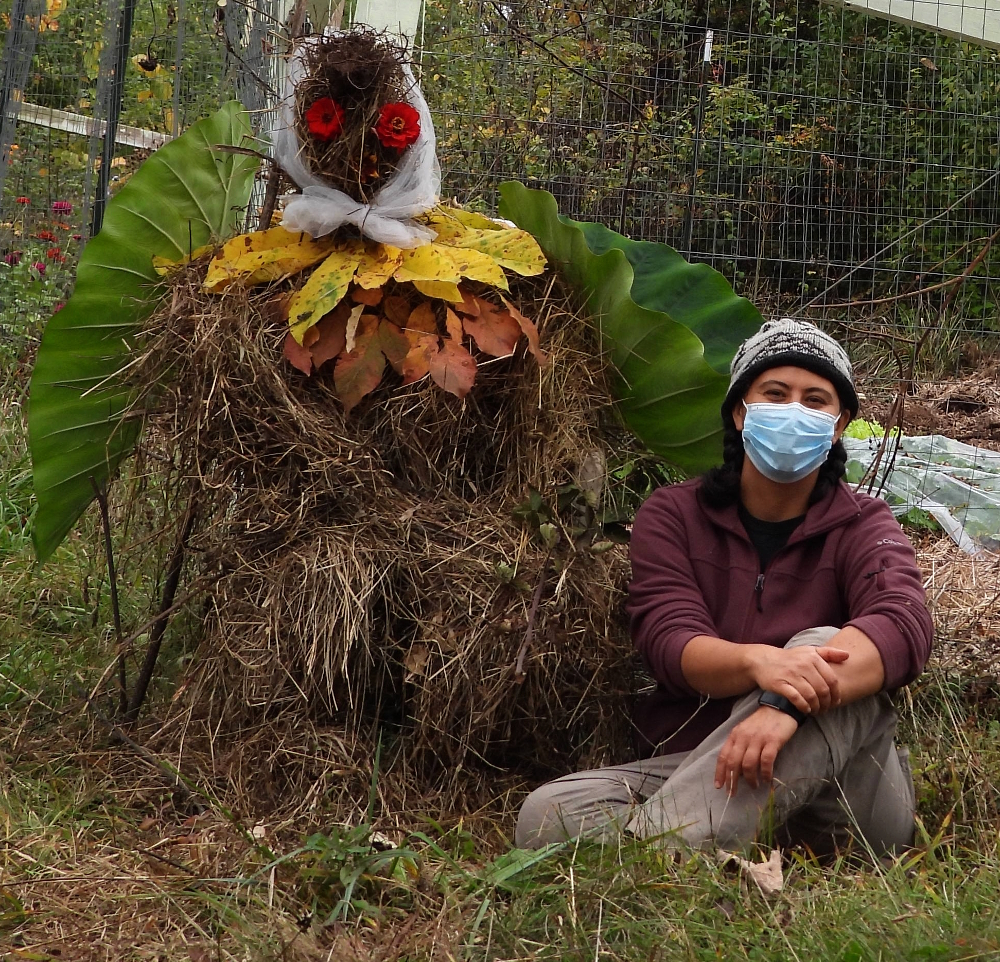
In addition to the costumes and jack-o-lanterns, those of us who regularly sink our fingers into the dirt might focus on the harvest facet of the Samhain celebration. One website suggests celebrating this day by gathering dead and dying plants from your garden and using the debris to construct a person. The result can be a scarecrow-like figure, or perhaps a green man like the one in Susan Cooper’s The Dark is Rising series (and the legend the books are based on). I had great fun last year inviting the neighbor kids down to help me out with this task and our plant creatures protected the garden for several weeks.


Bonfires are another traditional aspect of the Samhain celebration, welcoming winter. Any size fire can be used to symbolically burn away things you want to let go of. Just write the discarded emotions/habits/whatever down and feed the paper to the flame.


Or perhaps you’d rather honor lost loved ones. One method is to build an altar with photos and mementos of the dearly departed and set them a place at the table. Other options include switching traditions and veering off into ideas spurred by the Mexican Day of the Dead tradition.


No matter how you observe Samhain, I hope you take a moment to notice the days getting shorter and the first fog of your exhale on a chilly morning. Nibbling on the first persimmon of the year is perhaps my favorite Samhain celebration, eating carefully to make sure I find no bitter with the sweet.

The Lost Spells

The Lost Spells by Robert MacFarlane and Jackie Morris

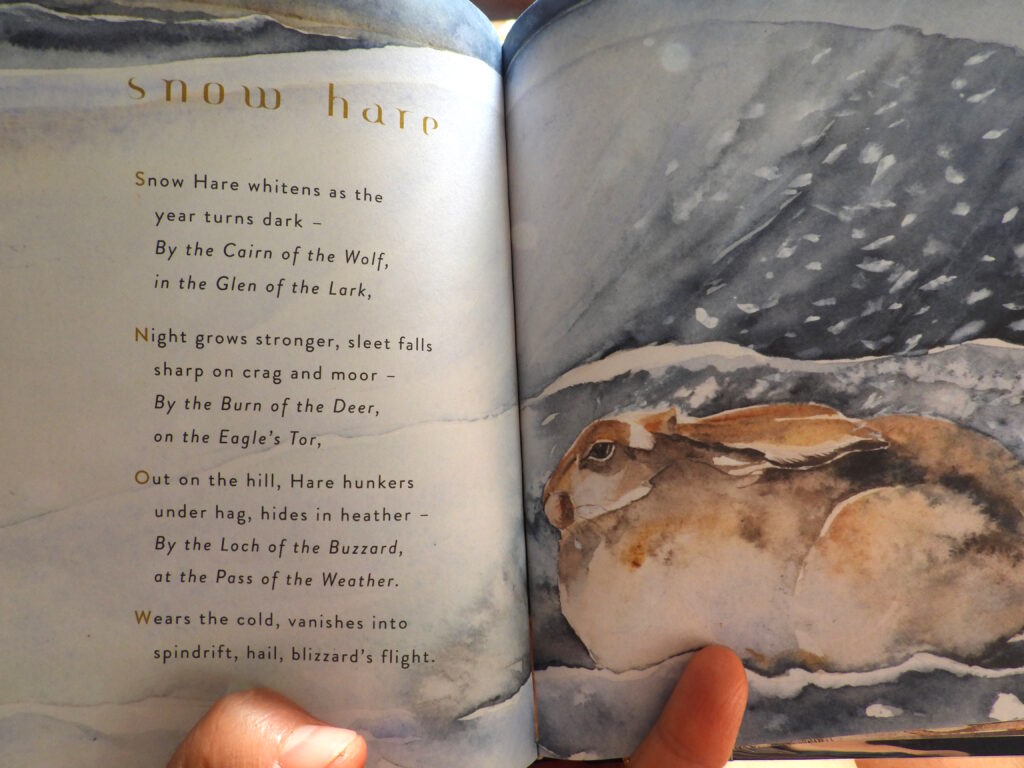
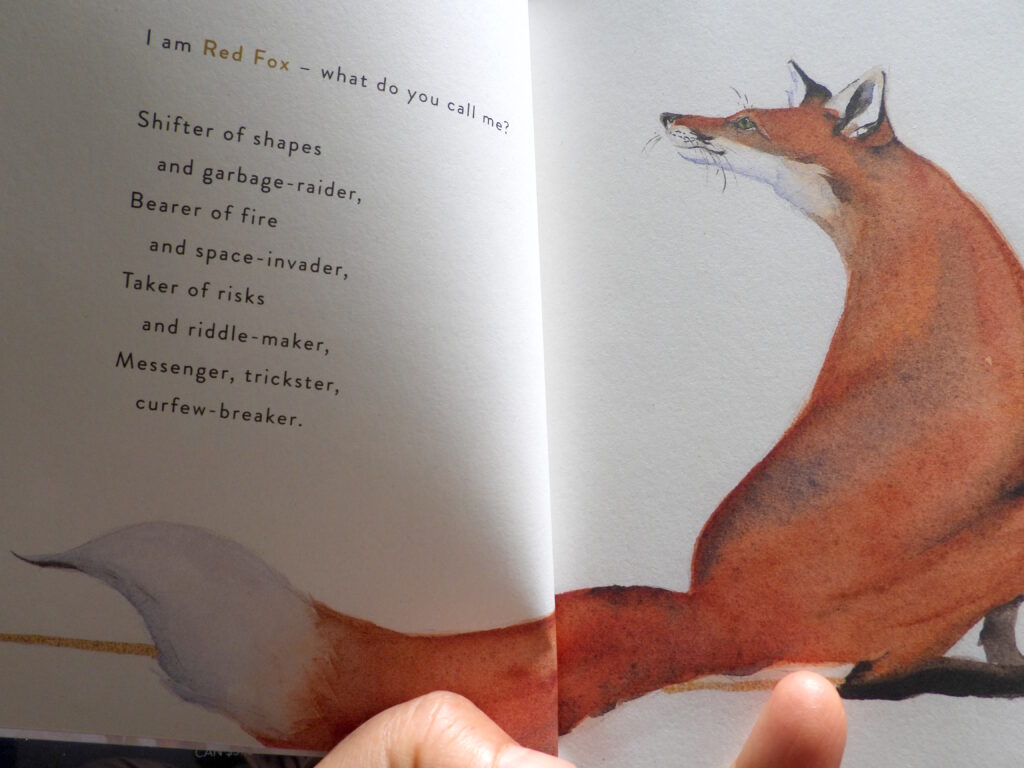
The Lost Spells by Robert MacFarlane and Jackie Morris is a really lovely book that transcends genre. It feels a bit like a children’s book for adults, with the suck-you-in illustrations and the admonition that it’s best read aloud. And, at the same time, the book reads as a combination of going out into the woods and stumbling across something you see seldom enough to be magical plus chanting “When the Dark Comes Rising” at the top of your lungs in your city backyard when you’re too young to realize the neighbors are going to think you’re a witch.

Red Fox poem

Highly recommended even by this non-poetry lover. (Yes, poetry is the genre the publisher chose for all of this awesomeness.)

Celebrating Imbolc

As a gardener and nature-lover, I’ve always been drawn to the cross-quarter days. These holidays are important in my Samhain Shifter series (and in the Celtic belief system that series is roughly based on), so I thought you might enjoy hearing more about them.

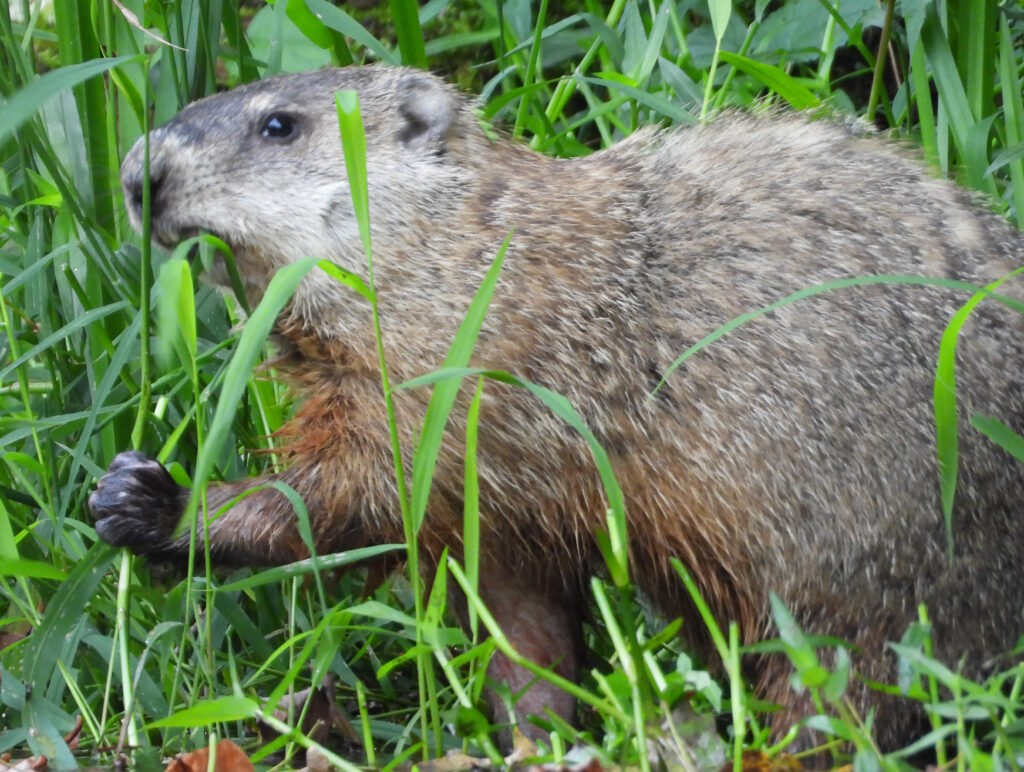
Less well-known than the solstices and equinoxes, the days halfway between often feel like the true start of each season. And this week marks one of those cross-quarters — Imbolc, aka Brigid’s Day, aka St. Brigid’s Day, aka Là Fhèill Brìghde, aka Groundhog’s Day!

Astronomically, the cross quarter falls on February 3 or 4, but it’s sometimes celebrated earlier. Brigid’s Day is generally listed as beginning at sunset on January 31 or sunset February 1, while  Groundhog’s Day (more on how that crazy holiday came about next) is on February 2.

I’m not a stickler, so I celebrate whenever the whim strikes me within the relevant week.


Weather divination

Groundhog

I’ll start with the part of the holiday Americans have probably heard the most about — forecasting the severity of the rest of winter. Twenty years ago, during a visit to Australia, I tried to explain that Americans “believe” (or want to believe) that a groundhog coming out of its burrow on February 2 foretells the future. The Australians thought I was a nut.

When I learned the Celtic origin of the belief, though, it made more sense. Cailleach is a goddess known as the Queen of Winter in Scottish folklore. Like us, she tends to run low on firewood around the beginning of February (oops!), on the day the Scottish call Là Fhèill Brìghde. So she heads out into the woods to collect more.

Unlike us, though, Cailleach both knows what the weather is going to be like for the rest of the winter and can change the current day’s conditions. So, if it’s going to be a hard late winter, she’ll make Imbolc bright and sunny to allow for plenty of firewood gathering. On the other hand, if winter is pretty much over, she’ll let the day be gray while she sleeps in.

Now, doesn’t that make more sense than a divinatory rodent?


Celebrating Imbolc with Fire

Burning the Christmas tree

The goddess Brigid is Cailleach’s counterpart, associated with homes, livestock, milk, and the coming of spring. There are lots of ways to celebrate her return, but I chose a couple that particularly spoke to me.

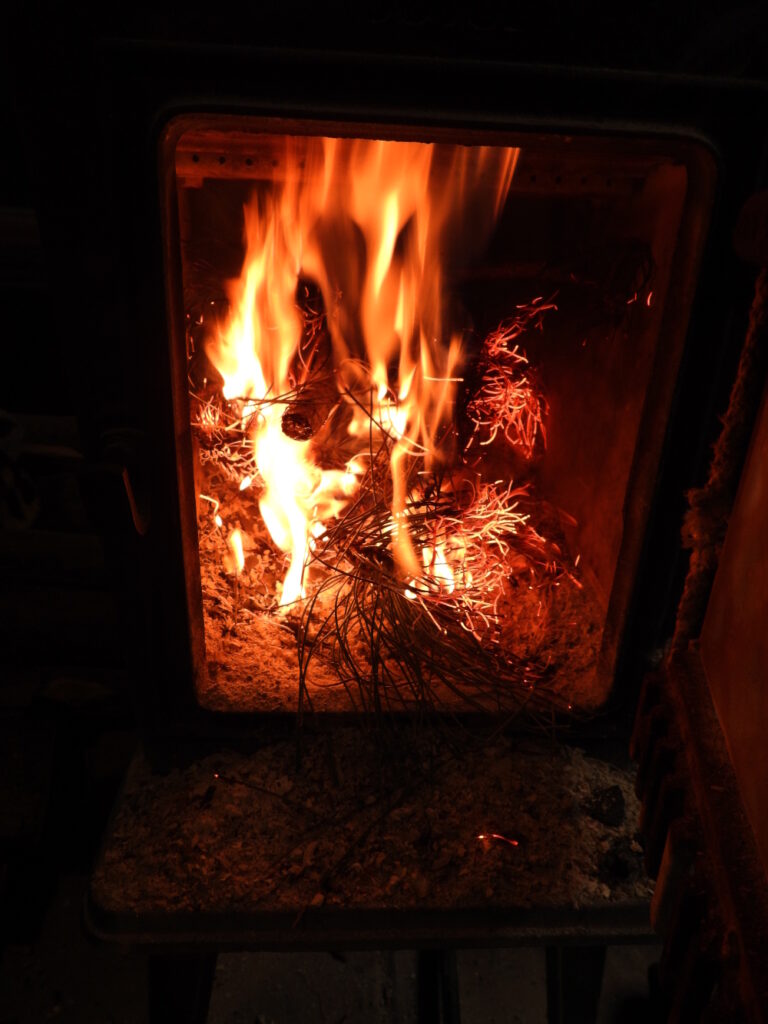
Fire is an obvious choice for Imbolc since it symbolizes the return of sun and the coming of spring. My husband and I took down our mini Christmas tree to celebrate the turn of the seasons and stuffed it in our woodstove as a symbolic gesture.

If you plan to follow suit, be aware that conifers burn hot. We wouldn’t have put more than our one little limb in an indoor stove. I’ve seen folks throw full-size Christmas trees on outdoor bonfires though. Or, if you want to play it safe while keeping the same symbolism, how about burning a paper snowflake instead?


Celebrating Imbolc with Water

Sacred water

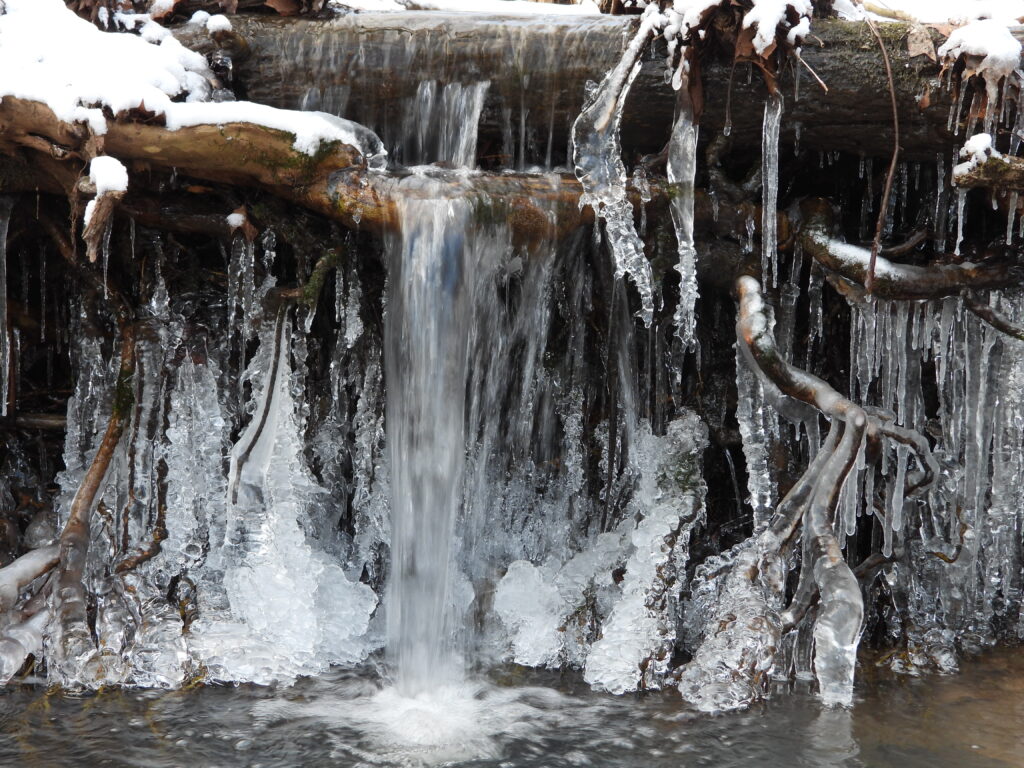
Another facet of Imbolc is the beginning of a new year. Ritual spring cleaning is one way to celebrate, but that sounded more like work than play to me. Instead, I’ll visit a holy well (which I translate broadly as any body of water that feels particularly powerful) and walk sunwise (clockwise) around it to celebrate the turn of the seasons.

How are you celebrating the cross-quarter? I hope you’ll click through to facebook below and let me know!


As a gardener and nature-lover, I’ve always been drawn to the cross-quarter days. These holidays are important in my…

Posted by Aimee Easterling on Monday, February 1, 2021

Of Wolves and Men

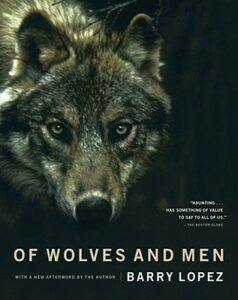
Of Wolves and MenOf Wolves and Men was written shortly before I was born, and small parts of it are dated. However, the overall theme of the historical human relationship with wolves stands the test of time.

My favorite sections involved the intersection of Native American and wolf culture. Both two-legged and four-legged hunters would stalk antelopes in Wyoming by lying low in tall grasses, twitching their tails to draw in curious prey animals. Elsewhere, both wolves and people hunted bison by chasing them out onto lake ice where they’d slide around and become easy to kill. And Lopez suggested that deer responded similarly to both wolf and human territories, sticking to the disputed space along borders where neither hunter was likely to go.

Another favorite part of the book was when the author recounted an experience tracking a wolf and a fox. The former had made a kill alone and was preparing to cache the meat it couldn’t cram into its stomach for later, but the wolf knew a fox was hanging around waiting for scraps. So the wolf traveled in crazy loops, hopping through puddles and generally going to great lengths to hide its trail before digging a super-secret cache.

The fox got the meat anyway.

Other tidbits: I was intrigued to learn that the metal spikes on dog collars were originally envisioned as protecting dogs against wolves. And howls may be used, among other things, as a “mood-synchronizing activity.”

I’ll let you dig deeper into the book yourself but will provide one warning. The third section is about human attempts to eradicate wolves and it’s a tough read. You might skip straight over that and head into the folklore near the end.

The Hidden World of the Fox

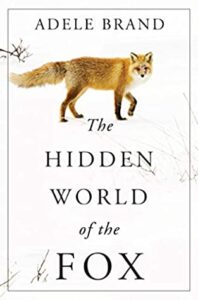
The Hidden World of the FoxAdele Brand’s book is a lovingly written, easy to read, but far from exhaustive window into the red fox’s world. Most the text is about the European foxes the author has had personal experiences with (which she notes are considered by some to be a different species than the North American red fox). Here are some of my favorite takeaways:

I hadn’t realized that red foxes in Britain have been folded into not-so-wild areas, both living wild in cities and fed in backyards the way Americans feed birds. (A different source suggests urban foxes are evolving to be more doglike than their rural counterparts, which is an intriguing corollary). This actually matches up with my anecdotal survey of fox populations in the U.S. — I smell them regularly during my woodland hikes while very rarely seeing them, but a suburban friend says they’re pretty common where she lives.

How (other than smell) do you know foxes are present? My friend often hears them (probably most frequently in midwinter when they’re mating) and sees them as roadkill. And while we think of foxes as nocturnal, Brand notes that they’ve just learned to be leery of humans and move their activity to night when we’re around. All of that said, game cameras will dramatically increase your odds of seeing a fox. Set the camera up about a foot and a half off the ground, pointing up a game trail (rather than across).

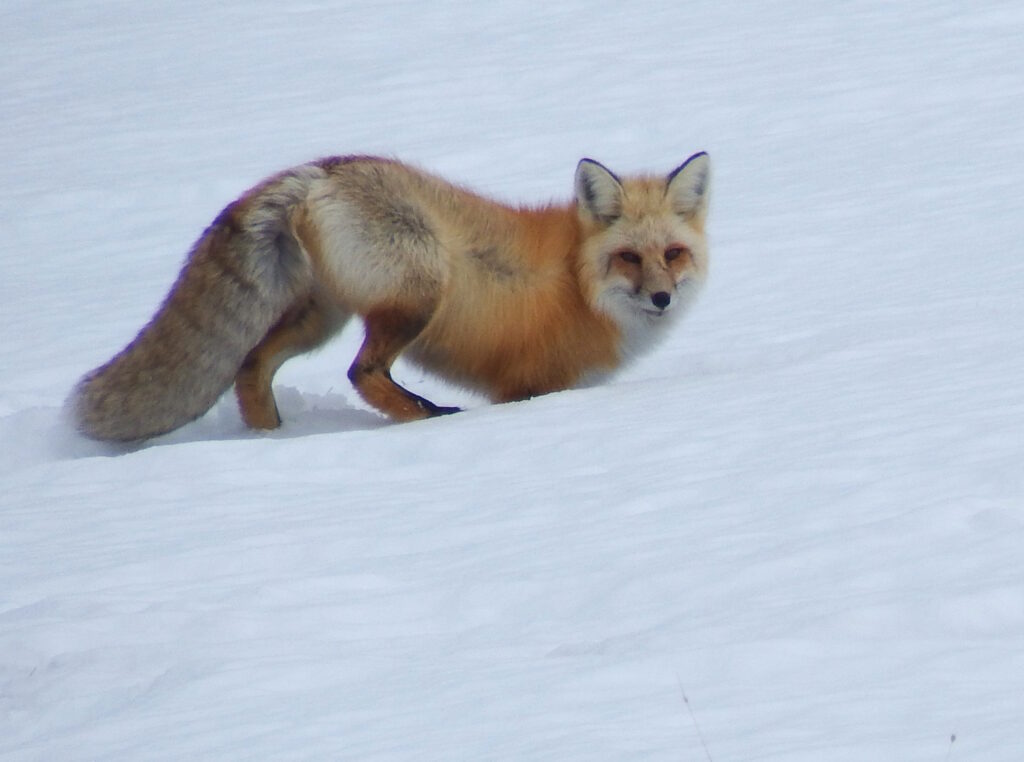
hunting fox

Brand goes on to explain that a fox requires “nine voles or one rat daily – or one double cheeseburger with fries.” A mother fox will need to add on two additional voles a day per cub. And since their stomachs are small, foxes can’t go long periods like wolves do between meals. Instead, they need to snack often, sometimes on earthworms or carrion (although rodents are their main prey).

The experienced viewer can tell male and female foxes apart by the shape of their faces. Vixens (females) have narrower faces while dogfoxes (males) have broader cheekbones that make their faces look W-shaped.

Brand writes: “Territories are really the construct of male foxes; a vixen, rather like a Victorian woman, holds property only as a proxy of her mate.” A fox territory is often home to a breeding pair, subordinate females who usually don’t breed, cubs from the previous year (usually female), and possibly a transient male or two.

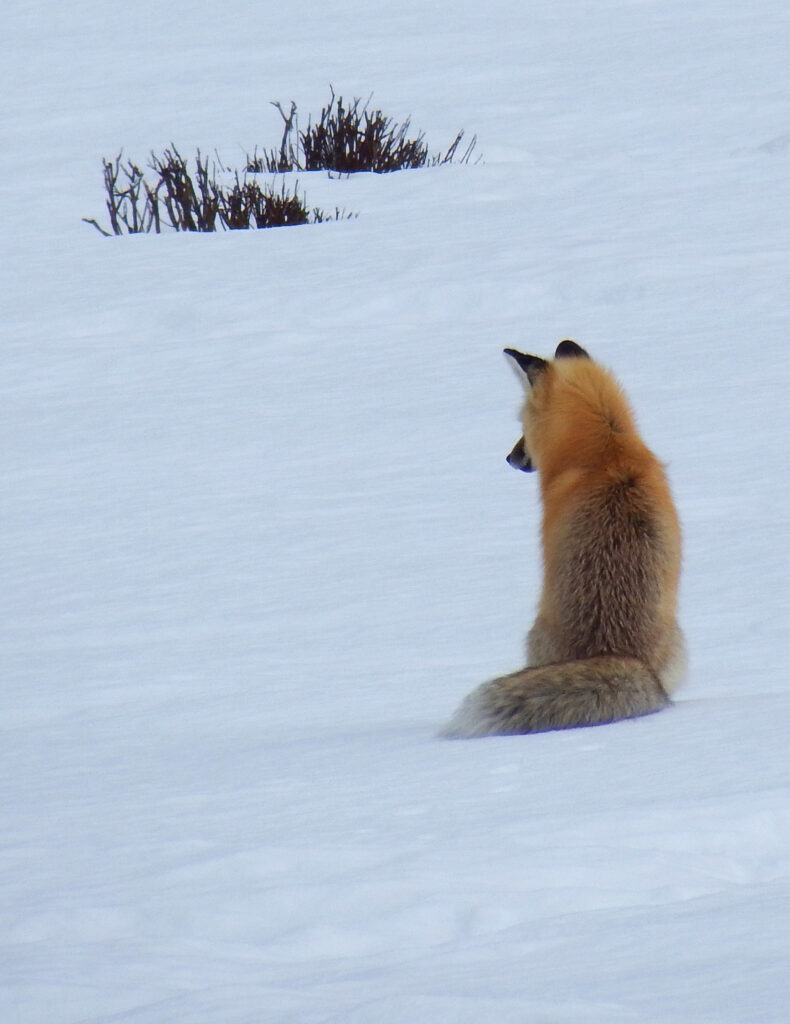
Sitting fox

Finally, I’ll end with an absolutely crazy story Brand told about a German fox who “gathered shoes to a fantastically obsessive level. For over a year, steel-capped workmen’s boots, wellingtons, and slippers all vanished from doorsteps. When a forestry worker stumbled upon her den, an astonishing 86 shoes were stashed around it. Another 32 were found nearby in a quarry. The count of the town duly had laid them out in his palace for their owners to collect – and put out a gentle advisory to keep footwear indoors at night.”

Intrigued? There’s plenty more where that came from, but you’ll need to read the book for the rest. Alternatively, you can read my far-more-fantastical take on foxes in the city in the free book Wolf’s Bane.

Reading week

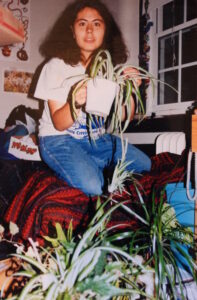
Aimee Easterling in collegeTwenty-five years ago, when I first showed up at college, I immediately pored over the academic calendar. “Reading week!” I exclaimed, imagining seven solid days of curtailed classes and assignments. We’d all sit around on bean bag chairs, sipping hot chocolate, gorging on pizza, and reading silently. Now and then one of us would share an amusing tidbit, then we’d all return to our books.

Unfortunately, the reality was very different. First of all, reading “week” was only two or three days long. Second, the period occurred right before finals, so our time was spent frantically poring over class notes while reciting our school’s unofficial mantra under our breath. “Anywhere else it would have been an A….”

Fast forward ahead to the present, and I sent Charmed Wolf off to the beta reader last week. Pre-pandemic, I used to spend those two weeks filling my brain with different ideas via travel before starting to brainstorm the subject matter of my next book.

Travel isn’t currently advisable, but reading — especially the non-fiction that tends to pile up on my shelf waiting for my attention — can transport me while feeding the bubbling soup of my imagination. So I decided to recreate the Reading Week that naive frosh imagined in 1996.

To that end, I’ll be curled up on the couch each morning this week, in front of our wood stove with zero to two cats plus some dark-chocolate-covered almonds and clementines (my current snacks of choice). I’ll fall into my kindle and, when something interesting jumps out at me, I’ll come over here and share tidbits on my blog. Stay tuned!

The root of my storytelling gene

Since today is my birthday, I thought you might indulge me sharing an old family story that contains no werewolves or supernatural elements. This essay was written by 17-year-old me as part of an application for a scholarship from the Daughters of the American Revolution.

(No, they didn’t give me the scholarship. I can’t imagine why not.)

***

Most of my mother’s ancestors were blond, blue-eyed people. They traced their descent on her father’s side from Sweden and on her mother’s from Saxon stock. So the question arose: Why did my grandmother, my mother, and I all have dark hair and eyes?

Once, my grandmother was told by her angry grandmother that she was just like “that woman” with her dark hair and snapping black eyes. At the time, a woman was expected to be meek and obliging, not willful and defiant.

My grandmother showed me a picture of “that woman,” who turned out to be Mary Greene, my great-great-great grandmother. The photograph was black and white and much faded with age, but I could easily distinguish the woman who my grandmother was supposed to resemble. Mary Greene’s hair was white and the old woman sat peacefully in a large chair. And yet, I saw the same pride in her face that I often see in my grandmother’s, the pride I hope to find in my own face.
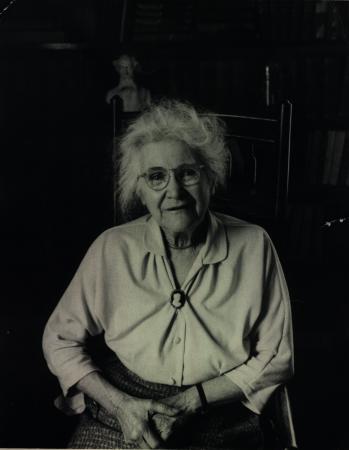
I think this is the picture 17-year-old-me was referring to…but if so I was a bad listener. This is my great-grandmother.

The Greenes, so the story goes, lived in Hope Valley, Rhode Island, and often went to Shawomet, by the shore. Some of my relatives remember picnics at the traditional family farm in Rhode Island. However, the Greenes lived long before the memories of these relatives, in a simpler time when people walked the few miles to the beach to sharpen their scythes in the sand.

I like to imagine that these distant ancestors were good people, and their deeds certainly seem to indicate kindness. After one of the violent storms that blew in off the ocean, the Greenes found a shipwrecked girl tossed up on the beach and took her in. Their dark-complexioned foundling was named Mary Greene and, although she was well-loved, she never quite blended into the family. She looked different; but, more than that, she was independent.

Mary Greene grew up and lost some of her impulsiveness, although she was never a conventional woman. She married a blond Yankee like those in her adopted family and soon they had four small children, each of whom kept at least a small part of Mary Greene’s features and will. Her third child named his first child Mary Greene after her grandmother. However, the girl’s mother believed, as most people did at that time, that a woman should be tractable and obedient. Therefore, Mary Greene the elder’s daughter-in-law was never in accord with her new mother-in-law.

The willful streak of darkness slipped down through the generations until my grandmother stamped her foot angrily and was told by that daughter-in-law (now a grandmother) that she was just like “that woman,” the defiant waif who family lore supposed was Spanish or Portuguese or perhaps Native American.

Mary Greene was a woman born at the wrong time, but her descendants inherited the fortitude and defiance necessary to survive in twentieth century America. That willful, wonderful woman imparted to my grandmother the ability to travel to Panama as a dietician at a time when many women didn’t have jobs outside the home, let alone outside the country. I am anticipating with pleasure the ability Mary Greene has bequeathed to me.

***
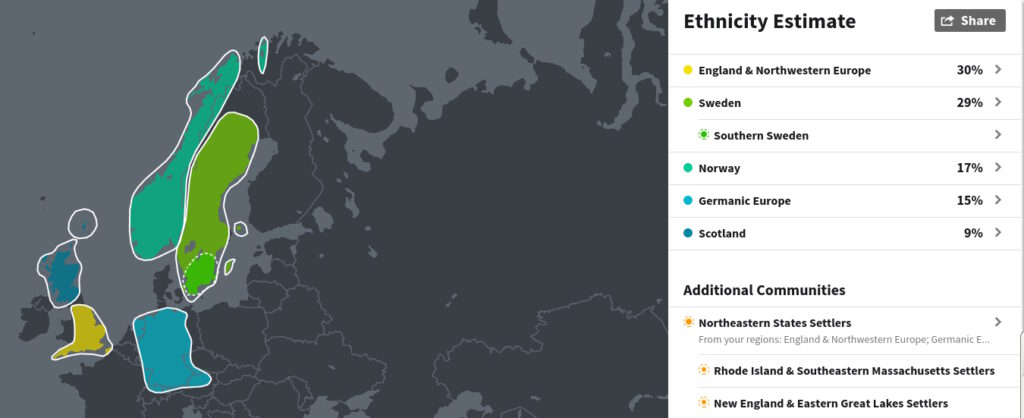
In case you’re curious, a DNA test of my mother combined with some genealogical sleuthing suggests that “that woman” was likely of Germanic descent. An odd coincidence since my father’s side of the family is largely from Austria and Germany and is also dark-haired and dark-eyed.

But that — including the butcher who could write two different letters with his right and left hands at the same time — is a story for another time.
Selkies and swan maidens and woelfin

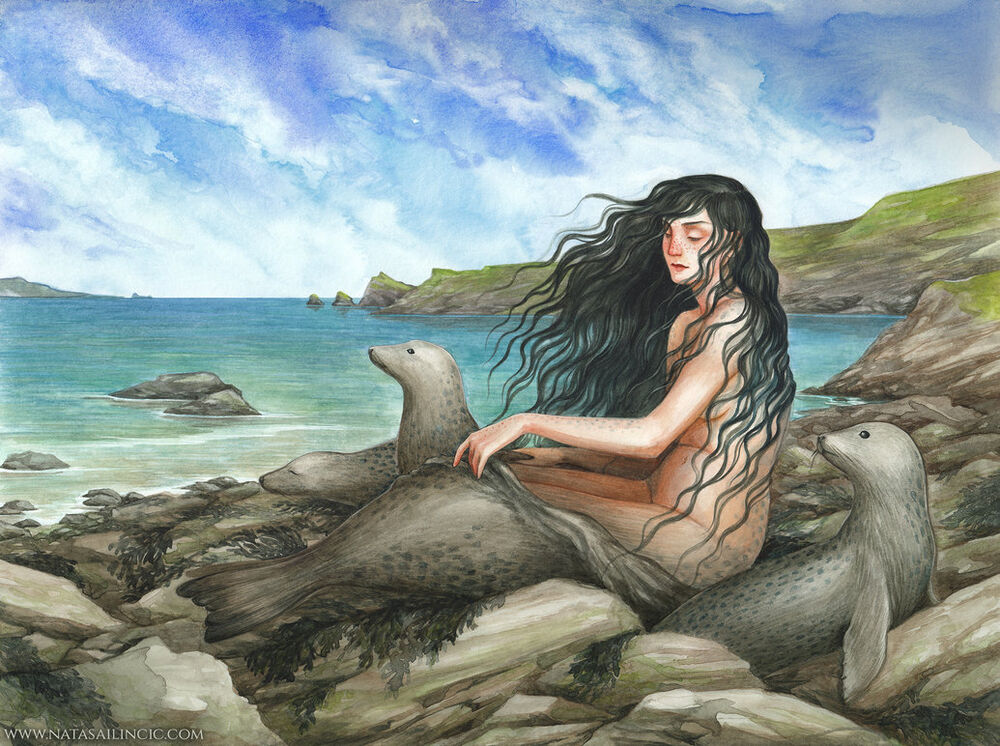
Selkie
Those of you who have dived into my Moon-crossed Wolves series may be wondering where the idea of woelfin came from. The short version is — I made it up. Of course, no story exists in a vacuum, and woelfin have real predecessors in the mythological world.

Many of you have probably heard about selkies. I’ve always been intrigued by these Scottish stories of seals who came ashore, shed their skins, and turned into beautiful women. The trouble is, the rest of the myth is less palatable. A man steals the selkie’s skin, forces her to marry him, then hides the skin so she can never return to her home in the ocean. Yuck!

On the other hand, social scientists who study folklore across cultures report that selkies are just one offshoot of the Swan Maiden type. These stories are believed to have originated in Pacific Asia during paleolithic times (at least 10,000 years ago) and involve many types of animals. In Croatia, there’s a tale in this vein about a she-wolf who sheds her skin to become human…and that idea sucked me in.

What if, I wondered, the heroine hadn’t lost her own skin but was instead hunting the lost skin of a family member? What if woelfin (the name I chose because German was much easier than Croatian for an English speaker to wrap her keyboard around) were like werewolves but different in key ways? What if a peaceful, family-loving woelfin was sucked into a rough-and-tumble werewolf pack?

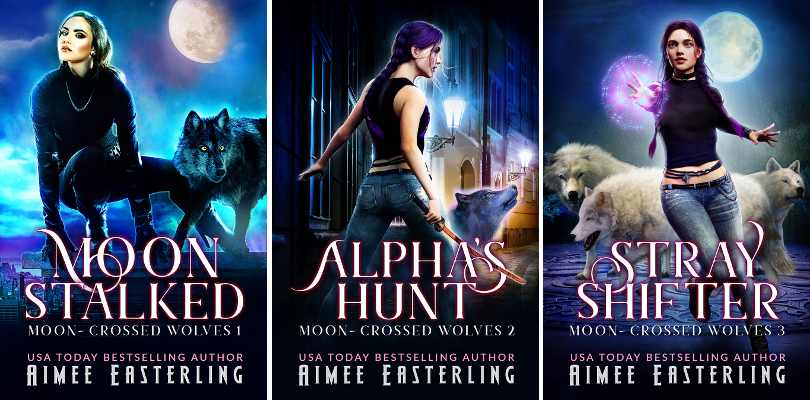
The result was Moon Stalked, Alpha’s Hunt, and Stray Shifter. As I near the end of the first draft of the latter, I’m already starting to regret having to leave the woelfin world behind.

Moon-crossed Wolves

The universal appeal of shifters: A trope for every genre

Humans that morph into animals abound in stories of fantasy and romance and can even be found in literary fiction, science fiction, and horror. But which shifters appeal to which readers?

I have my own theories, but I thought I’d see how they stack up against real-life responses. To that end, I polled three facebook groups — one focused on werewolves in paranormal romance settings, one focused on urban fantasy in general, and one created just for fans of Patricia Briggs.

Alpha werewolves

As expected, the paranormal-romance readers were most united about their reasons for loving werewolves. 80% of them were looking for one or both of the following:

Mates — You could have guessed this one. Paranormal-romance readers love the idea of the one true mate, the fated mate, and/or the hot alpha mate. They’re not the only ones sucked in by that idea, though. 8% of urban fantasy respondents and 14% of Patricia Briggs’ fans also put mates at the top of their werewolf-book wish list.

Found family — This is one of my favorite things to write about (present in all of my books to some extent, but particularly in my Wolf Rampant series), so I know exactly where readers are coming from. A community of werewolves that comes together to create something larger than the sum of its parts is instantly seductive. Subsets include: pack bonds and lone wolves being drawn into a pack.

Werewolf pack dynamics

In contrast, readers in both the general urban fantasy group and in Patricia Briggs’ fan group rated a different facet of werewolf books most important:

Pack dynamics — We love the way the combination of wolf and animal traits create a complicated world full of drama, ritual, and infighting. In fact, if you add in the element of making human power dynamics more visible (overbearing alphas, sassy underdogs bucking the hierarchy, etc.), 20% of paranormal romance readers put this at the top of their list as well. I’ve found pack dynamics are particularly fun to tease apart when you insert a protagonist into a pack she wasn’t born into, as is the case in my Moon Marked series (and, come to think of it, in Mercy Thompson’s case as well).

Human/wolf duality

On the other hand, urban-fantasy readers were more interested than anyone else in this aspect:

The dual animal/human nature of a werewolf — I’ll let one of my respondents sum this one up since she said it so well: “The internal struggle between wolf/human. I think it is a good description of how complex humans are. We all have a wolf half or darker nature, if you will. And we all struggle to balance those emotions and desires.” I suspect this human/wolf duality that Lori Hughes so ably described (and which I put at the forefront of my Moon Blind series) would appeal to a horror audience in addition to a fantasy audience. If you want your werewolves to be forced to shift at the full moon, I suspect you’re tapping into this deep human conflict.

What’s left to love about werewolves? How about:

The wolves themselves — As Tina Hoefs explained, “I love animals more than people. Less drama and bs.” Other respondents mentioned how much they love wolves specifically. They particularly appreciated the scenes where protagonists ran in lupine form, although several also mentioned other aspects of wolfish behavior (either while two-legged or four-legged). Paranormal-romance readers weren’t strongly interested in this aspect, but about a quarter of urban-fantasy readers and a fifth of Patricia Briggs’ fans listed it as a must-have in werewolf books.

Finally, a much smaller subset of readers noted that their favorite aspect is:

General worldbuilding — Whether that’s werewolf superpowers or shifters interacting with vampires and other beings.

And that’s about it for what most of us love about werewolves. Except…maybe you’re attracted to something entirely different? If so, you’ll have to write an outside-the-box shifter novel and share it with the world!


« Older posts

© 2026 Aimee Easterling

Theme by Anders NorenUp ↑