USA Today bestselling author

Category: Aimee Easterling’s Inspiration (Page 2 of 5)

A month of Star Wars

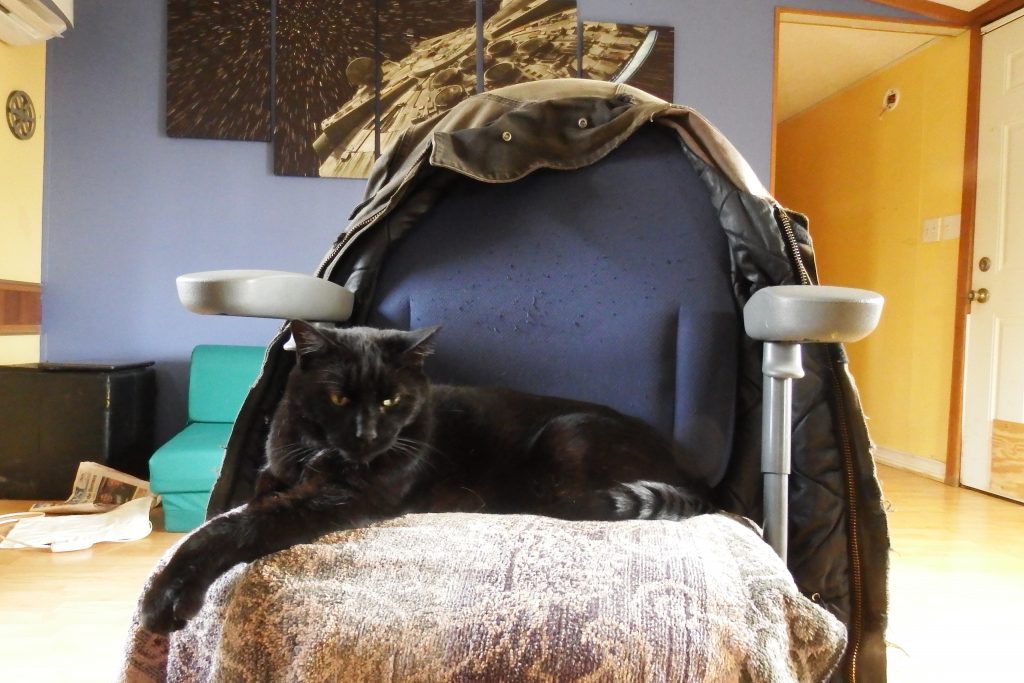
Star Wars cat

I live in a Star Wars household. Can you tell?

Perhaps that’s why, when I heard about Disney Plus, I decided to indulge in a Star Wars marathon before the new movie comes out.

Never mind that I love to read but almost never make it through a movie or television show.

Okay, so, yes, mind that. For me, a Star Wars marathon involves watching nine movies within a single month. I’m so proud of myself for managing the feat that I couldn’t resist posting a review of each.

(There are no spoilers for Episode 9 below, but if you haven’t seen the older movies you’ll want to watch them before reading this post.)

Star Wars episode 1

Star Wars Episode 1: The Phantom Menace was absolutely awful. When I watched it in the theater on opening night amid a band of costumed college students, I don’t remember it being so bad. But, I mean, pretty much anything is going to be good in that setting.

Watched at home with my husband (the cat wasn’t invited), Jar Jar Binks was cringeworthy and there was pretty much nothing to make up for his presence. I did enjoy seeing C3PO’s origin, but the whole thing just felt really, really long.

One star out of five.

Star Wars Episode 2

Star Wars Episode 2: Attack of the Clones was my favorite of the prequels. Anakin and Obi-Wan had great buddy chemistry (which continues into episode 3 and is my favorite part of the prequel trilogy). Anakin’s relationship to Padme was thought-provoking, pointing out flaws in the Jedi system of eschewing attachment. And knowing who the villain was from a previous viewing added depth and interest to scenes that dragged for me the first time around.

That said, the movie still felt a bit long. And — my usual annoyance with Star Wars — there was way too much fighting.

Four stars out of five.

Star Wars Episode 3

Star Wars Episode 3: Revenge of the Sith started with some great buddy time, but it had two flaws for me. The first is completely a matter of taste (and my husband strenuously disagrees) — it gets too dark for me to enjoy. But even he noticed how Padme — once a strong, interesting character — becomes reduced to a caricature of weakness. (The lack of strong female characters is, in my opinion, the biggest downside of the entire Star Wars saga.) Then there was the endless fighting and gruesomeness at the end, bringing the score to:

Three stars out of five.

Star Wars episode 4

Star Wars Episode 4: A New Hope was a delight even on what I suspect is my third or fourth viewing. (My husband, when asked how many times he’d seen this episode, told me: “I never really got obsessed with it…. Probably only 15 or 20.”) It really benefited from a recent viewing of the prequel, which added depth to a lot of exchanges mentioning the past.

Plus, C3PO and R2D2 have the best banter ever! Luke’s hero’s journey is perfectly executed. Han Solo and Leia and Obi-Wan and Darth Vader are vivid, memorable characters. And the music!

All of that said, I did start getting sleepy in the last third, but I’ll still round its rating up to:

Five stars out of five.

 

Star Wars Episode 5

Star Wars Episode 5: The Empire Strikes Back is my very favorite of the first six movies. The romantic tension and banter between Han and Leia is delightful. The drama with Luke and Darth Vader (and Luke’s wrestling with the Dark Side) is gripping. Yoda is perfect.

Since I gave the last movie five stars, this will have to be:

Six stars out of five.

 

Star Wars Episode 6

Star Wars Episode 6: Return of the Jedi was a bit disappointing. The first quarter or so was fun (if light-weight), but the middle dragged if you’d seen the prequel trilogy. Suddenly, revelations turned into info dumps. And the final battle between Luke and Darth Vader didn’t have the emotional weight I thought it should have (perhaps because of the photoshopping in of young Anakin to replace old Anakin in the final scene). Unfortunately, my rating became:

Three stars out of five.

(Without the big change at the end and without knowledge from the prequels — in other words, as it was originally screened — this likely would have been four stars for me.)

 

Star Wars Episode Y

Star Wars Episode 7: The Force Awakens is a tough episode to rate. When I first watched it, the other movies were distant memories from years in the past and I adored it! All of the parts I loved about Star Wars were included with the addition a female character who was less of a sex symbol and more of a heroine than Leia! Everyone who complained about it being too derivative of the original series was clearly wrong.

Then I rewatched the move after zipping through the previous two trilogies over the course of a month…and those poo-pooers were right. The Force Awakens does repeat too many specifics without much tweakage. Even with the awesomeness of Rey and the very interesting father-son story, I reluctantly dropped its score to:

Four stars out of five.

(Although, I have to say, this is perhaps the movie I’m most likely to rewatch. On initial viewing, it was a solid six stars out of five.)

 

Star Wars Episode 8

Star Wars Episode 8: The Last Jedi lived up much better to a rewatch. I enjoyed Rey’s thread on the island the most, especially the way the Dark Side becomes very real. There was also a lot of grist for wondering, leaving me hypothesizing about what would happen in episode 9. And the music was utilized just as well as in the original trilogy, managing my moods just the way I wanted them managed.

What did I like less? That endless final battle! I hate to say it, but I felt like every Star Wars movie would have been better if it had been condensed down to an hour and forty-five minutes rather than allowed to sprawl out over two hours and a half. This one particularly felt like it should have been over after the (awesome) confrontation between Rey and Kylo Ren. Plus, I missed the buddy banter that marks my favorite episodes, making this one clock in at:

Four out of five stars.

 

Star Wars Episode 9

Star Wars Episode 9: The Rise of Skywalker is tough to rate on my first watch. Coming out of a Star Wars movie in the theater, I always feel like I’ve been to another world! Then add on the melancholy of knowing this is the end of a nine-part saga and I’m only vaguely sure I’ll later agree this was:

Four out of five stars.

So, to sum it all up:

Click over to facebook to chime in!
Shapeshifters: A History

A few weeks ago, I was thrilled to notice a talk on shifters being planned at my library. It turns out that local author John B. Kachuba had researched the topic extensively while planning out his new release — Shapeshifters: A History. I took copious notes so I could share his lecture with you!

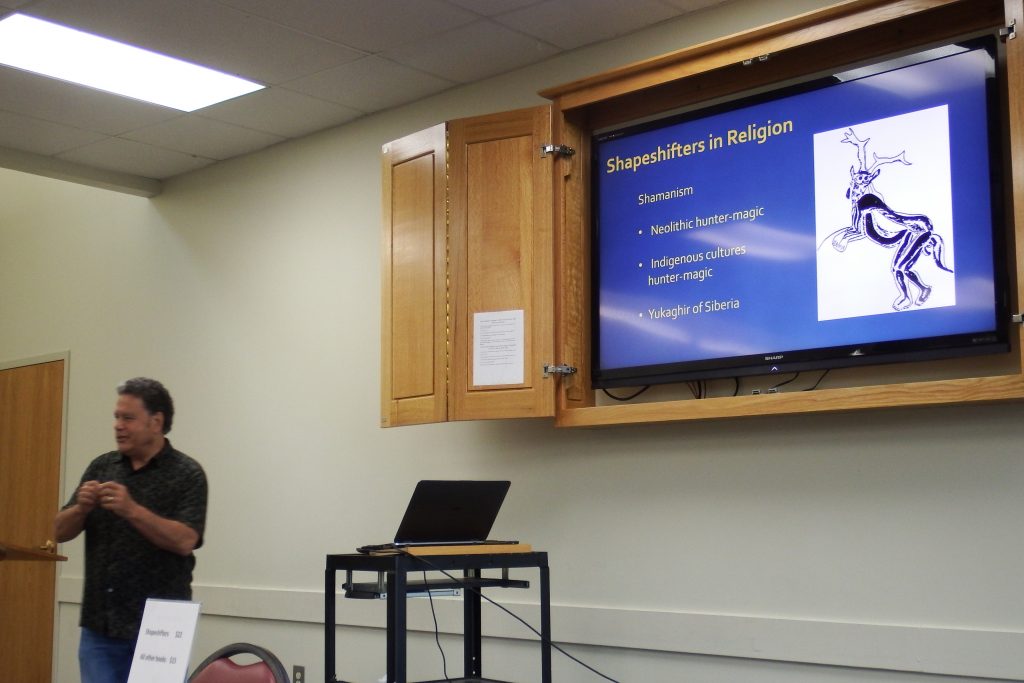
John Kachuba speaking about shapeshifters

Kachuba takes a very inclusive view of shifters, starting with cave paintings from thousands of years ago that seem to represent animal-human hybrids. While we can’t know what prehistoric people were thinking, modern studies of the Yukaghir people in Siberia suggest that these cave paintings might represent ceremonies in which shamans mentally transformed into animals to assist in planning hunts.

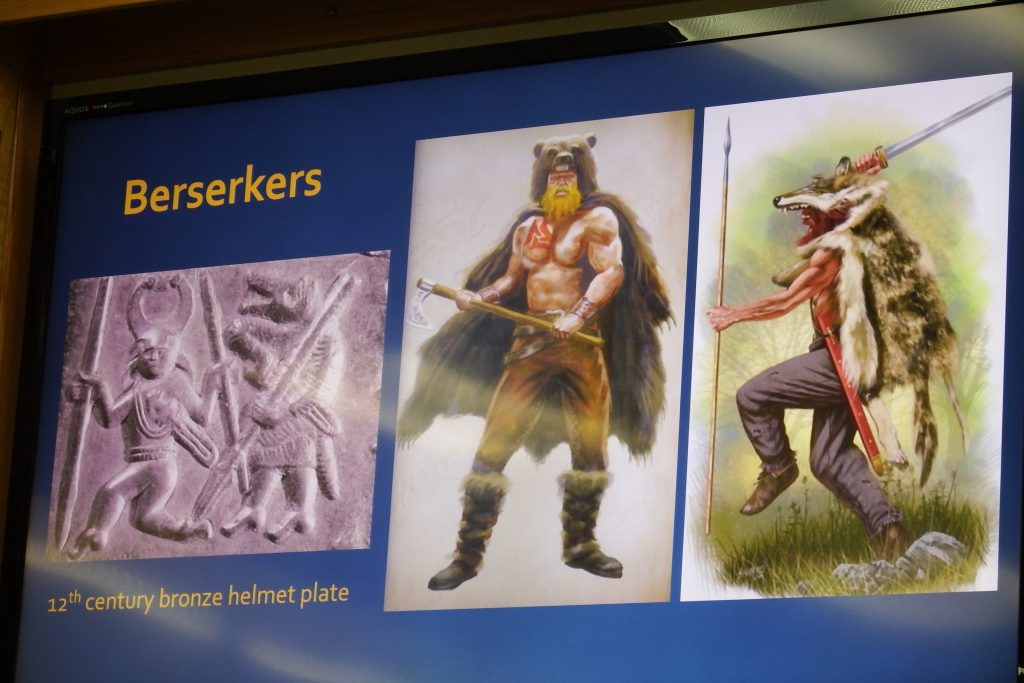
Berserkers as shapeshifters

The natural successor of this belief is the Scandinavian berserkers from the eleventh and twelve centuries AD. Fighters donned hides of bears or wolves and, like the shamans of old, believed that they became as invincible as that animal in battle.

(To me, this has clear fictional potential. Berserker werewolves, anyone?)

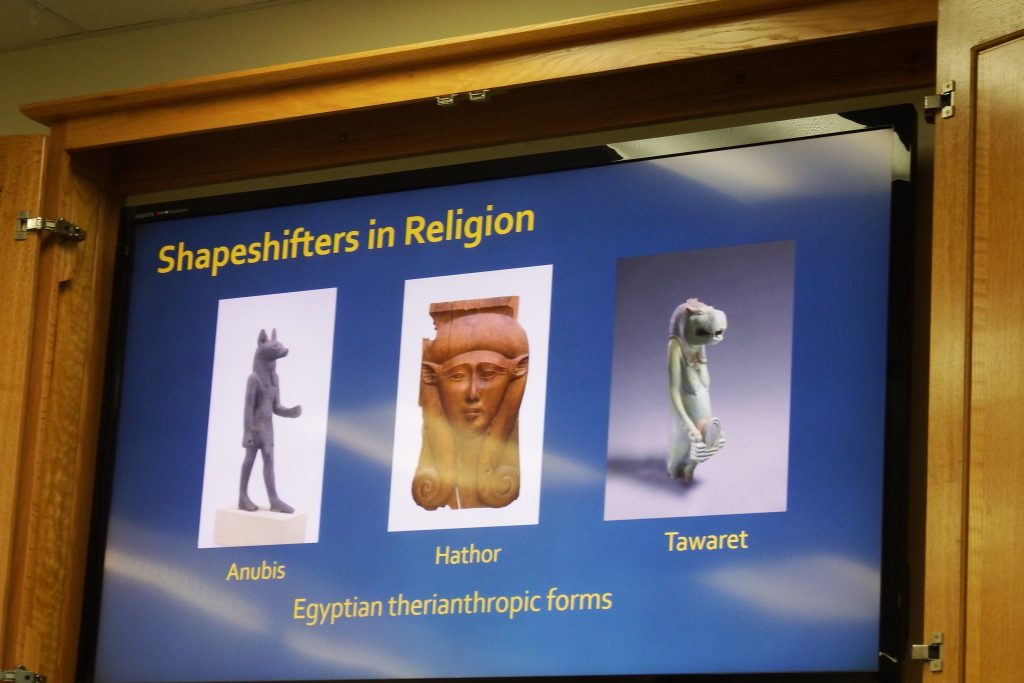
Egyptian therianthropy

Next up was Egyptian therianthropy. These human-animal hybrids were believed to inhabit statues. But, except for that small fact, they could have been taken straight out of modern urban fantasy. Isn’t it Patricia Briggs’ werewolves who can take on a wolf-man hybrid form for battle?

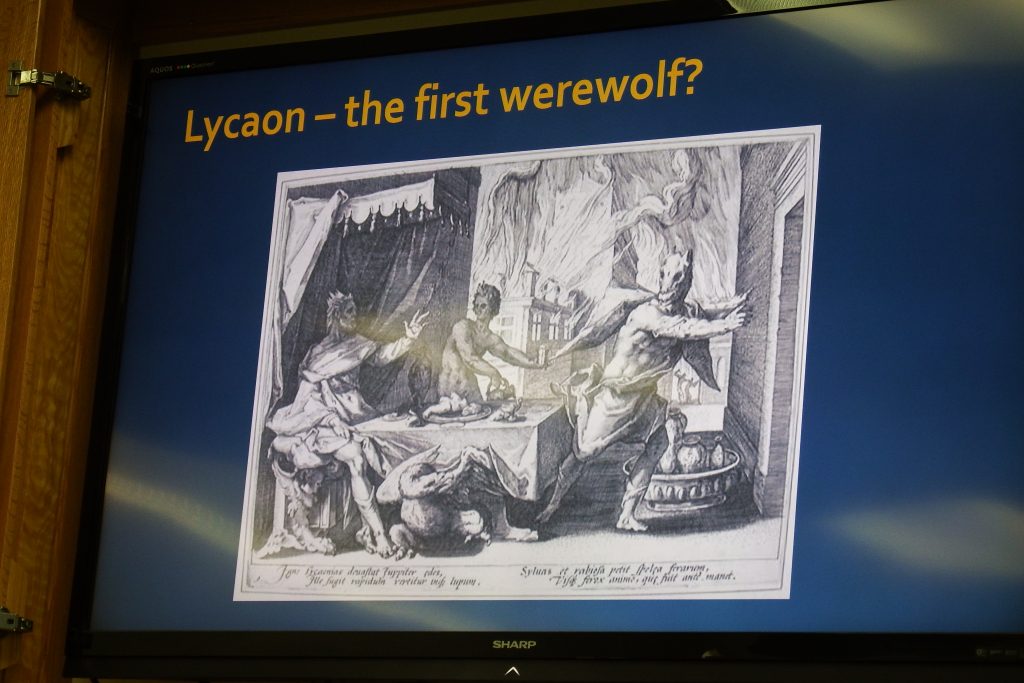
Shifters in Greek and Roman mythology

Greek and Roman mythologies were even more full of shapeshifters, with gods taking the form of bulls, swans, and many other animals. In most cases, the gods shifted to seduce women. (Because, you know, a bird is so much sexier than a human male….) In others, gods shifted mortals into plants to help the latter escape a similar fate.

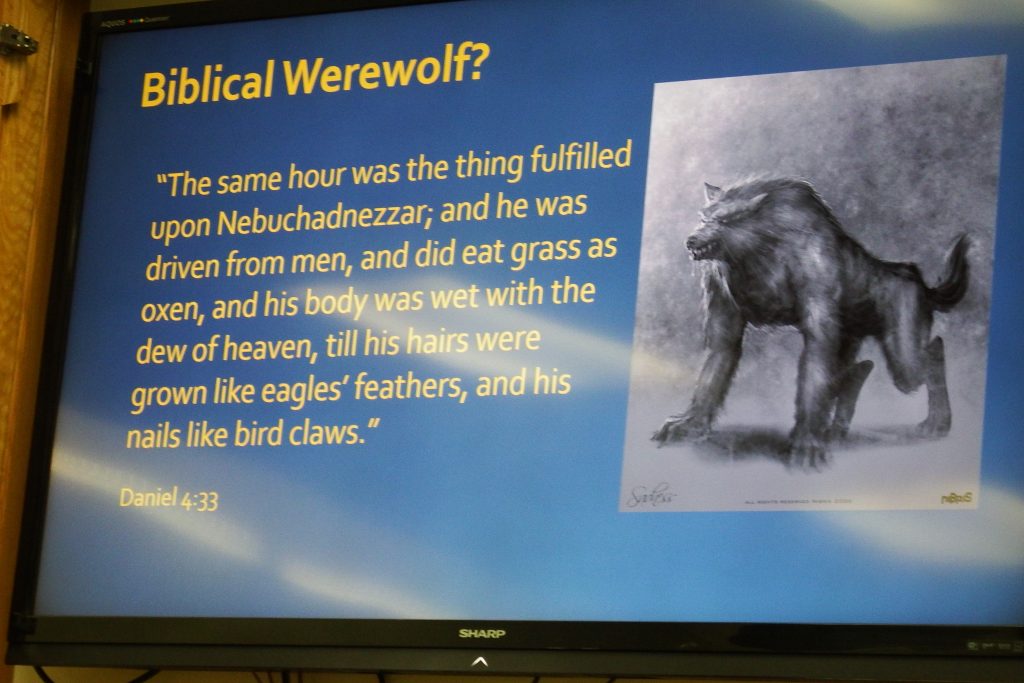
Biblical werewolves

Then Kachuba went out on a bit of a limb. He argued that there were shifters in the Christian Bible, starting with Nebuchadnezzar and possibly extending to Jesus himself. Similarly, he read Buddhist texts that suggested Buddha had transfigured at least twice. At which point Kachuba jumped over to Hinduism to mention Vishnu’s many forms.

Except for Nebuchadnezzar, all of these transformations were from human to human rather than from human to animal. But the religious history does beg the question — where do you draw the line about what counts as a shifter and what does not?

Modern paranormal accounts

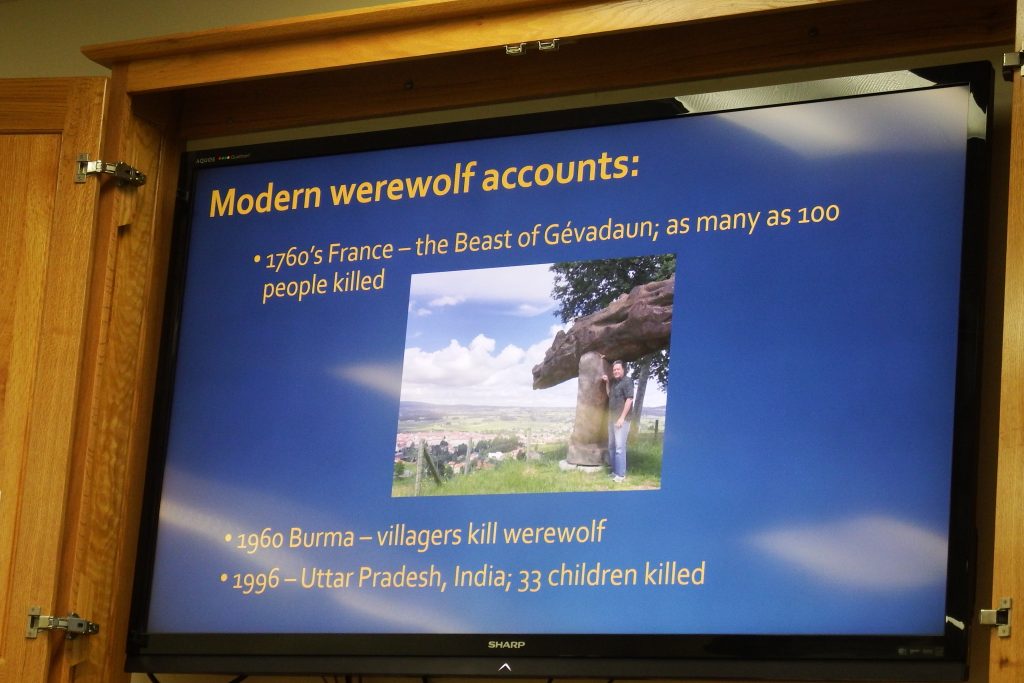
Religious hair-splitting aside, there have even been near-modern accounts of shapeshifters. For example, the Beast of Gevadaun killed more than a hundred people in one year in eighteenth century France. A New York Times article suggested that a werewolf was killing children in India in 1996. And modern vampire communities still exist in New Orleans and Buffalo, New York, with volunteers donating blood to “vampires” who believe they need this fluid to keep them alive.

(Kachuba included vampires in his shapeshifter history because of their reputation of transforming into bats.)

Skinwalkers

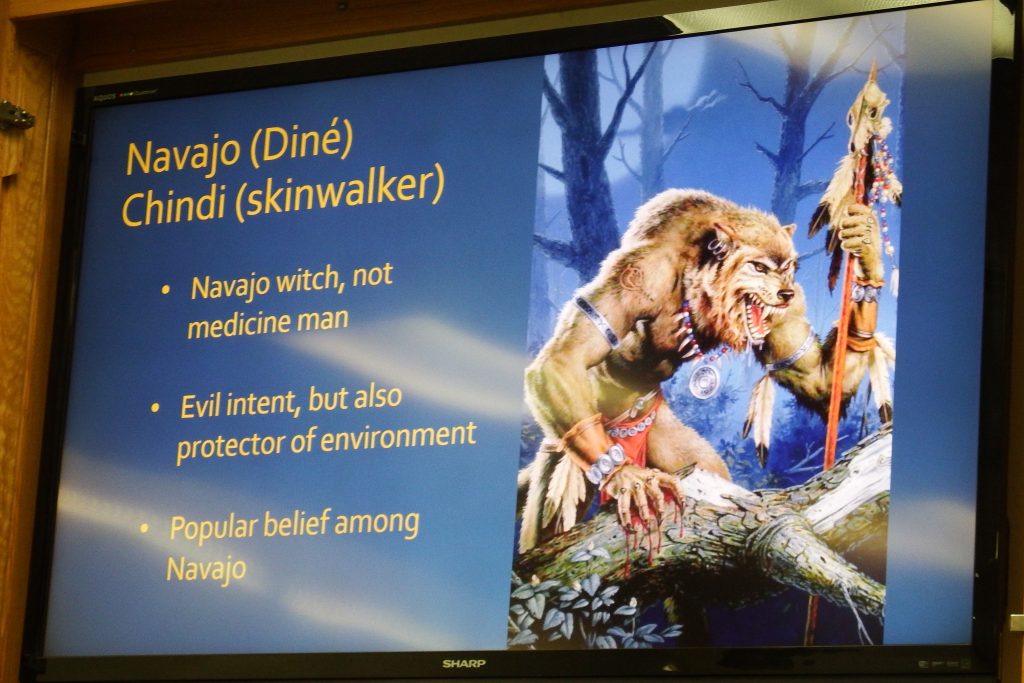
Our lecturer was starting to run out of time when he branched out beyond Western shapeshifters. But he did mention Navajo skinwalkers, along with the vast quantity of shifters included in Japanese lore. (If you’ve read my Moon Marked series, you’ve learned about one of the most common examples of the latter — the kitsune, a fox shifter.)

To Kachuba’s list, I would add some of the other historical shifters which have caught my attention in recent months. The selkie (seal shifter) has always fascinated me, even more so when I learned that Croatian lore has a werewolf version of this tale. (You’ll find out what I made of that in December!) Kelpies are water horses that transform into women. Naga are snake shifters in India. And some Chinese stories have humans shifting into the form of dogs.

But — why? Why do shapeshifter legends span so many cultures? Kachuba suggested a few possible explanations.

In my books, I often like to play with the dual nature of shapeshifters — animal vs. civilized human — and this may be the psychological root of some legends. But shapeshifting also offers us a way to hide, to understand personal transformation, to attain new knowledge (especially in shamanic beliefs), and to excuse bad behavior (Dr. Jekyll and Mr. Hyde style). There is also a trickster side to many shapeshifter archetypes, which may be related to some or all of the above.

Which, I know, sounds pretty esoteric when written out in the form of a list. But think of it this way — how did you feel as a kid when you dressed up for Halloween? Didn’t you, in some metaphorical manner, shift your skin? If so, I hope you’ll click over to Facebook and tell me all about it!

What to read after Ilona Andrews

Ilona Andrews

Ilona Andrews is one of my favorite authors…or, actually, two of them. This husband/wife duo create the perfect blend of action, fantasy, and romance in their Kate Daniels (urban fantasy with a side of shifter), On the Edge (urban fantasy/paranormal romance mixture), Hidden Legacy (romantic urban fantasy with a witchy cast), and Innkeeper (sci-fi-ish/urban fantasy) series.

If you haven’t already, you should definitely read them all. But then what do you dive into? Here’s what some of their fans have to say:

Patricia Briggs gets the most votes (including mine!).

Anne Bishop is a close runnerup. It took me forever to look past the cover and try out her Others series. But when I did I was blown away!

Nalini Singh is a sister author if you like a little more romance.

And after that it’s a tossup of whether you should move on to Faith Hunter, Devon Monk, Seanan McGuire, Jim Butcher, Rachel Aaron, or Karen Marie Moning. Or any of the dozens of other authors whose books fill urban-fantasy bookshelves today.

In fact, it made my day when a reviewer compared my Moon Marked series (the first book of which is free) to Ilona Andrews. Maybe someday I’ll live up to that compliment! In the meantime, I’ll just keep reading their witty prose.

Hopeton Earthworks archaeology tour

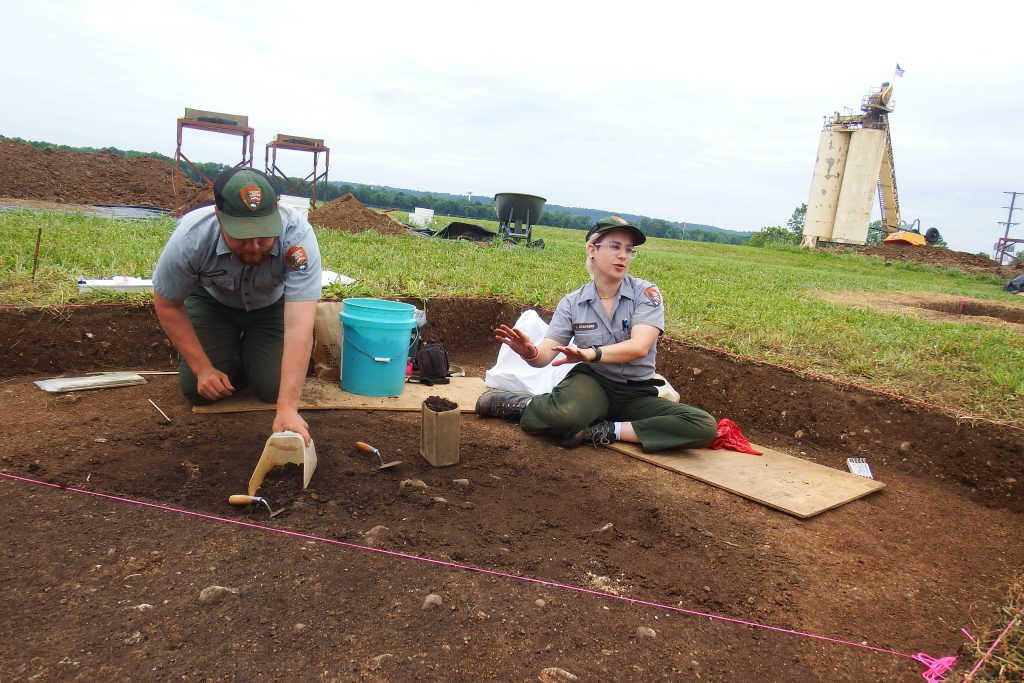
Archaeologists at work

I took a break from writing fictional prehistory so my husband and I could tour a real, live archaeological site this weekend. And, of course, I came away awash in facts and guesses about what made these ancient people tick.

Hopeton Earthworks map

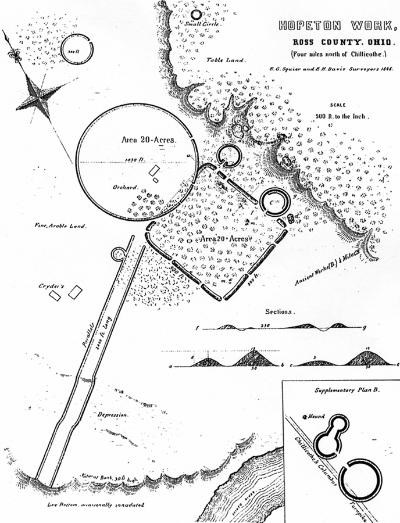
The site in question is Hopeton Earthworks, located just across the river from the contemporaneous Mound City Earthworks in Chillicothe. In fact, our guide — Dr. Bret Ruby — suggested that we should really think of these two areas as facets of the same site. Mound City was used for burials while Hopeton appears to have been used a “World Center shrine.”

That analysis is based on the work of modern Native Americans, who speak of sites like this as being models of the universe. Specifically, the long double line at the bottom of the picture above represents two quarter-mile earthen walls that point to sunset on the winter solstice. This seasonal focus is common at similar sites, like the Calendar Mounds at Fort Ancient. Dr. Ruby suggested that Hopeton Earthworks may have been built as an “earth naval” meant to capture or channel the power of the solstice sun.

Fire-cracked rock

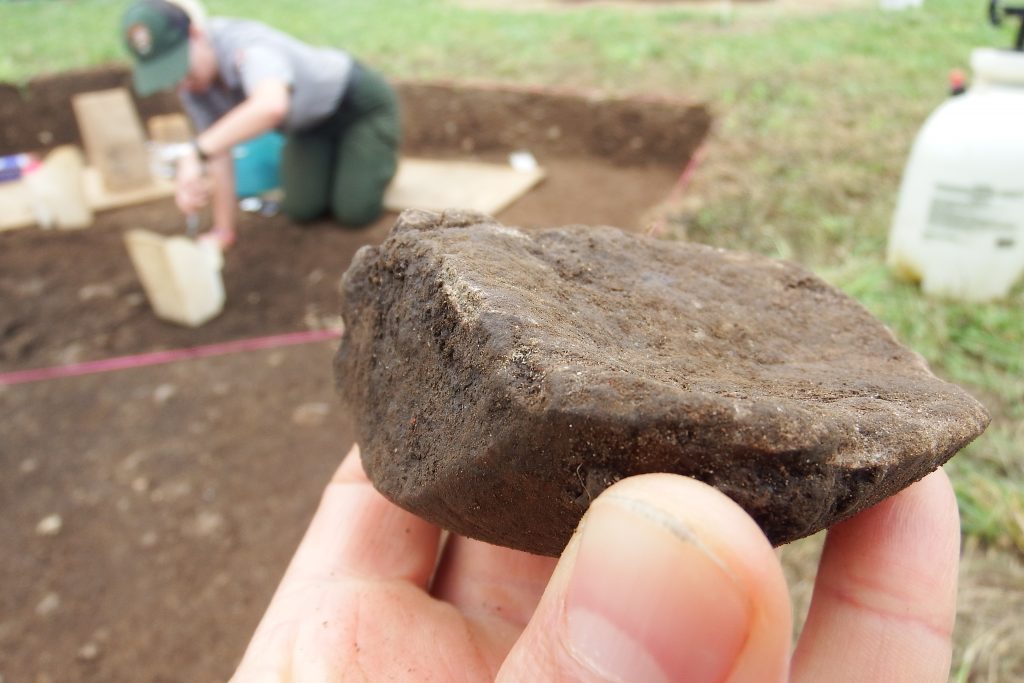
That part is guesswork, but there was plenty of rock-hard data present…quite literally. This summer, the archaeologists are excavating the remains of earthen ovens, which are currently found via machinery that senses magnetic anomalies in soil. In the past, these same ovens were often discovered by walking across tilled farmland and looking for fire-cracked stones like the one shown above.

What’s a fire-cracked stone? Let me back up and explain about earthen ovens. Hopewell people dug pits in the soil, filled them with wood, lit fires, then piled stones on top. The stones sucked up the fire’s heat then released it more slowly, often cracking along weak points in the rock in the process. The result is stones with multiple flat faces like the one pictured above. You don’t usually find this shape in non-human-impacted areas.

At the Hopeton Earthworks, fire-cracked rocks are very common, but they aren’t found everywhere. Instead, people appeared to keep their cookfires at the edge of the raised terrace that encircles the site, out of the floodplain but far enough away from the earthworks so they weren’t muddying the sacred with the profane. In other words — no trash in church!

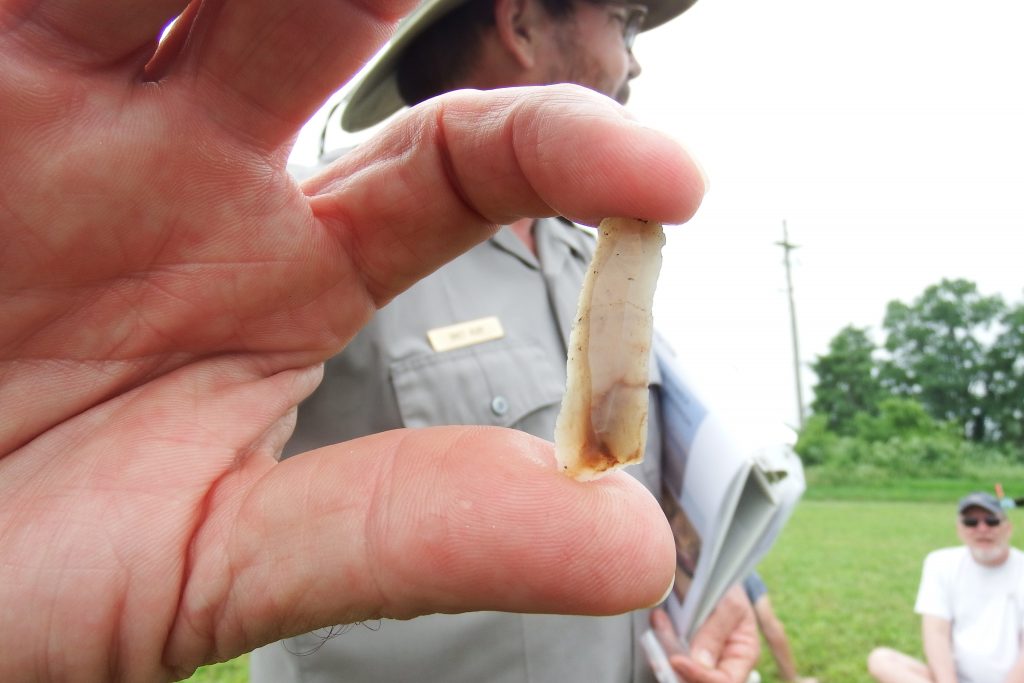
Lamellar bladelet

There was, however, trash in the ovens…and archaeologists were excited to find it! The flint bladelet above was found the same day of our tour, the prismatic cross-section proving that the knife was knocked off a core using a very specialized Hopewell technique. This particular blade never got utilized, but our leader said that similar blades were used to shave hair into elaborate hairstyles. Fashion was a thing in Ohio in 0 BC.

Mica and deer bone

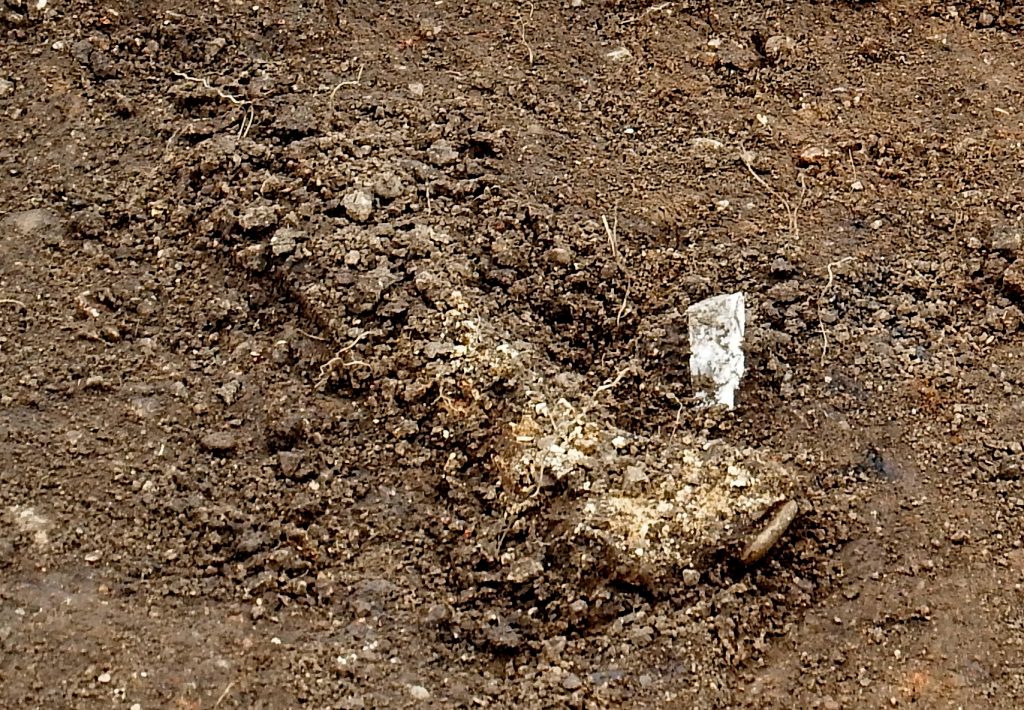
So was art. The reflective shard on the other side of the deer bone in the image above is a chip of mica that might have been discarded while making ceremonial objects like images of birds and hands. Mica isn’t commonly found in Ohio, however, so this shiny rock would have been carried in from the mountains of North and South Carolina.

How did mica — and other distantly sourced materials like shells and obsidian — make its way to Chillicothe? I’d always understood that the Hopewell people had a farflung trade network. But Dr. Ruby made the excellent point that materials clearly moved to Ohio, but none seemed to make their way back out. Wouldn’t trade result in Ohio flint and other materials being discovered in North and South Carolina (among other places)?

Instead, our guide suggested two hypotheses for how this mica arrived in the Hopewell epicenter. Possibly Hopewell people went on long journeys, bringing home materials like mica to be incorporated into their ceremonial sites. Or perhaps Native Americans from other parts of the continent traveled to Chillicothe just like my husband and I did, bringing gifts of their local mica in exchange for viewing the sun through Hopeton’s quarter-mile earthen tunnel.

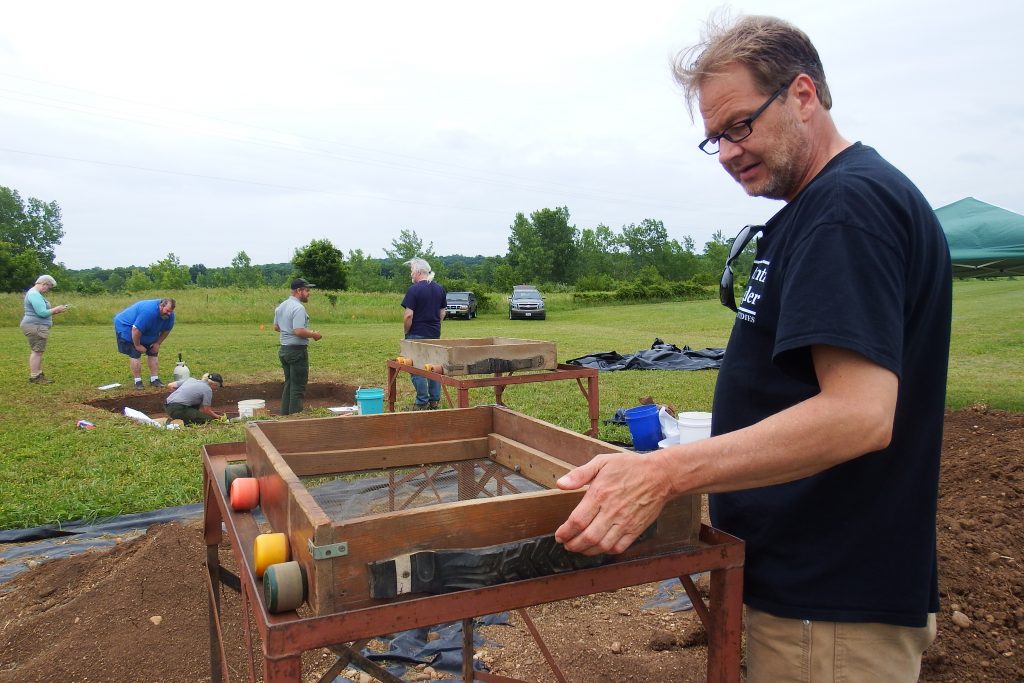
Archaeology sifter

There’s so much more to share (like wood-henges purposefully dismantled and mounded over to hold power in the earth). But I’ll end with one last factoid:

  • The clear quartz crystals sometimes found at Hopewell sites were tied as the hardest materials in the Hopewell world. What was the other material in first place? Beaver teeth!

Okay, now back to work on my novel. Olivia was in quite a bind when last I visited her. I guess I’d better help her out.

Animism and petroglyphs

Waterfall

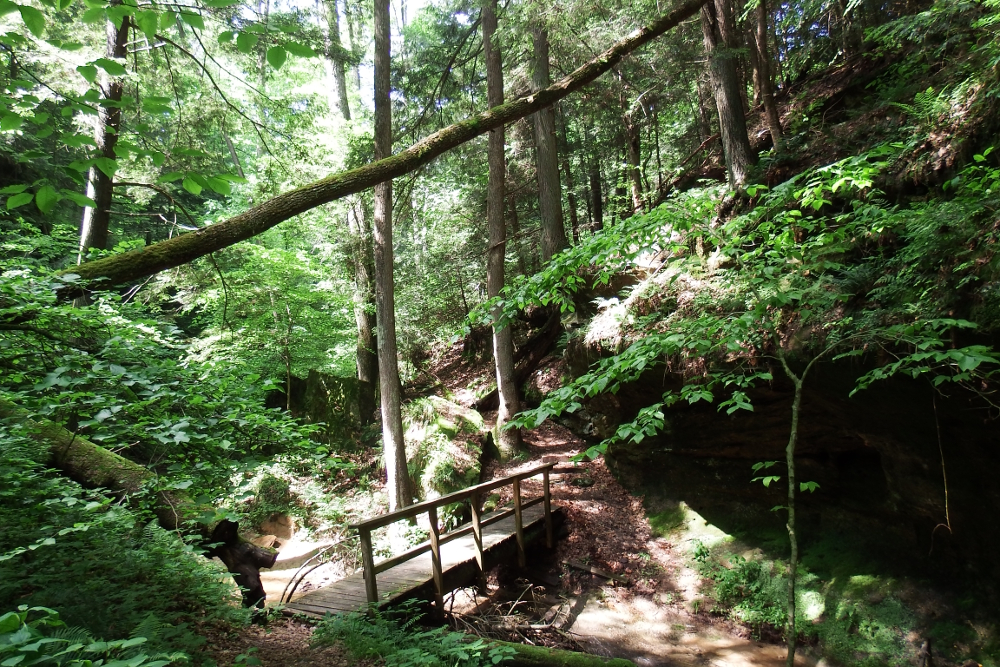
I dropped by Leo petroglyph again Saturday, this time with enough leeway so I could walk the nearby trail.

Leo Petroglyph nature trail

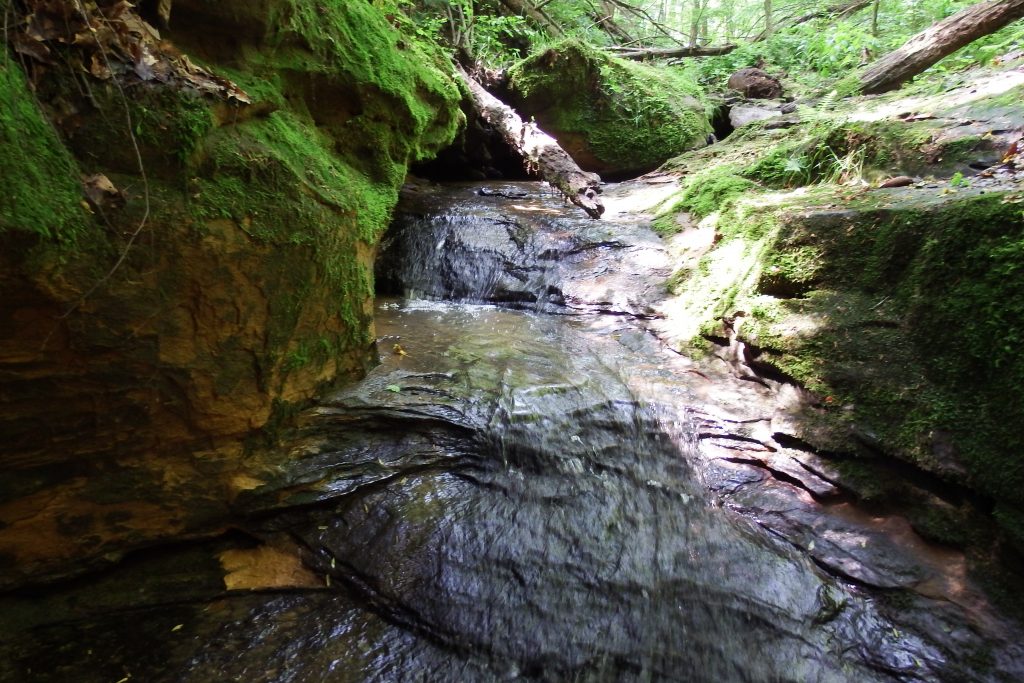
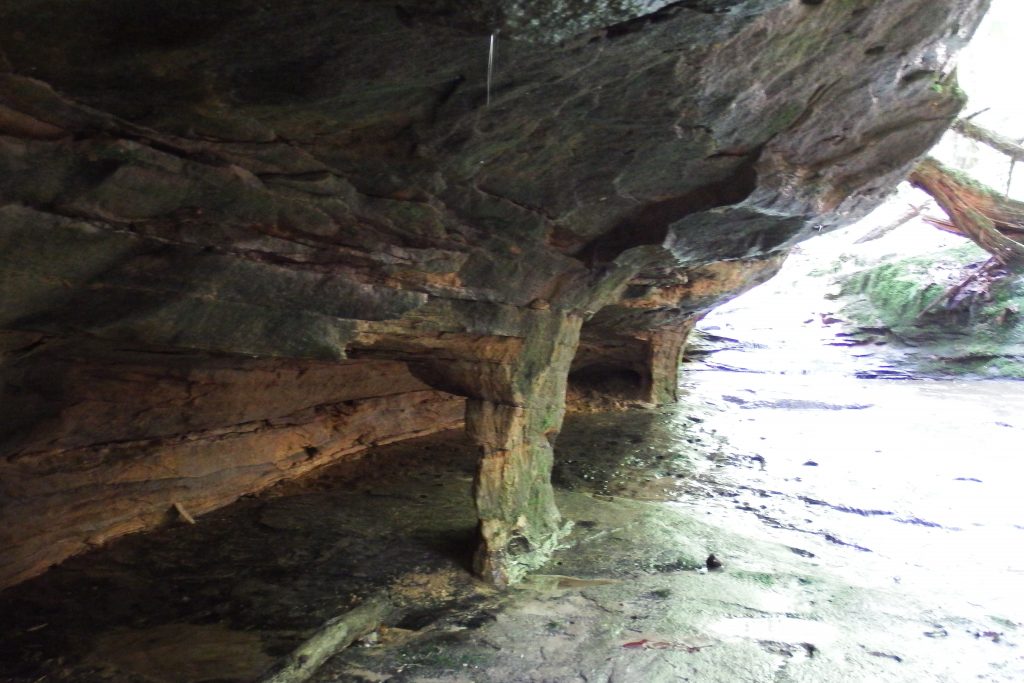
Just below the petroglyph, a stream runs through a stunning gorge full of fascinating rock formations, lichens, mosses, and liverworts.

Rock pillar

Which got me thinking — are all of our landscapes as breathtaking when left to their own devices? Or were Native Americans purposefully setting their constructions alongside beauty the same way we erect informational signs at overlooks within national parks?

Tree on rock

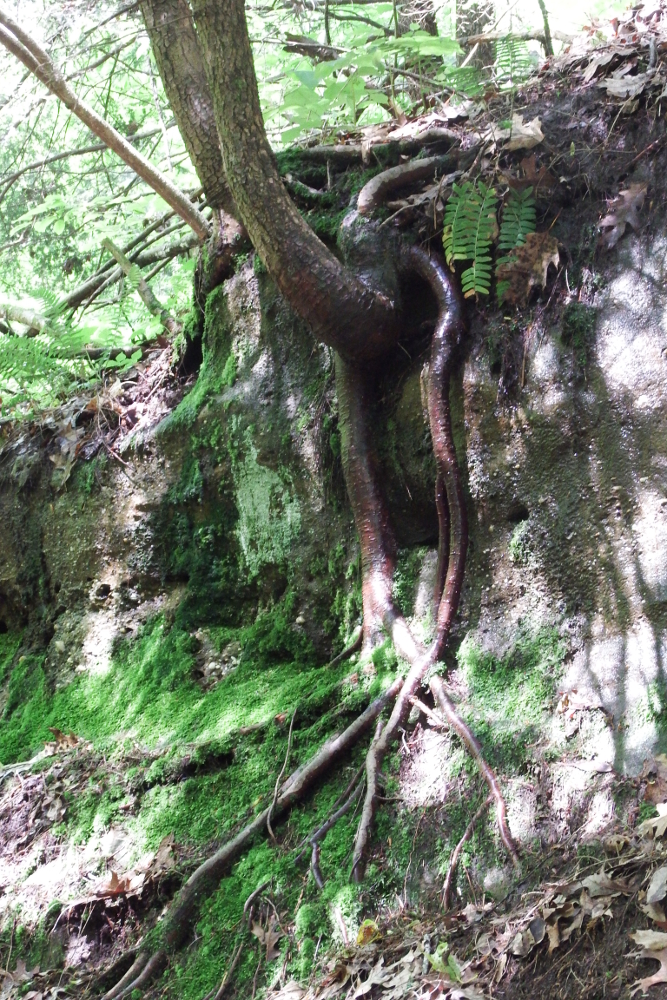
Animism is the belief — widespread among many native religions — that every tree, rock, and place contains a spiritual essence. Assuming that the people who created Leo petroglyph ascribed to this belief, doesn’t it make sense that they would use their mounds, effigies, and petroglyphs to call out the existing power/beauty of natural spots?

Tree eating sign

When considered this way, our obsession with preserving mounds is a bit like aliens coming to earth, blasting the Grand Canyon, then turning nearby signage into protected monuments. It’s possible we’re missing the point….

Fort Ancient musings

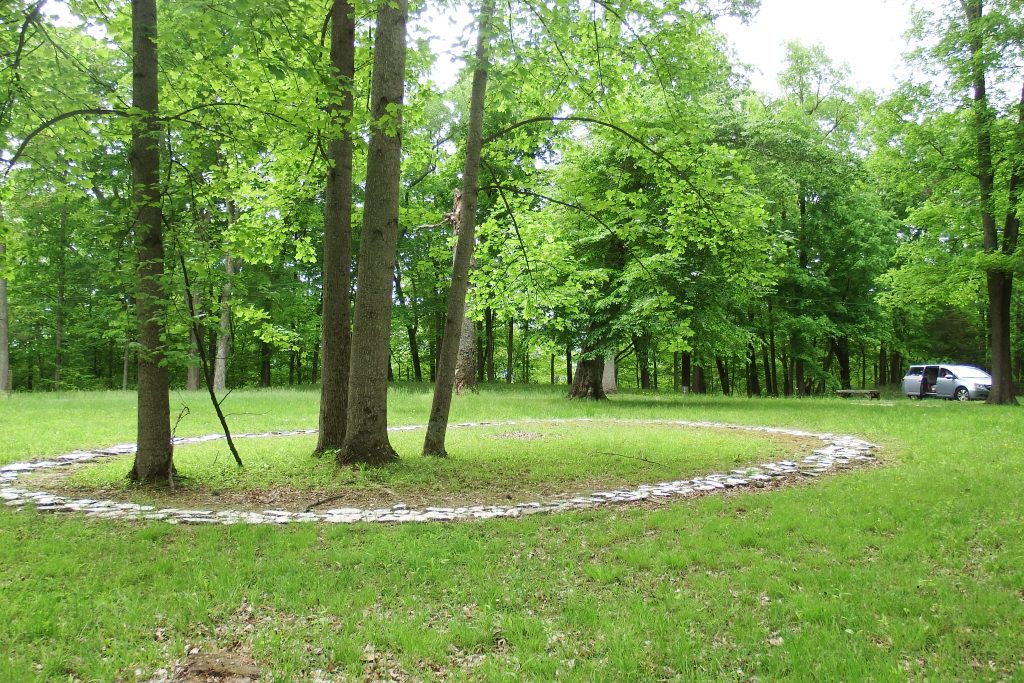
Limestone circle

My husband, my mothers-in-law, and I spent an illuminating afternoon at Fort Ancient yesterday. Unfortunately, our brains grew saturated before we made it halfway through the museum, and we didn’t get to spend nearly enough time walking through the astonishing earthworks either. But I saw enough to get my mind whirring, which will have to do for now!

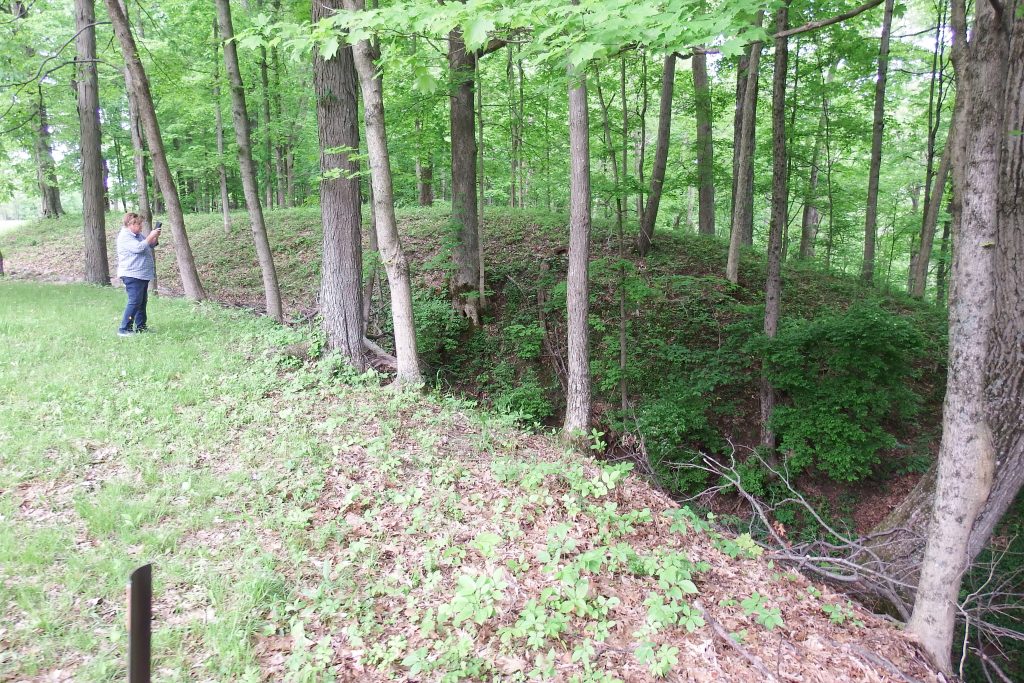
Fort Ancient ravines

This two-thousand-year-old site was created during a 400-year period then was used for another hundred years after that. Up on a bluff above the Little Miami River, the first step in construction involved moving tons of earth to fill in ravines like this one…using hand-woven baskets, elk antlers, deer shoulderblades, clam-shell hoes, and wooden digging sticks.

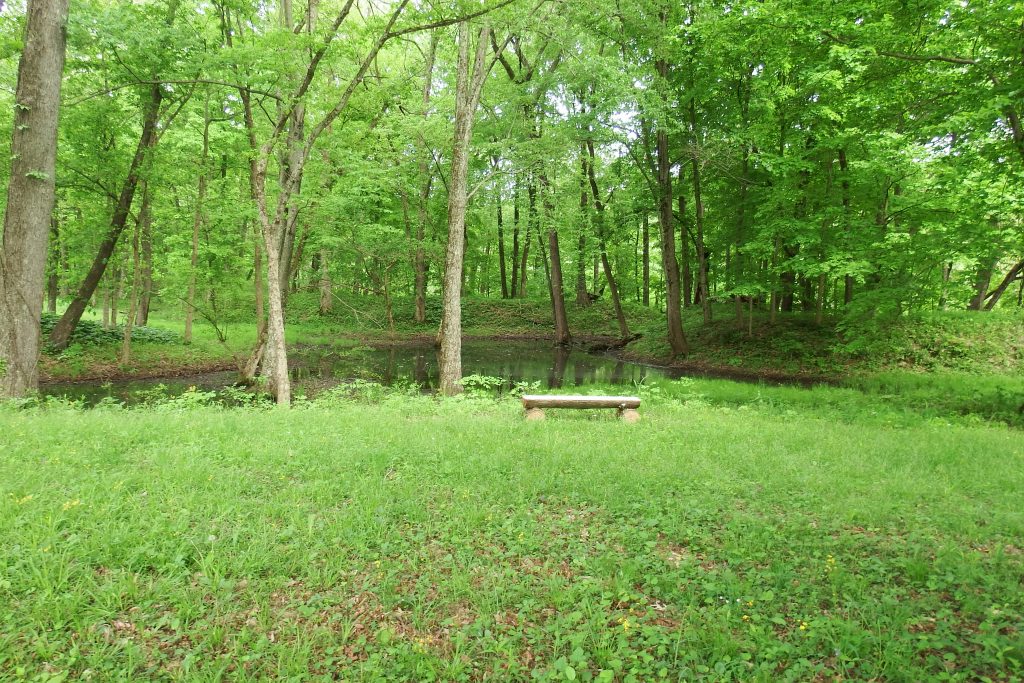
Fort Ancient earthworks

Then a 3.5-mile-long undulating curve of wall was created, along with indented ponds on the inside. To give you an idea of the scale of this endeavor, the amount of earth moved at the Fort Ancient site amounted to 221,000 full-size pickup-truck loads. If construction was ongoing throughout all four seasons every day of the 400 years in question, that amounts to 1.5 pickup-truck loads moved daily. A serious undertaking for a society in which people lived in small family groups!

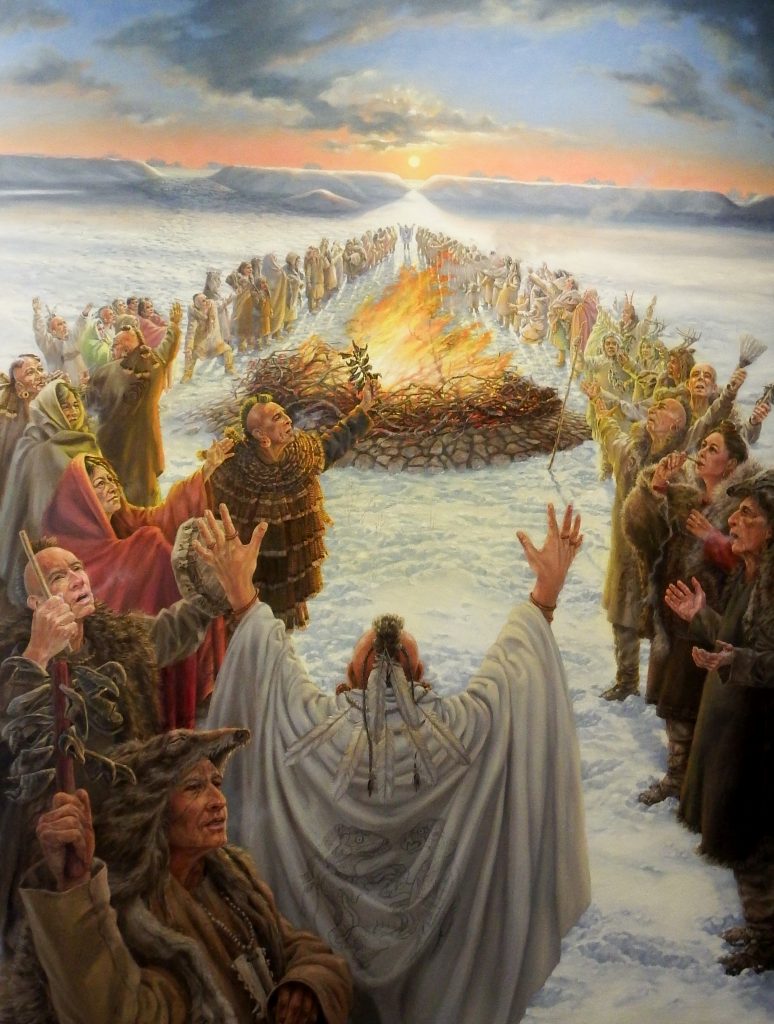
Fire mound ceremony

Early European settlers assumed these walls were fortresses, but scientists now think they may have been sites of religious ceremonies, athletic competitions, or other cultural events. The Calendar Mounds and the newly discovered Moorehead Circle are evidence of one potential use.

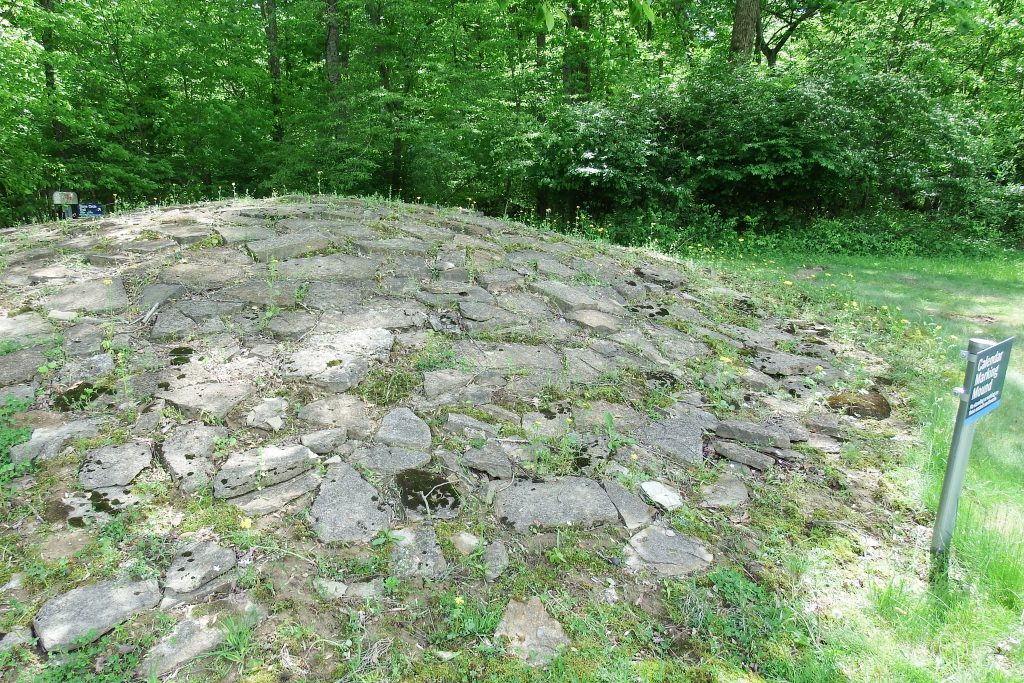
Calendar mound

Used in conjunction with intentional gaps in the encircling earthworks, the Calendar Mounds line up with sunrise at the solstices and with various astronomical events. Archaeological evidence suggests that the Fort Ancient people built bonfires at the site of these mounds, perhaps to create balance with the rising sun. The Moorehead Circle was a woodhenge (like Stonehenge, but built out of wooden posts) that may have had a similar function.

Shaman

Unfortunately, everything we decipher about two-thousand-year-old people who left no written record is guesswork. Could the Fort Ancient earthworks relate to earlier evidence of shamanism in which bear and wolf skulls were carved into ceremonial masks? Were the ponds part of the ceremony or simply inevitable depressions that resulted from moving so much earth? How many people came to Fort Ancient, how often, and why? Why do Fort Ancient’s earthworks take on such an organic shape while contemporaneous sites in valleys enclose perfect circles and squares?

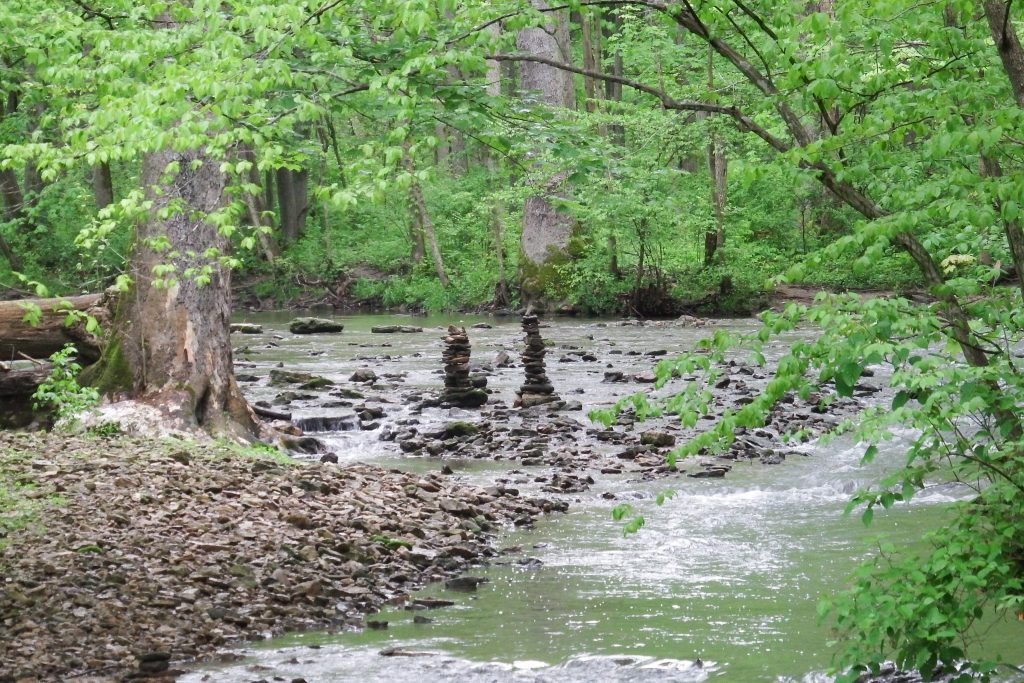
Cairns

It’s easy to ascribe deep spiritual significance to people we will never meet or know. But walking through a different park the next day and coming across modern cairns created by bored college students, I had to wonder how much of the stunning Fort Ancient earthworks is mystical…and how much is simply the result of humans with time on their hands wanting to leave their mark on the landscape.

After all, hunter-gatherers tend to have more leisure time than the average modern American. Without television and facebook to fill that time, did Fort Ancient people naturally gravitate toward building undulating walls and limestone-capped mounds?

Unfortunately, we will likely never know. Still, the Fort Ancient earthworks is well worth a visit…or two, or three!

Birds of ancient Ohio

Mound City, Chillicothe
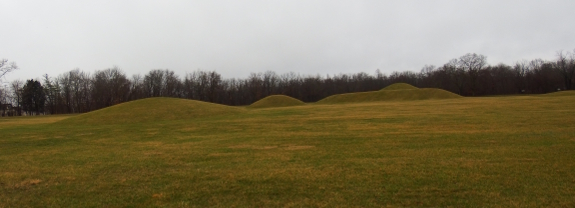
Mound City in Chillicothe, Ohio, is one of the best remaining examples of Hopewell Culture.

One of my favorite things about Ohio is the remnants of Adena and Hopewell cultures protected as parks or just waiting to be stumbled across in the woods. Yes, I’m talking about the 10,000 mounds scattered across the state, all dating from one to three thousand years ago.

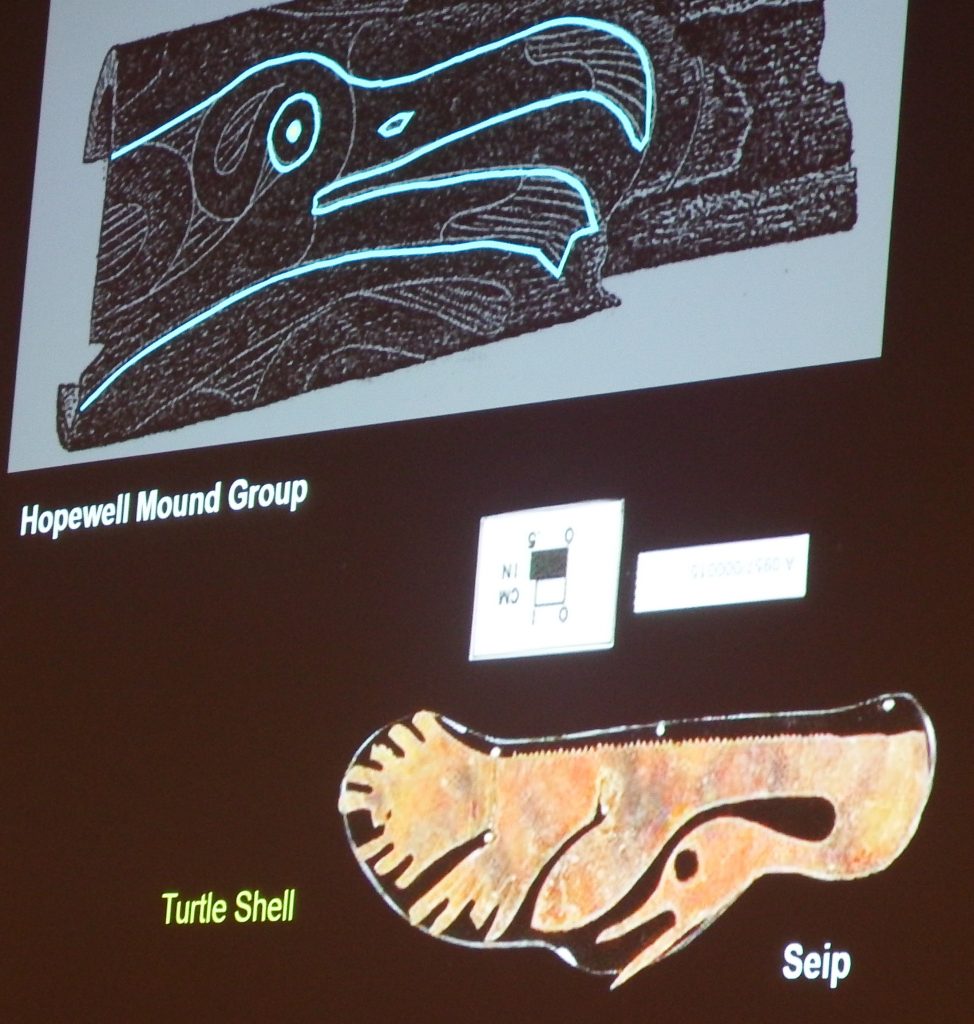
Hopewell bird imagery
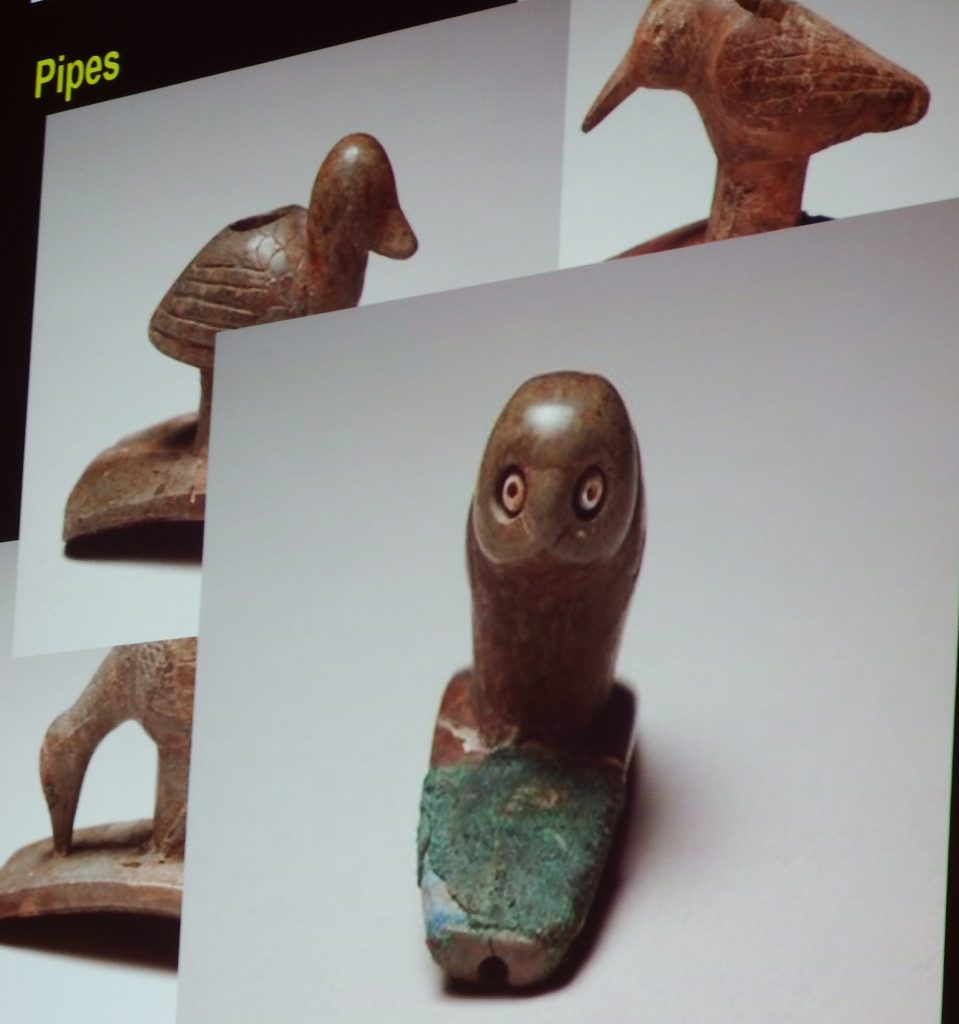
Birds were used on everything from pipes, beads, pottery, and copper plates to more unique examples like the human bone (top) and turtle-shell-turned-comb (bottom) shown here.

What we mostly don’t see unless the mound is connected with a museum is the beautiful art hidden beneath the dirt. Mounds cover the sites of ceremonial buildings which in turn cover the sites of cremations…and funerary objects are often cached nearby.

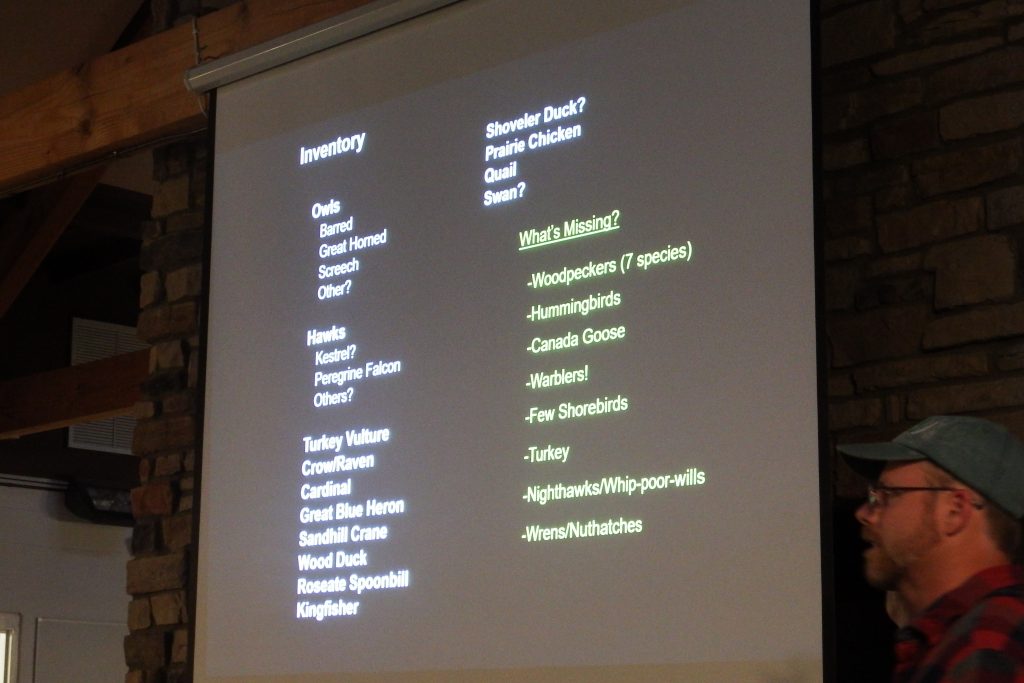
Jarrod Burks speaking about birds in Ohio archaeology
Jarrod Burks finds it interesting that many of Ohio’s most common birds aren’t represented on Hopewell art.

Jarrod Burks of Ohio Valley Archaeology, Inc. was interested in the fact that about half the figures on Hopewell creations were birds. And not just any birds — the species portrayed tend to be large, colorful, and/or powerful like hawks, vultures, and owls.

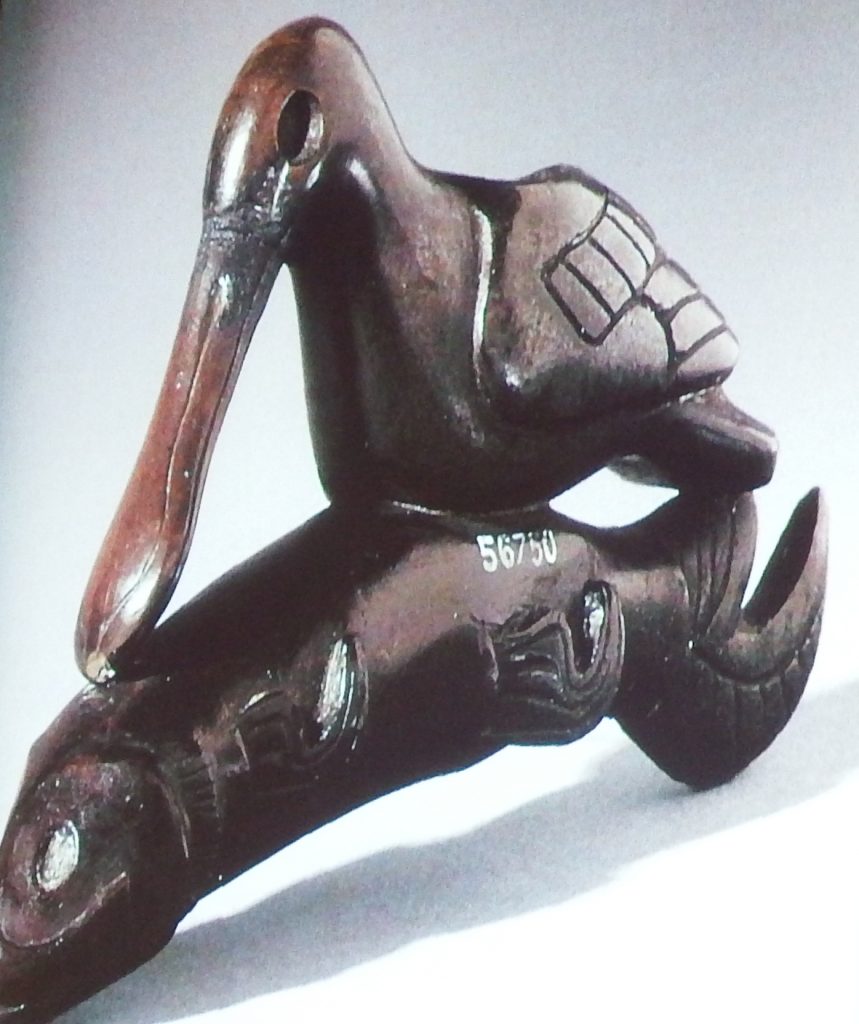
Roseate Spoonbill pipe
The Roseate Spoonbill’s brilliant pink feathers would have been a unique addition to the regalia of Hopewell people. Here, a spoonbill rides a fish on a tobacco-smoking pipe.

Nowhere is this more true than on the tobacco-smoking pipes broken and cached together in two nearby sites — Mound City in Chillicothe and Tremper Mound about thirty miles away.

The two mounds in question were created within one hundred years of each other (which means the pipes could have all been made by the same artist or family). But it’s impossible to know why birds dominate the pipe landscape and why hundreds of pipes were purposefully broken then buried beneath a newly formed mound.

Owl pipe
The beautiful artistry of these pipes was combined with other features denoting their importance. This owl has pearls for eyes, and the base has been mended with copper.

Archaeologists can guess, of course. They think that birds might have been revered because of their ability to visit the heavens, a realm humans can’t reach. Specifically, they suspect the many different types of birds portrayed on the Hopewell pipes were personal power symbols — a totem spirit that you’d peer at every time you smoked tobacco during a ceremony.

And why would everyone’s spirit animals be ceremonially smashed and buried at the same time? Your guess is as good as mine!

Ravens and wolves

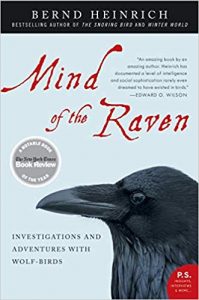
Mind of the RavenDid you enjoy Olivia’s pet raven in Wolf Dreams? Adena was originally meant to be a crow, but my husband talked me into turning her into a raven as a tribute to my Poe-loving father. Then, after writing the book, I discovered that wolves and ravens have an important relationship that likely goes back thousands of years.
In The Mind of the Raven, animal behaviorist Berndt Heinrich traveled to Yellowstone National Park just like I did but with a different goal — to figure out why wolves and ravens are so often found together in the wild. What he discovered appears to be a true symbiosis, with both species coming out ahead.

Ravens have the more obvious benefit, counting on wolves to break through tough hides so they can get to the good parts of carcasses. The birds also seem to crave the protection of a big burly wolf to make sure a passing predator won’t snap them up while they dine. No wonder ravens often show up soon after a wolf howls and hang out with wolves even while they play and rest.

On the wolf side of the coin, high-flying ravens can be handy at finding weak animals that will be easy to slaughter. In his book Brother Wolf, Jim Brandenburg tells about ravens finding a dead bear (beaucoup meat, impossible for them to access) then yelling until wolves arrived to tear the hide open. Ravens also act as sentries at carcass sites, noticing interlopers and waking wolves from their naps to chase competitors away.

“I can sneak up on a wolf,” a filmmaker told Heinrich, “but never on a raven. They are unbelievably alert.”

In fact, some scientists think that wolves and ravens consider each other family. When wolf pups are smaller than ravens, their parents don’t mind big black birds hanging around the den site and tugging on the youngsters’ tails even though they’d quickly drive any other animal away.

Perhaps that’s why I subconsciously chose a raven as Olivia’s first pack mate?

Wolves in Japan

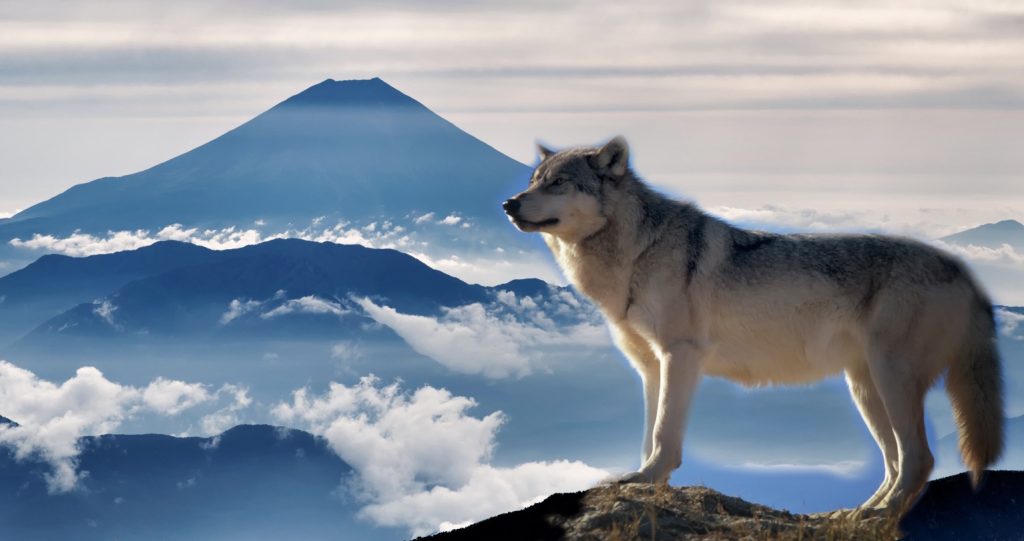
Japanese wolf

At a pull-out during my recent Yellowstone wolf tour, one of our guides ended up chatting with an expert on Japanese wolves. The story relayed was so fascinating that when I got home I had to fact check and share.

The tale begins long ago when wolves were revered in Japan. The dictates of Buddhism had led to a human diet that was largely vegetarian (with fish sometimes added to the plate). Wild animals were occasionally hunted by the lower classes, but livestock were few and far between.

In this landscape, wolves were helpers rather than hinderers. Two subspecies — the Japanese wolf (Canis lupus hodophilax) on the southern islands and the Hokkaido wolf (Canis lupus hattai) on the northern island — dined on deer and boar that ate/tore up rice and vegetable fields. No wonder wolves made their way into myth as friends rather than foes. In fact, the people of the northern island sent dogs in heat into the forest to breed with wolves in hopes of adding more lupine traits to their domesticated stock.

The tone of the story shifts in the late nineteenth century when a Japanese emperor decided to ditch a dependence on rice farming and fishing and try out American-style ranching. Wolves and livestock are a tricky combination. Soon, wolves turned into pest creatures and were exterminated.

Fast forward ahead to the modern era, when scientists began sequencing the DNA of the few stuffed specimens of Japanese and Hokkaido wolves left in museums. In the process, they discovered that the shrimpy Japanese wolf had arrived in Japan — as you might expect due to proximity — from Asia.

On the other hand, the larger Hokkaido wolves were more closely related to a North American subspecies. Scientists now believe that these leggier wolves migrated westward along the Bering land bridge about 9 or 10,000 years ago, not long after humans headed in the opposite direction onto the North American continent.

Both subspecies, unfortunately, are now very much extinct. However, you can see wolves a lot like the Hokkaido wolf along the coast of British Columbia, since scientists believe the more northern Japanese wolf subsisted just like these do on a diet of marine and terrestrial prey at the edge of the water. Not so different from the ancient Japanese people who once called these wolves friends.

A highly recommended Yellowstone wolf watching tour

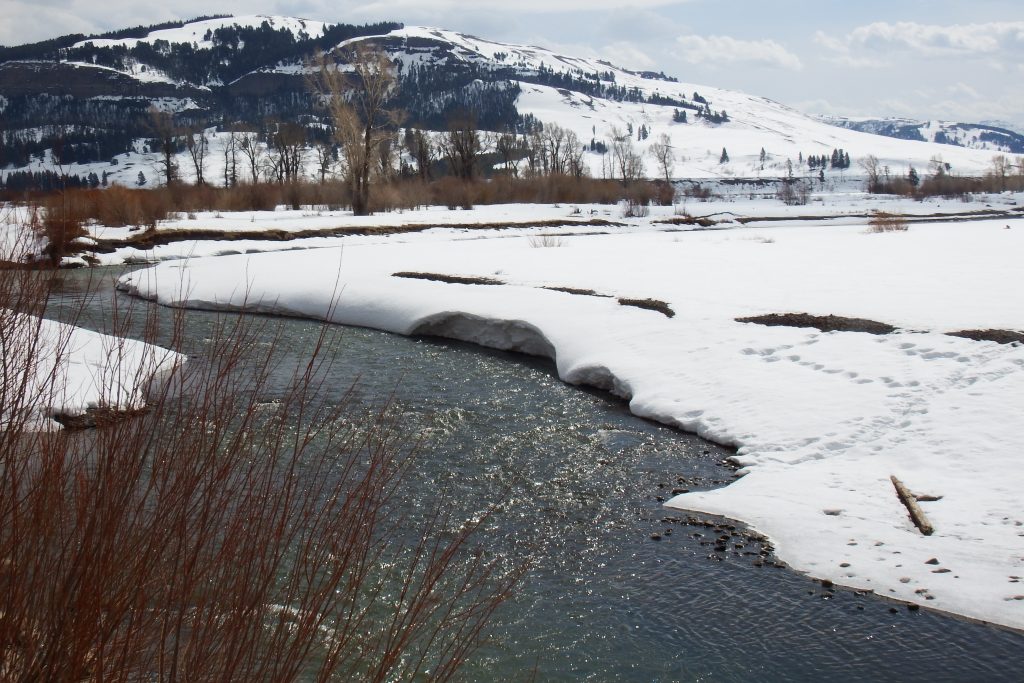
Lamar Valley

If you’ve been reading along with me all week, you probably have a question — what tour did I sign up for and do I recommend it?

Short answers: Yellowstone Wolf Tracker. And, yes, all of those five-star reviews on Trip Advisor are very much deserved.

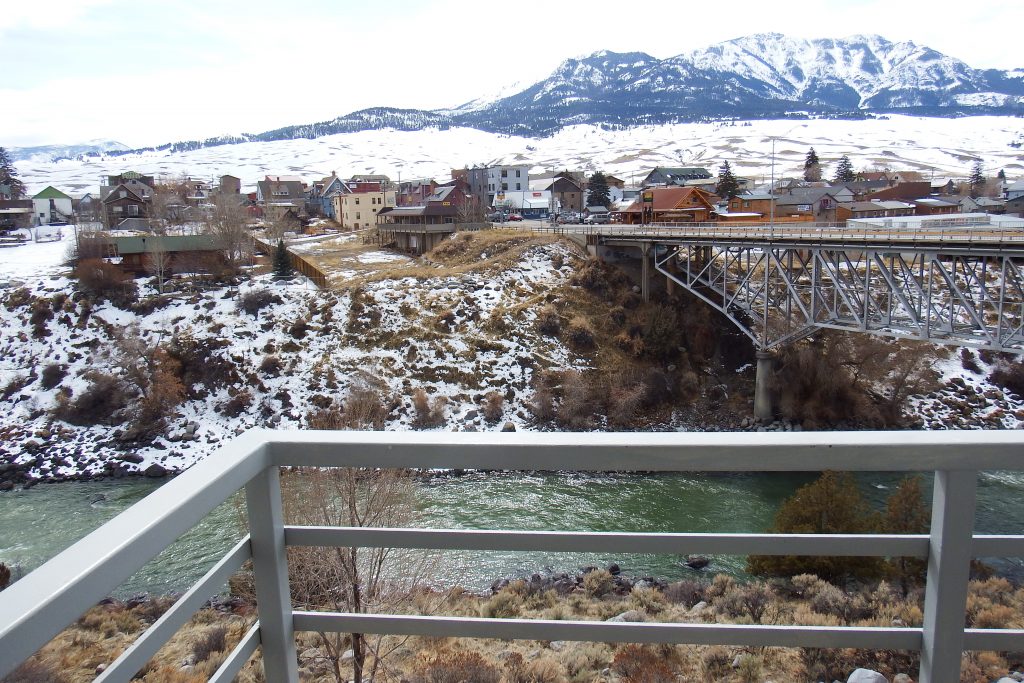
View from balcony of Absaroka lodge

For five days, I completely lost track of the outside world. I reveled in stunning scenery…

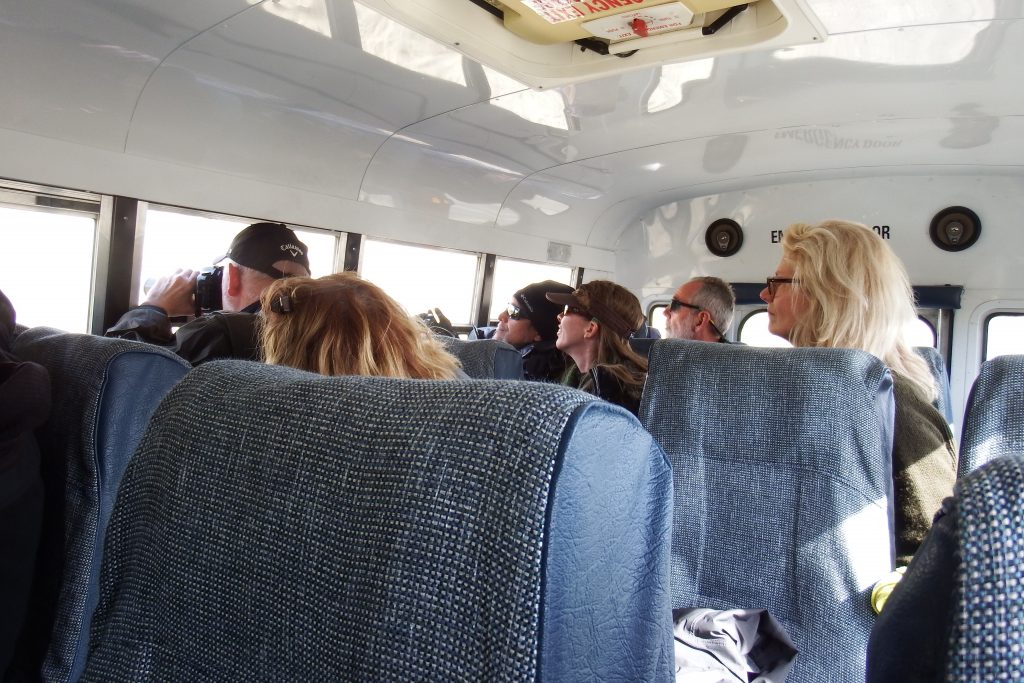
Ecotour

…enjoyed like-minded company…

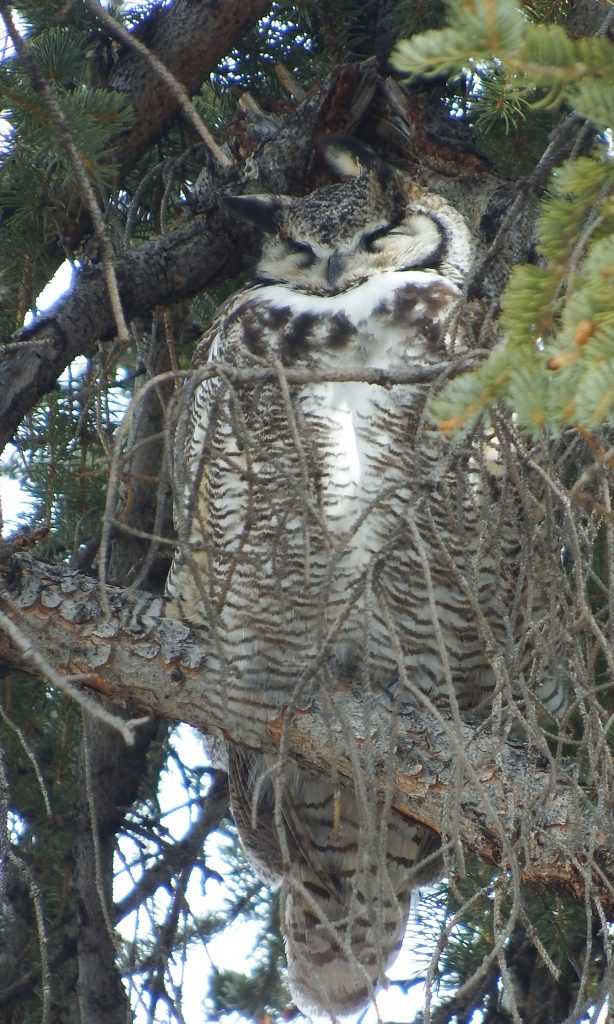
Sleeping Great Horned Owl

…followed knowledgeable, personable guides to track down astonishing wildlife-viewing (and –photographing) opportunities…

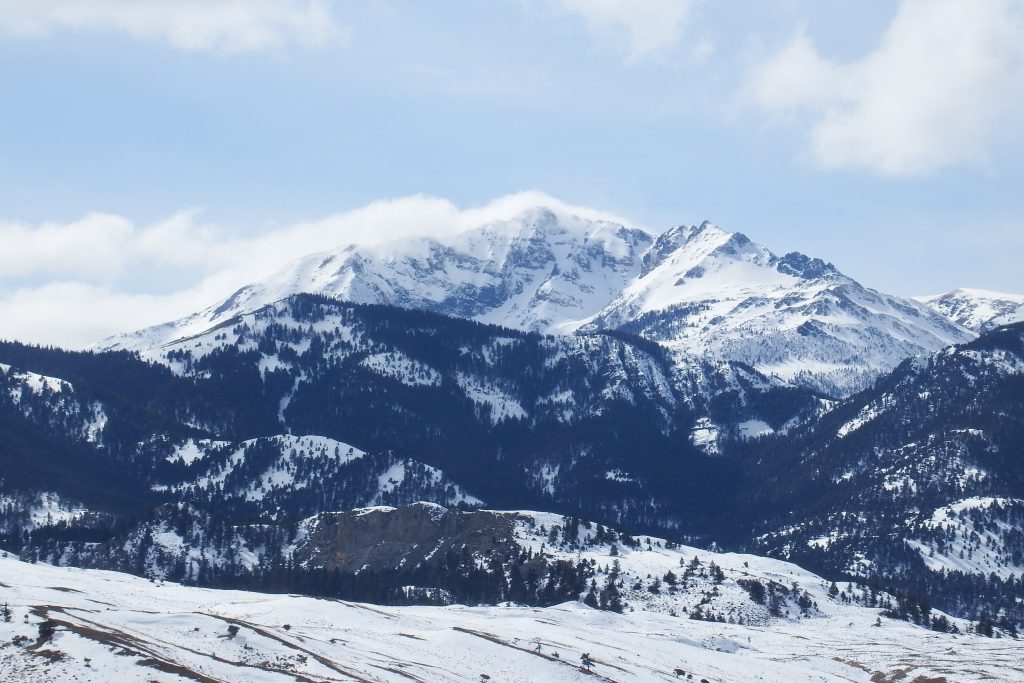
Yellowstone Mountain

…ate delectable food…

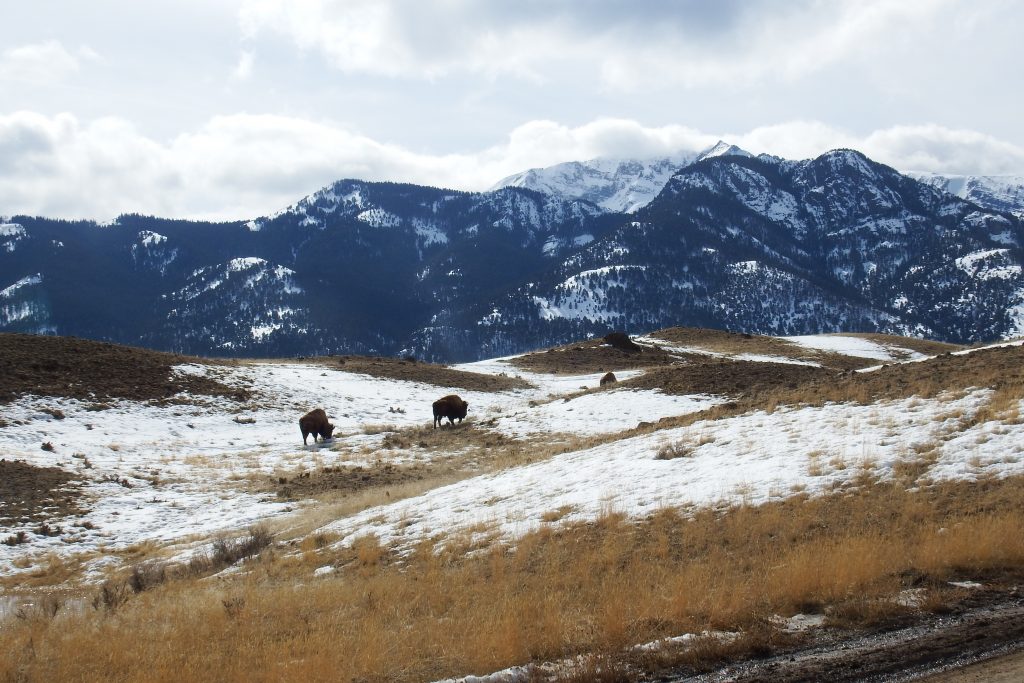
Bison and mountains

…and enjoyed bonus talks by local experts after dinner.

To cut a long story short — due to a combination of legal protection, radio collars, and open landscape,Yellowstone is one of the few places in the world where you can dependably watch wolves in the wild. And the leaders of Yellowstone Wolf Tracker are immensely knowledgeable experts with decades of experience, able to not only guide you to the wolves but also fill in the blanks with endless information and stories about the animals you see.

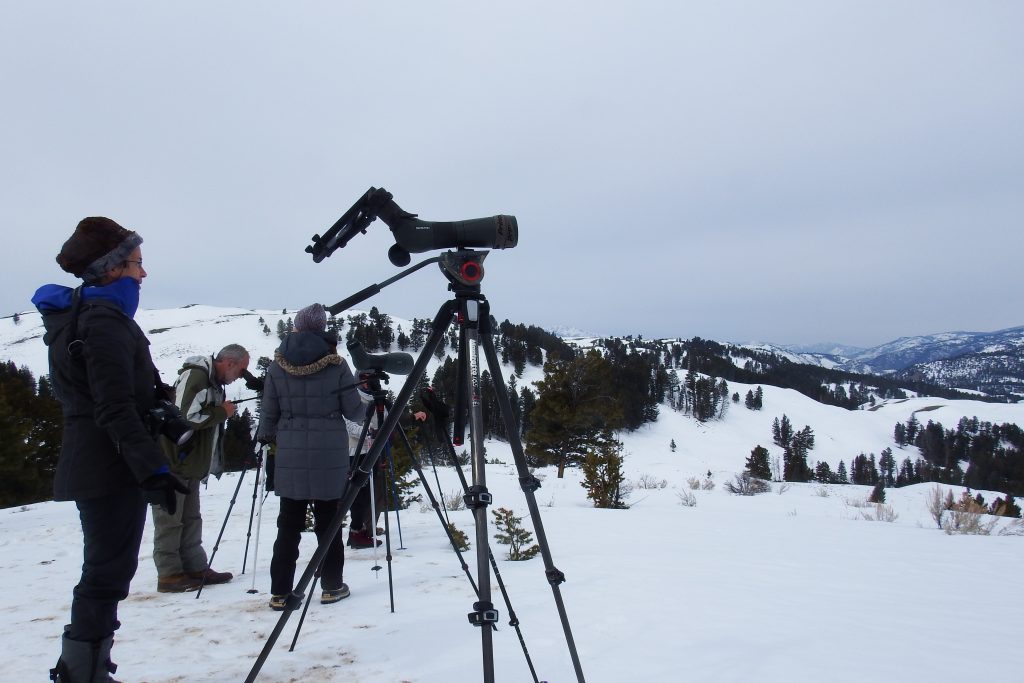
Wolf watching through a scope

There are some caveats, however. I doubt this trip would appeal to children or to the impatient — there are long periods of standing in the cold, waiting and hoping. And when you do finally see wolves, they are almost always very far away, visible only via scope.

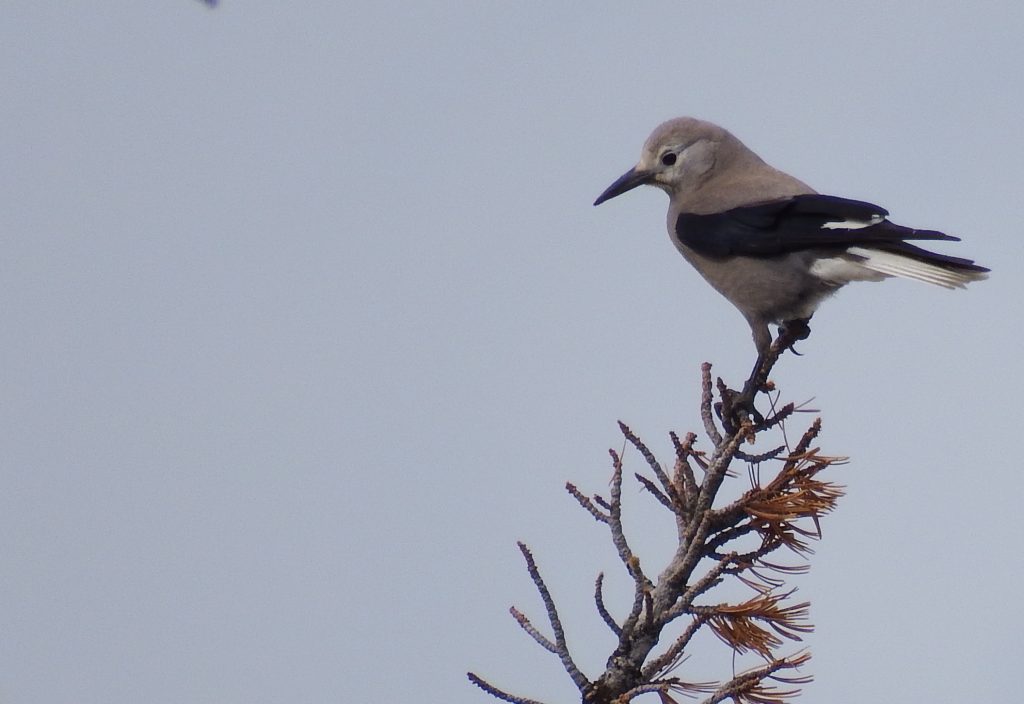
Clark's Nutcracker

(A fact that is very much made up for by the obliging nature of other wildlife, like this Clark’s Nutcracker.)

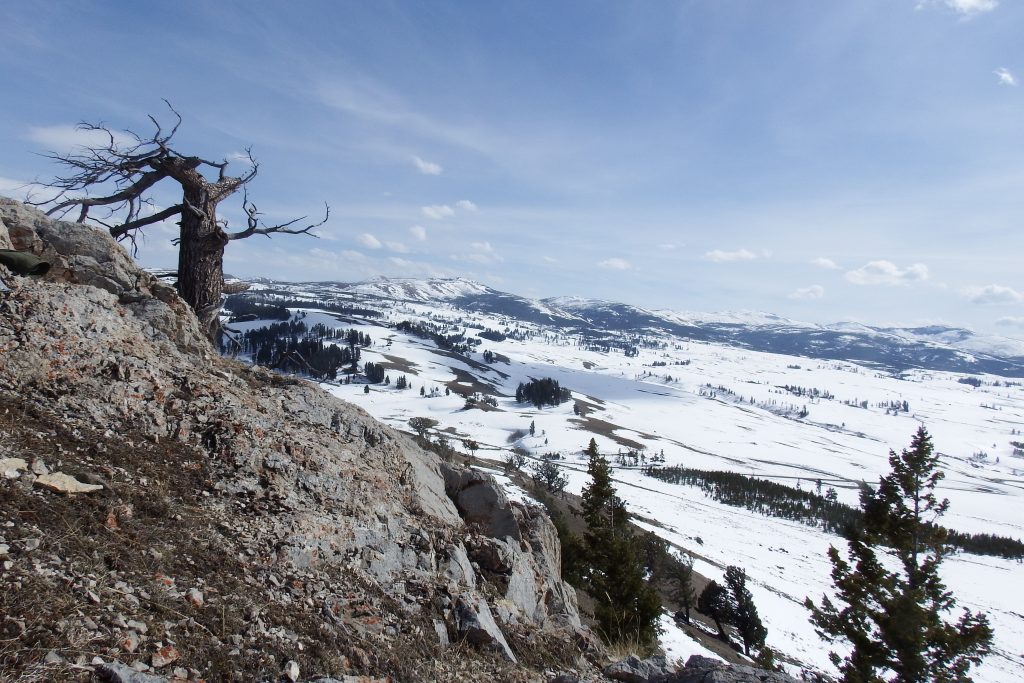
View from North Butte

The days were also very long with almost no alone time, which pushed my introvert nature to the limit.

Bull elk without his antlers

(Of course, that was my own fault. I could have skipped various optional activities…but when it came right down to it I preferred pushing my limits rather than losing a moment of this amazing tour.)

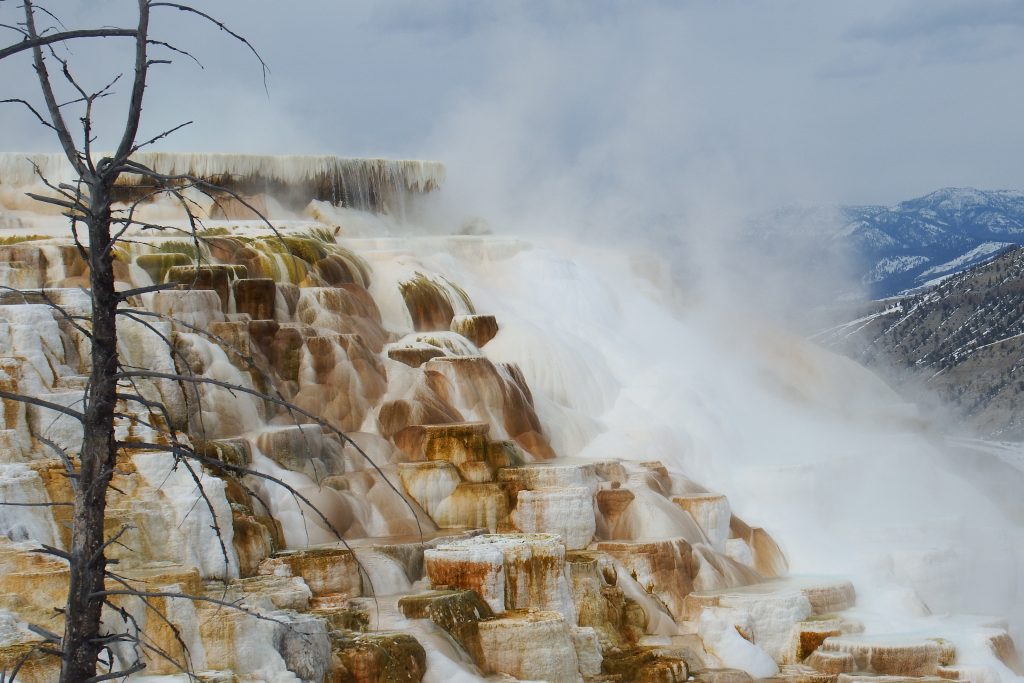
Mammoth hot springs

In the end, the only real negative is the price tag. Otherwise, I’d be signing up for every wolf watch Nathan and company leads.

If you want to be involved but can’t drop a couple of grand on the full adventure, there are other ways to engage your imagination. I read a bunch of books on Yellowstone wolves leading up to my trip, and I thoroughly recommend the following:

  • Decade of the Wolf — This is an easy-to-read, riveting summary of the first ten years of Yellowstone wolves, from capture in Canada to spread throughout the park. The profiles of individual wolves made me feel like I really knew them on a personal level and the whole thing was full of fascinating tidbits and evocative passages.
  • Yellowstone Wolves in the Wild — The photos in this book are astonishing, and the behavioral information was some of the best I’ve found.
  • American Wolf — I haven’t read this one yet, but several of the tour participants loved it. I gather this is a deep look into the life of one very popular wolf. (I currently have it on hold at my local library.)

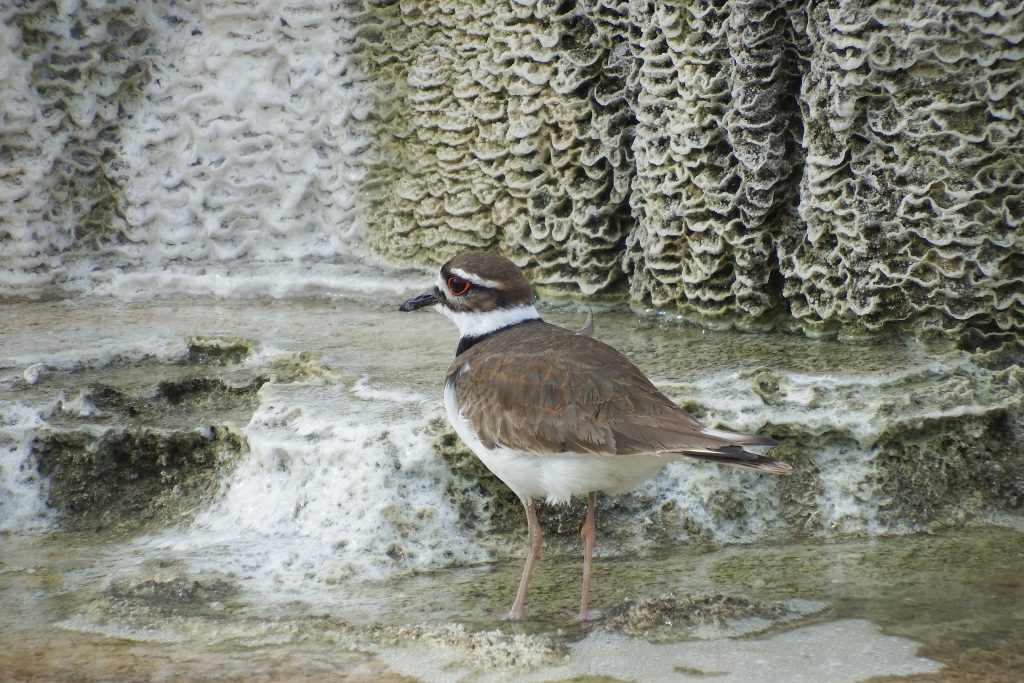
Killdeer at a hot springs

Alternatively, if you’d like to help ensure the survival of these magnificent creatures, a couple of non-profits might be right up your alley:

  • Yellowstone Forever is responsible for all of the amazing science that goes into collaring, tracking, and studying the park’s wolves. With their help, two decades of Yellowstone wolf watching has taught us more about the species’ behavior that centuries of previous studies managed to ferret out.
  • Bear Creek Council is a grassroots nonprofit that takes engagement to another level. This group deals with thornier issues that transcend boundaries, like the fact that wolves who set foot out of Yellowstone often fall to hunters’ bullets.

And there you have it — a life-changing week in a nutshell for your reading enjoyment. I hope you had fun wolf watching along with me!

Have something you want to share? Click the facebook link below to comment:

« Older posts Newer posts »

© 2026 Aimee Easterling

Theme by Anders NorenUp ↑