USA Today bestselling author

Tag: archaeology (Page 1 of 2)

Moon Blind duology now in audio!

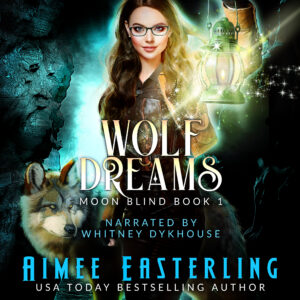
Wolf Dreams audiobook

I’m so excited to be able to share both Wolf Dreams and Moon Dancer with you for a twelve-hour gulp of werewolves, archaeology, adventure, and romance! Whitney Dykhouse blew this reading out of the water, making this my favorite series adaptation yet. So, if nothing else, I highly recommend you take a listen to the sample above.

Like my Moon Marked series, the Moon Blind audio duology is available everywhere (including your local library)…or it will be. There seems to be some major delay going on at ACX (the author side of Audible and Amazon). After waiting a solid month for Wolf Dreams to go live, I gave up on a synchronous release and uploaded both audiobooks to the other retailers for immediate gratification. Bonus: they’re only $7.99 apiece on Apple at the moment, which is dirt cheap!

Happy listening!

7/30 update: Wolf Dreams is now on Amazon and Audible. Moon Dancer might take a while though….

2019 in review

I saw another author make a post about everything she’d launched this year and promptly decided to steal the idea. So, without further ado, 2019 publications just in case you missed one the first time around!

Aimee Easterling's 2019 releases

New releases:

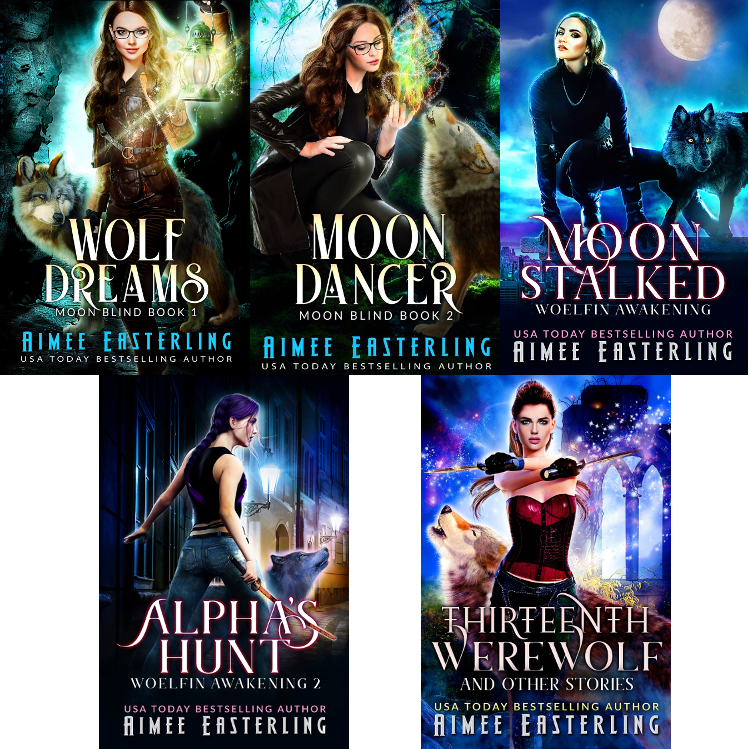
Wolf Dreams — After spending several months wide, the first book in the Moon Blind duology went into Kindle Unlimited in November.

Moon Dancer — The second book in the Moon Blind duology is also currently in KU.

Thirteenth Werewolf and Other Stories — This wide anthology is full of stories that were originally written as newsletter-only freebies, but the first story is brand new.

Moon Stalked — The first book in a new series. This one launched on all retailers but soon thereafter I pulled it into Kindle Unlimited. It will be wide again at some point, though, so please don’t despair if you missed the official launch window.

Alpha’s Hunt — This will be on 2020’s list officially. But, just in case you want to jumpstart the new decade, book two in the Woelfin Awakening series is up for preorder now on all retailers.


2019 werewolf box sets

Box sets:

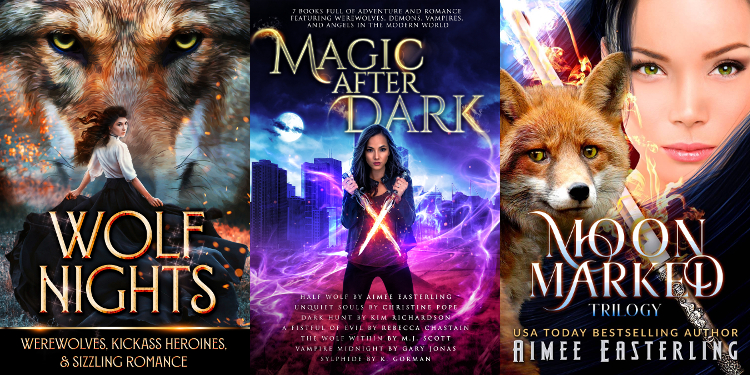
Moon Marked Trilogy — I recently bundled up my reader-favorite series, and the resulting box set will be at a special 99-cent price point for one more day. Grab it while it’s cheap!

Wolf Nights — This is a multi-author, free box set. I picked some of my favorite authors to include, so I highly recommend trying it out.

Magic After Dark — I’m afraid you missed this limited-time, multi-author, free box set if you weren’t reading along all year. I’ve linked to its Goodreads page in case you want to check out the included authors. Once again, I chose novels I thought my readers would particularly enjoy.


Aimee Easterling's 2019 audio releases

Audio:

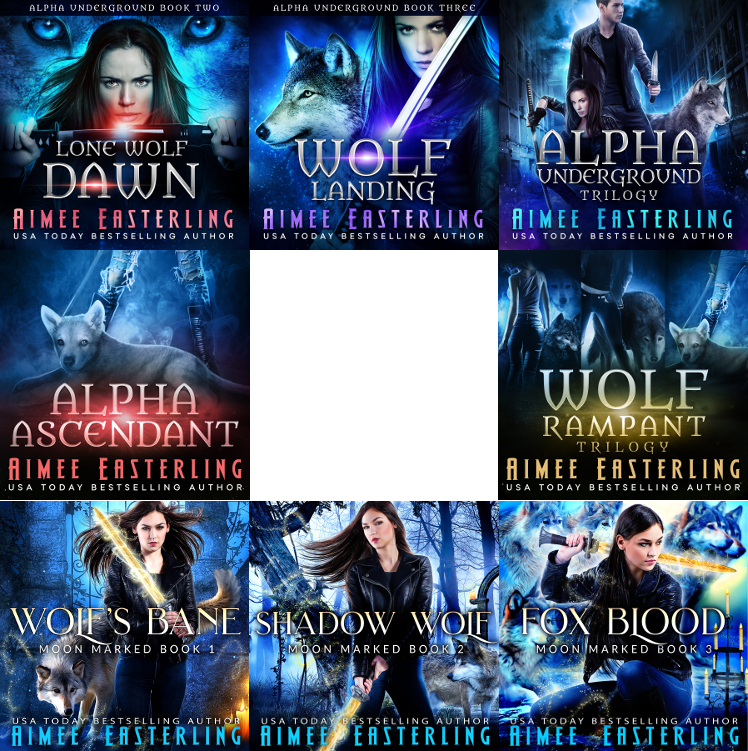
Newly available on all retailers and via your local library: Wolf’s Bane, Shadow Wolf, and Fox Blood. (Well, Fox Blood is currently seeping into retailers. It is 100% definitely on Kobo, though, and should reach the others by the end of the year…I hope.)

Newly available on Amazon, Audible, and Apple: Lone Wolf Dawn, Wolf Landing, the Alpha Underground Trilogy bundle, Alpha Ascendant, and the Wolf Rampant Trilogy bundle.


What’s coming up in 2020?

I can definitely tell you I will write words! Not sure how many or in what form or when they’ll reach your ereaders/headphones. If you want up-to-the-minute release information, be sure to sign up for my email list. Have a great new year!

Shapeshifters: A History

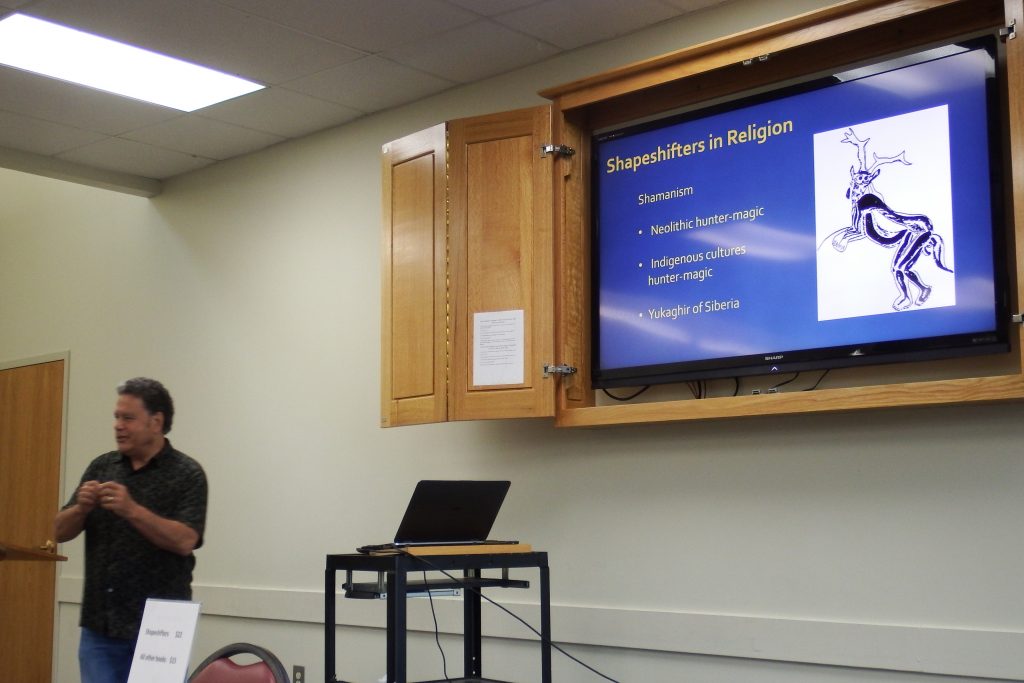
A few weeks ago, I was thrilled to notice a talk on shifters being planned at my library. It turns out that local author John B. Kachuba had researched the topic extensively while planning out his new release — Shapeshifters: A History. I took copious notes so I could share his lecture with you!

John Kachuba speaking about shapeshifters

Kachuba takes a very inclusive view of shifters, starting with cave paintings from thousands of years ago that seem to represent animal-human hybrids. While we can’t know what prehistoric people were thinking, modern studies of the Yukaghir people in Siberia suggest that these cave paintings might represent ceremonies in which shamans mentally transformed into animals to assist in planning hunts.

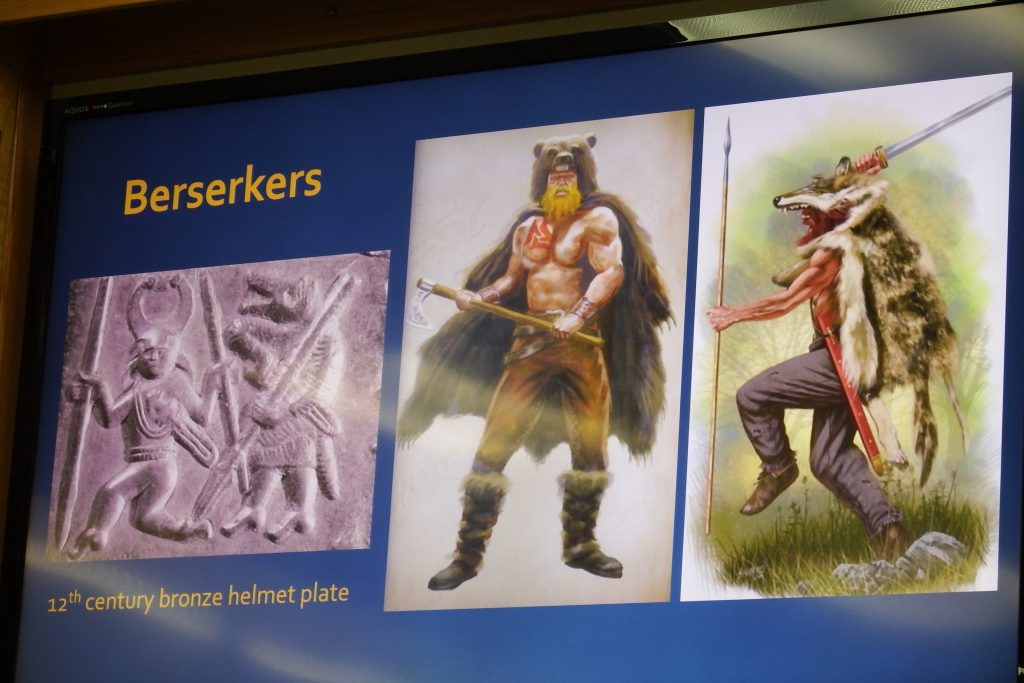
Berserkers as shapeshifters

The natural successor of this belief is the Scandinavian berserkers from the eleventh and twelve centuries AD. Fighters donned hides of bears or wolves and, like the shamans of old, believed that they became as invincible as that animal in battle.

(To me, this has clear fictional potential. Berserker werewolves, anyone?)

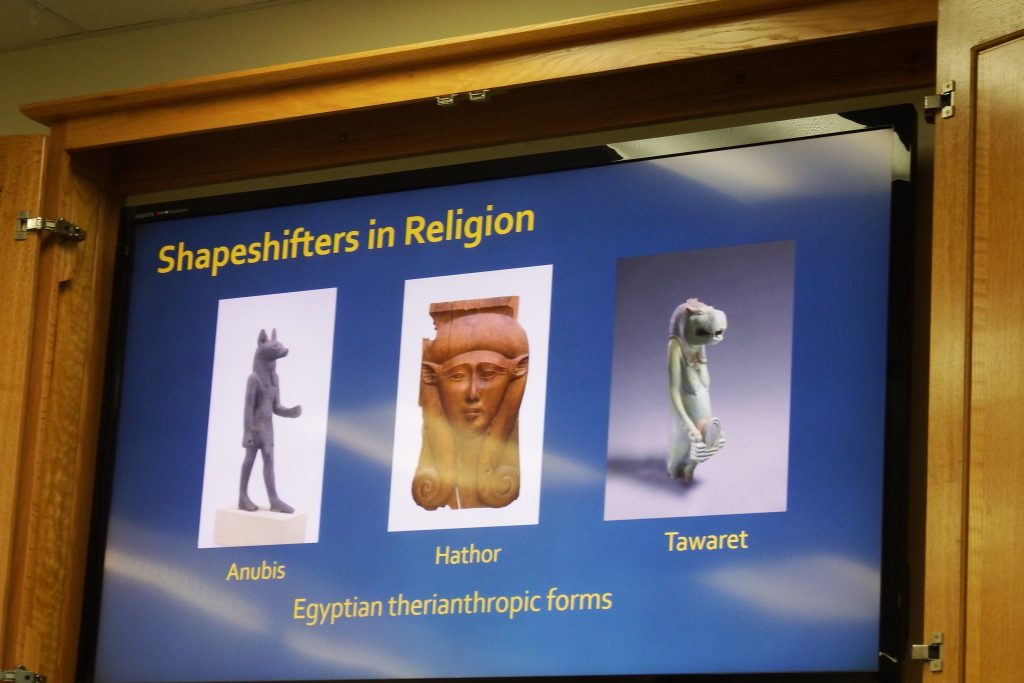
Egyptian therianthropy

Next up was Egyptian therianthropy. These human-animal hybrids were believed to inhabit statues. But, except for that small fact, they could have been taken straight out of modern urban fantasy. Isn’t it Patricia Briggs’ werewolves who can take on a wolf-man hybrid form for battle?

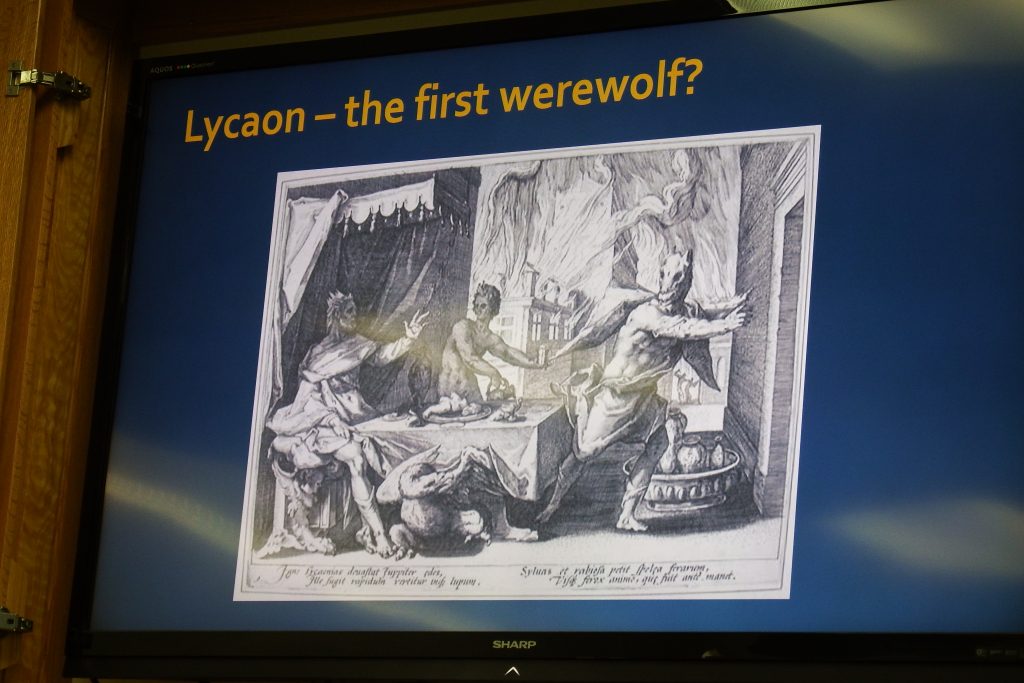
Shifters in Greek and Roman mythology

Greek and Roman mythologies were even more full of shapeshifters, with gods taking the form of bulls, swans, and many other animals. In most cases, the gods shifted to seduce women. (Because, you know, a bird is so much sexier than a human male….) In others, gods shifted mortals into plants to help the latter escape a similar fate.

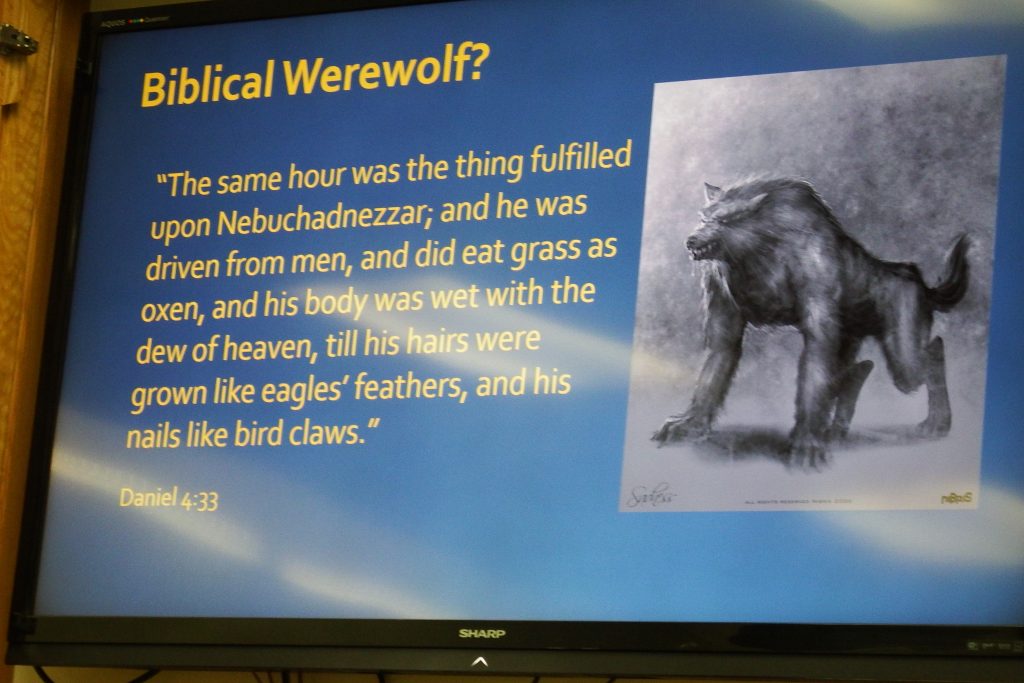
Biblical werewolves

Then Kachuba went out on a bit of a limb. He argued that there were shifters in the Christian Bible, starting with Nebuchadnezzar and possibly extending to Jesus himself. Similarly, he read Buddhist texts that suggested Buddha had transfigured at least twice. At which point Kachuba jumped over to Hinduism to mention Vishnu’s many forms.

Except for Nebuchadnezzar, all of these transformations were from human to human rather than from human to animal. But the religious history does beg the question — where do you draw the line about what counts as a shifter and what does not?

Modern paranormal accounts

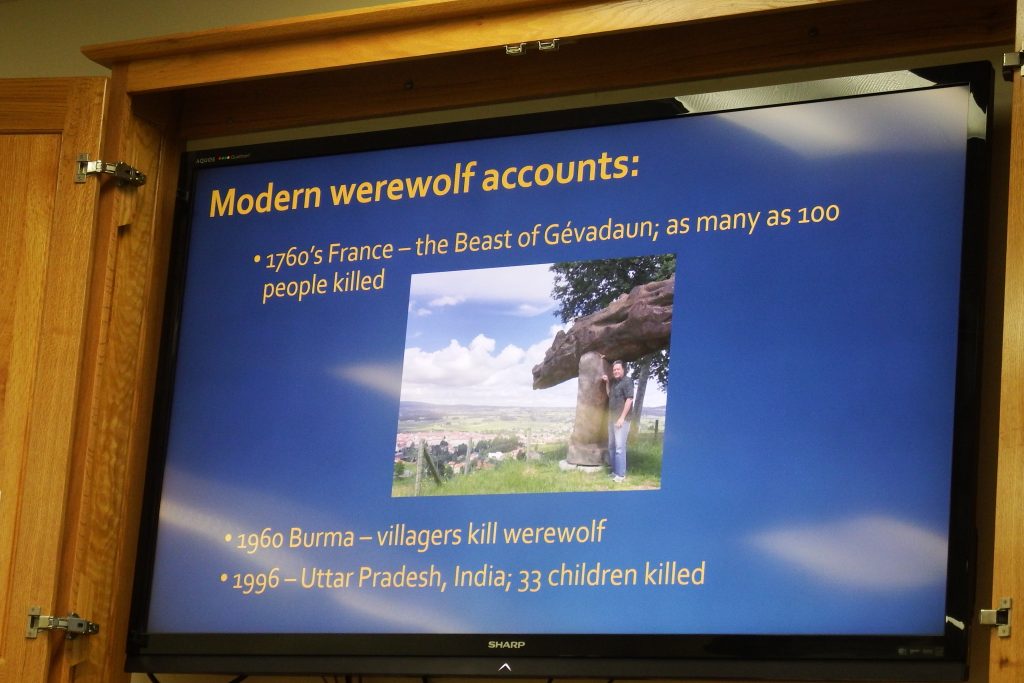
Religious hair-splitting aside, there have even been near-modern accounts of shapeshifters. For example, the Beast of Gevadaun killed more than a hundred people in one year in eighteenth century France. A New York Times article suggested that a werewolf was killing children in India in 1996. And modern vampire communities still exist in New Orleans and Buffalo, New York, with volunteers donating blood to “vampires” who believe they need this fluid to keep them alive.

(Kachuba included vampires in his shapeshifter history because of their reputation of transforming into bats.)

Skinwalkers

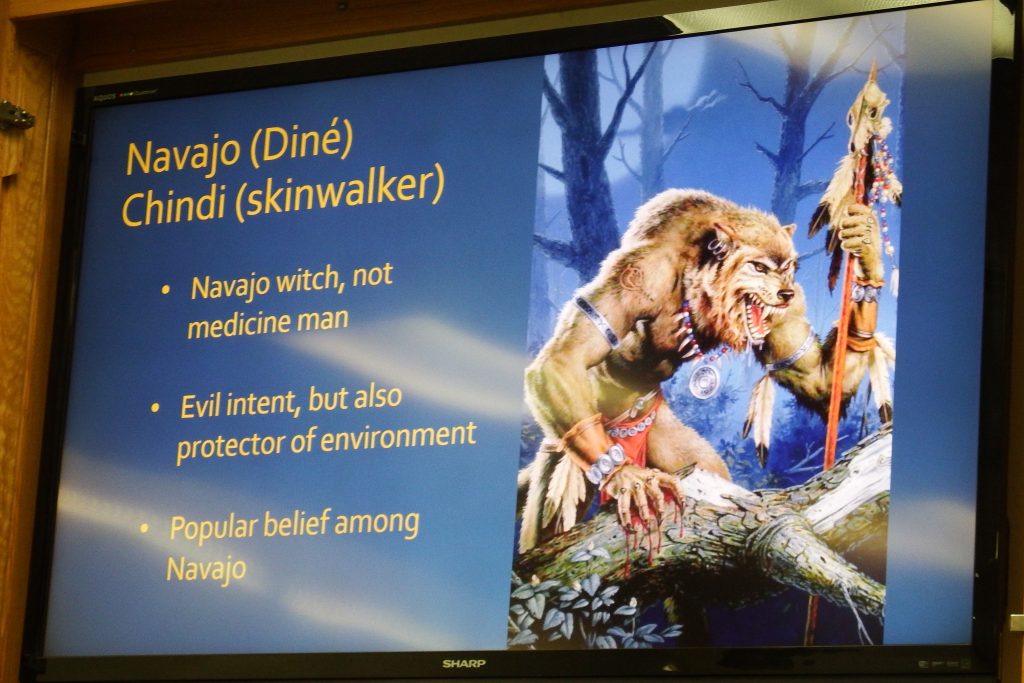
Our lecturer was starting to run out of time when he branched out beyond Western shapeshifters. But he did mention Navajo skinwalkers, along with the vast quantity of shifters included in Japanese lore. (If you’ve read my Moon Marked series, you’ve learned about one of the most common examples of the latter — the kitsune, a fox shifter.)

To Kachuba’s list, I would add some of the other historical shifters which have caught my attention in recent months. The selkie (seal shifter) has always fascinated me, even more so when I learned that Croatian lore has a werewolf version of this tale. (You’ll find out what I made of that in December!) Kelpies are water horses that transform into women. Naga are snake shifters in India. And some Chinese stories have humans shifting into the form of dogs.

But — why? Why do shapeshifter legends span so many cultures? Kachuba suggested a few possible explanations.

In my books, I often like to play with the dual nature of shapeshifters — animal vs. civilized human — and this may be the psychological root of some legends. But shapeshifting also offers us a way to hide, to understand personal transformation, to attain new knowledge (especially in shamanic beliefs), and to excuse bad behavior (Dr. Jekyll and Mr. Hyde style). There is also a trickster side to many shapeshifter archetypes, which may be related to some or all of the above.

Which, I know, sounds pretty esoteric when written out in the form of a list. But think of it this way — how did you feel as a kid when you dressed up for Halloween? Didn’t you, in some metaphorical manner, shift your skin? If so, I hope you’ll click over to Facebook and tell me all about it!

Moon Dancer: Chapter 2, Scene 2

If you missed it, click here to start at the beginning….

***
Claw ScordatoAfterwards, the students mobbed me with questions and effusions. But my wolf slid past so quickly her act bordered on rudeness. What did students matter when Claw was present? Without wasting time on apologies, we took the stairs to the back of the lecture hall two at a time.

All three werewolves rose as I approached them. The gesture might have been respectful, but it felt more like intimidation. I tensed, fully expecting a mean-spirited comment from one of Claw’s companions.

After all, Theta was dour by nature and Harry hated me because I’d lost him the job of presidential protector. Both were strong, hard, and capable. No wonder they found it frustrating to cool their heels in a small college town.

Claw was their alpha, however, so where he went they followed. Now, they let their leader do the talking for the group.

“Olivia.” Claw’s voice was as sweetly seductive as the cloud of butterscotch surrounding him.

“Claw.” I breathed the word as I relived our most recent conversation. For weeks, I’d avoided this werewolf who turned my inner beast unruly. But three days ago we’d all been invited to the White House for a formal thank-you from our President.

There, Claw had finally drawn me aside and forced the conversation I’d been trying to escape.

What you and Val want,” he growled, “is an abomination.”

I have to do this.”

At least hunt with the pack one more time before you make a final decision.”

I’m trying to cut that tie, not strengthen it.”

You think starving your wolf will make her leave you?”

I’m not starving her. I’m segregating her.”

That’s the exact same thing.”

His eyes had said I was an idiot, but his mouth remained silent. We’d left it at that. Or I had.

Since then, Claw kept showing up just beyond speaking distance. In the cafeteria when I met with a student interested in a career in archaeology. At the edge of my vision when I walked home on a day too warm to be stuck in a vehicle. Outside my bedroom window just before I closed the shades for the night.

His silent presence should have been creepy. But Claw met my eyes, raised his brows, accepted my silent refusal to budge on my decision.

Rather than a stalker, he was a sentinel guarding a recently Changed werewolf. He disapproved of my decision, but he wouldn’t try to force the issue. Instead, he watched, waited, expressed his willingness to help if I lost the battle with my inner beast.

Now, he took a single step forward. His lips parted—for a kiss or a comment?

I never knew, because Claw’s languid grace shifted into alertness as his eyes flicked up and over my shoulder. Behind you, my wolf warned unnecessarily.

I whirled, taking in the grandmotherly form of Dr. Inez Sanora, the new department chair. She was one inch shorter than I was, her long gray hair twisted into an unremarkable bun. But her tone reminded me less of a fairy-tale grandmother and more of the big, bad wolf.

“When you have a moment, I’d like to speak with you.”

Apparently my joke about tomato juice hadn’t hoodwinked everyone.

Do you want to know what happens next? Keep reading in Moon Dancer!

Moon Dancer: Chapter 2, Scene 1

If you missed it, click here to start at the beginning….

***

Moon DancerThe wolf had drunk with wild abandon. But she was a predator. Even while reveling in cow blood, she hadn’t closed her eyes.

So I was privy to the reactions of the audience. Surprise. Disgust. Bewilderment.

The cluster of archaeology faculty two rows back vibrated with consternation. This open-to-the-public lecture was meant to draw new students into our department. My actions would surely drive our existing students away to biology or math.

The Archaeology Club was more forgiving. My former-student-turned-teaching-assistant Patricia cocked her head as if waiting for the punchline. She whispered something to the blond freshman beside her. A cascade of nods fluttered down the line, ending with a pencil-stick drumbeat from the pimply boy on the end.

Between the two extremes, audience members I was unfamiliar with exuded pheromones that tantalized my wolf-assisted senses. Confusion. Excitement. The slick sweetness of fear.

I swallowed hard. Or rather, my wolf swallowed. We licked blood off our lips, raised our hand to wipe our chin, then sucked on our fingertips.

We didn’t try to erase the streak of red across the top of our formerly pristine blouse. There was nothing to be done about that so it was better ignored.

Instead, we turned to face the audience member I’d been avoiding, the only person my wolf was interested in. Claw.

He perched at the edge of a seat at the rear of the lecture hall, flanked by familiar werewolves. The others were overlookable, but Claw was tall, broad, glowering.

Magnificent.

No wonder my wolf advanced a single step in his direction. Our joint body vibrated with interest. She acted for all the world as if—three months after Changing—we were still very much caught in the fickle attraction of the moon blind.

If so, moon blindness had its advantages. My animal half was so intent upon Claw that she forgot to fight me for control of our shared body. She didn’t notice when I grabbed her tail with intangible fingers and yanked.

I struggled not to gag as furry feet slid down my gullet and into my stomach. My eyes bulged as her claws scraped against the underside of my skin.

But now I was in charge and she wasn’t. Time to salvage the lecture.

“Blood,” I repeated, this time speaking my own mind rather than responding to the wolf’s yearning. “Blood was one of the binders added to rock powders to help colors adhere to cave walls.”

I plugged the HDMI cable into the side of my laptop, hit a button, then relaxed as prehistoric art glowed into life on the screen behind me.

“Blood-red ochre was used ceremonially for tens of thousands of years across several continents. Also known as iron oxide, the pigment was painted onto cave walls, used in ceremonial burials, and streaked across bodies, weapons, and animal skins.”

I dipped my fingers into the blood puddling in the indentation atop my collarbone, used the drying liquid to streak quick lines across my brow and cheekbones.

Now the cascade of red around me wasn’t horrifying; it was intentional. Was this how the first shamanism had started—klutziness saved from ignominy with a little stagecraft?

Warm air swirled around my nostrils. The audience was relaxing. As my faux pas faded, I segued straight into Patricia’s promised punchline.

“For hunters, blood was instantly familiar,” I continued. “Drop a caveman in this lecture hall and he’d know I merely spilled my morning tomato juice.”

Click here to dive into the next scene!

Moon Dancer: Chapter 1 Scene 2

If you missed it, click here to start at the beginning….

***

Moon Dancer excerptThe faster I tried to button my white silk blouse, the more my fingers fumbled. No wonder since my nails kept lengthening into claws.

“Cut it out,” I muttered, grabbing my keys and wallet and stealing one quick glance in the hall mirror. I needed to be on time. I needed to look professional…

…And I needed to rebutton my blouse. Because, despite my best efforts, I’d still managed to mismatch the rows.

My day. My choice, the wolf inside me grumbled. She forced me to drop the car keys back into the bowl by the door then bent our body double until clean cuffs dragged against grubby floor tiles. Run. Hunt. Come, Adena.

The raven responded to our body language with a caw and a rustle of feathers, hopping off the coat rack to land on our curved spine. Both bird and wolf were willing to blow off the most important lecture of the semester in favor of stalking rabbits in the empty lot three blocks over. Unlike me, they had no concerns about losing our job and winding up homeless when we failed to pay the bills.

Wolves don’t need houses, my inner beast scoffed. Wolves need pack.

“How about blood?”

Hmmm?

The body she commanded froze, knees pressing against unyielding floor tiles. We sank back onto our skirted bum, the welcome mat managing to scratch our skin despite the fabric in between.

My wolf was listening.

“Hot blood,” I elaborated, pressing my index fingernail against the pad of my thumb to measure sharpness. The claw had receded but my human nail was longer than it had been when we’d started our morning power struggle. Still, my nails weren’t so claw-like that I’d have to rush back to the bathroom and clip them. If the wolf accepted our humanity, we didn’t have to be late.

“Salty. Tasty,” I continued. Testing my muscles, I rose into a more human posture. “Look.”

Flicking open the drinking spout of the insulated coffee mug, at first I smelled nothing. Then, my wolf’s interest piqued.

Colors dimmed. Scents sharpened. Saliva pooled in our shared mouth.

I hurried through the locking of one door and unlocking of another. But my wolf didn’t stay distracted long.

Now, she demanded as my hand made contact with the cool metal of the car door handle.

I tried to clench my fingers sufficiently to pull up on the lever, but my left hand was the one that moved without my permission. The mug lifted to my lips. Drink, the wolf demanded.

I couldn’t bait and switch, so I swallowed the thick liquid I’d bought in the butcher’s freezer section yesterday then primed in the microwave moments earlier. The notion of what I was sucking down repulsed me. The taste was vile.

The wolf disagreed. Pleasure suffused us. Was she or I the one being strengthened by the liquid some poor cow had lost while being processed into hamburgers?

The demand that followed was most definitely lupine. More.

“Once we get there,” I countered. This time, I managed to slide into the car so we could speed toward campus. It was only a three-minute drive and my lecture wasn’t scheduled to begin for another four minutes. I wasn’t yet officially late.

More! Furry fingers clenched around the steering wheel, swerving us sideways. The car’s fender narrowly missed a pedestrian, who yelled something I was glad was blocked by the closed window. Adena responded from the passenger seat with a round of avian swearing as I turned into the closest lot.

“We’re almost there.” I needed both hands to park and grab my laptop case, but I rolled my tongue around in my mouth to capture the final molecules of blood.

The effort was a sop to my wolf and she responded with a minuscule relaxation sufficient to allow me to exit the vehicle. Our knuckles were hairless—mostly. And I found myself able to juggle the mug and the laptop once Adena abandoned me in favor of her customary tree branch.

Sunny March weather meant the raven preferred to stay outside while I lectured. My wolf had similar inclinations. But the salty liquid on my tongue soothed her. She hummed her satisfaction as I swallowed one last particle of blood.

The bell tower chimed, knocking me off my stride. Shoot. I’d forgotten that my car clock ran two minutes slow.

Sprinting, I clung to the mug while rebuttoning my blouse and trying not to let the laptop strap bounce off my shoulder. The halls were empty. Everyone must have already settled into their seats.

I burst through the door, gazing up at the packed lecture hall. My eyes slid over the back corner, hiccuped as my wolf struggled for dominance.

She wanted to greet him. She wanted to lick him. She wanted to….

Squashing her interest, I moved on to assess the room professionally.

I was late, but the turnout was excellent. I could still make this appearance work.

“Ah, here she is now.” The new department chair turned to greet me, only a faint twitching in her cheek denoting her disapproval of my tardiness. “Please give a warm welcome to Dr. Olivia Hart.”

The clapping was effusive. I smiled then leaned over the nearby table, setting down my bag in preparation for hooking my laptop up to the projector.

And my wolf pounced.

“Blood.” Her words. My mouth. A titter from the audience.

Not now! This time I was the one speaking silently. She was the one grabbing the travel mug and upending it over our tilted face.

Ruby red liquid poured out the hole in the top, glinting in reflected sunlight before gushing over our taste buds. Most we swallowed—after all, the wolf thought this treat was delicious. But some overflowed onto our chin, the table, the neck of our blouse.

White no longer, my work attire was now streaked with crimson. I glanced down, cheeks heating at the way blood puddled between my breasts.

This wasn’t how I’d intended my lecture to start.

Click here to jump to chapter 2!
Moon Dancer: Chapter 1 Scene 1

Are you ready for a sneak peak into Moon Dancer? This book probably won’t make any sense if you haven’t read Wolf Dreams. But if you’ve got book one under your belt, here’s a teaser to whet your appetite for book two.

***

Moon Dancer excerptIt came as a dream but felt like a vision. A wolf’s face in beaten copper, hollows where the eyes should have been. The hand I possessed—broad, ornamented with a ring of twisted fibers—slid the wolf mask into a tightly woven basket that bobbed along the edge of a barely illuminated stream.

…The old ways.” A male voice rumbled out of my chest. Quiet drumbeats almost drowned out our words.

Something clenched inside me. My wolf, sleeping until then, woke and clawed at my insides.

Pack. Find him….

This was no time for lupine nonsense. I pushed the wolf down, analyzing the artifact that was being released into an underground watercourse.

It was ancient. Even in the dim light, I could tell the mask had a story and belonged in a museum. Was it…?

Before I could fully formulate the question, the artifact was lost into the wild. Like a stick dropped into a stream to race against another, the basket leapt free of our fingers and jumped forward out of reach.

We didn’t try to stop it. Instead, we stood frozen while the roar of a not-so-distant waterfall was overwhelmed by a rising melody of chants and drumbeats. Weariness of age made our body tremble as the last flicker of copper disappeared into the darkness.

Come,” the man murmured. His voice was querulous. “We need you.”

For one moment longer, we lingered. I couldn’t tell why the man whose body I inhabited wasn’t moving or who he’d been calling, but I understood my own intentions.

It had been months since I’d visited the past in a vision. No wonder I reveled in the connection. What was this man about to reveal to me? What would…?

We turned. Hit pause on a cell phone. The soundtrack halted mid-note.

Wait, what?

This wasn’t the prehistoric past. This was the technologically overpowering present.

I woke to the blaring anger of a long-ignored alarm.

Click here to dive into scene two!

Hopeton Earthworks archaeology tour

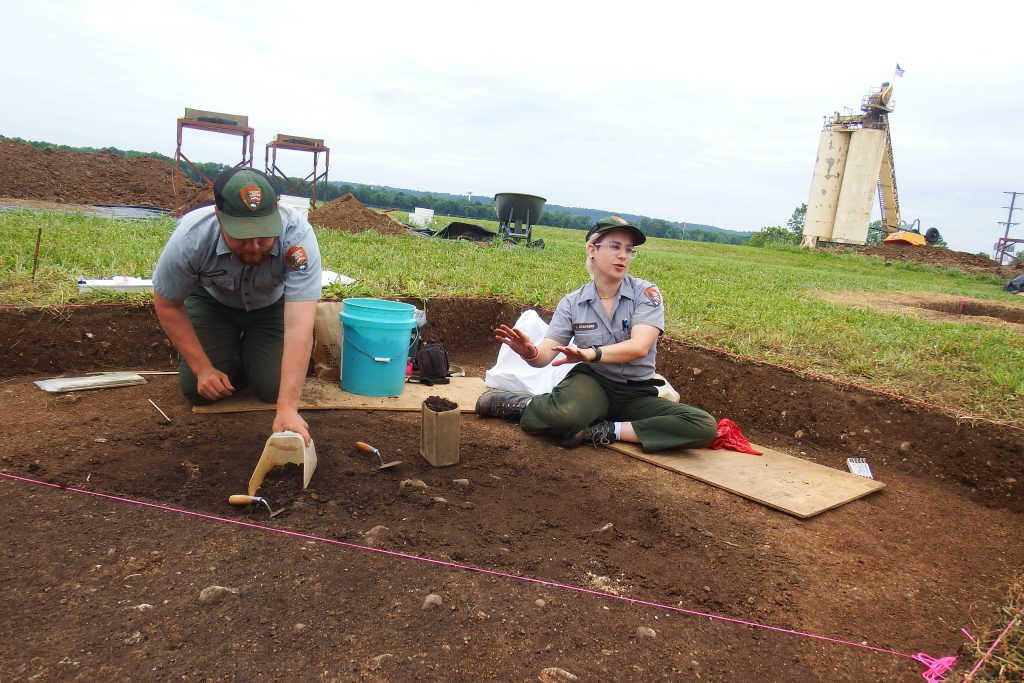
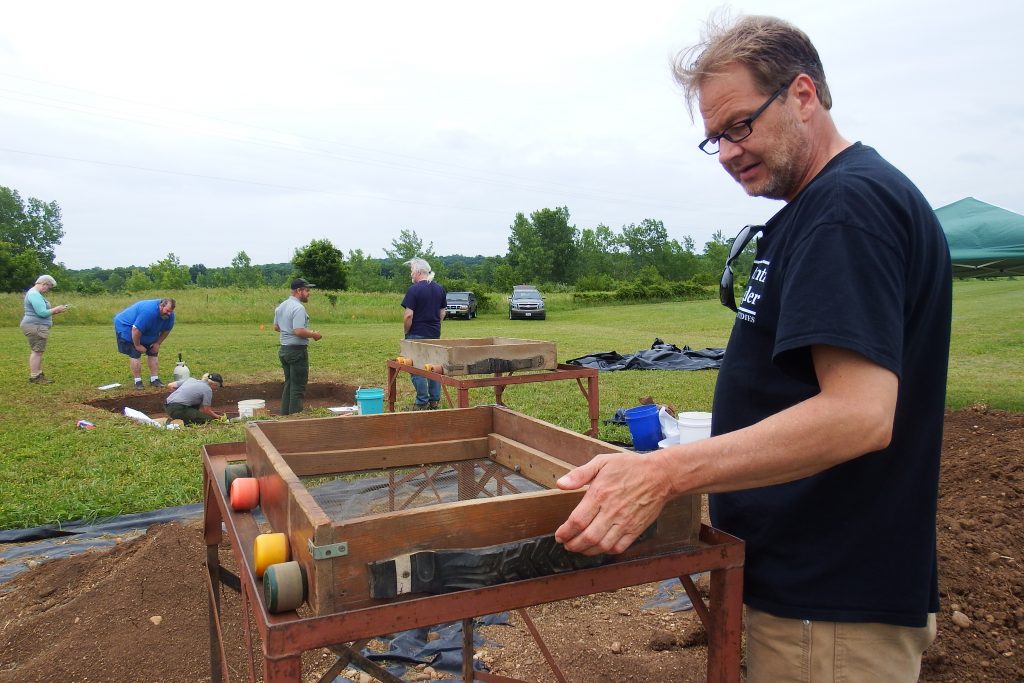
Archaeologists at work

I took a break from writing fictional prehistory so my husband and I could tour a real, live archaeological site this weekend. And, of course, I came away awash in facts and guesses about what made these ancient people tick.

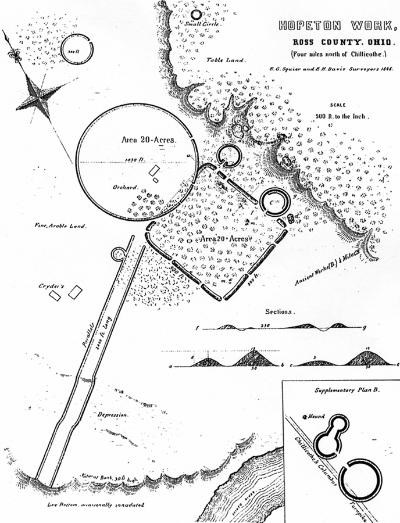
Hopeton Earthworks map

The site in question is Hopeton Earthworks, located just across the river from the contemporaneous Mound City Earthworks in Chillicothe. In fact, our guide — Dr. Bret Ruby — suggested that we should really think of these two areas as facets of the same site. Mound City was used for burials while Hopeton appears to have been used a “World Center shrine.”

That analysis is based on the work of modern Native Americans, who speak of sites like this as being models of the universe. Specifically, the long double line at the bottom of the picture above represents two quarter-mile earthen walls that point to sunset on the winter solstice. This seasonal focus is common at similar sites, like the Calendar Mounds at Fort Ancient. Dr. Ruby suggested that Hopeton Earthworks may have been built as an “earth naval” meant to capture or channel the power of the solstice sun.

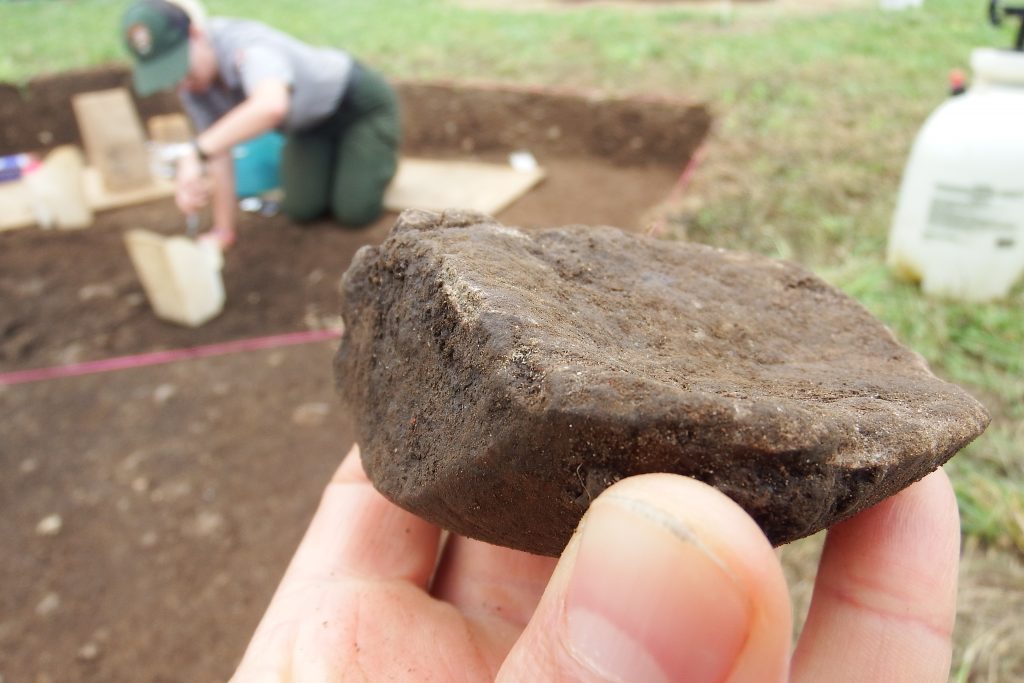
Fire-cracked rock

That part is guesswork, but there was plenty of rock-hard data present…quite literally. This summer, the archaeologists are excavating the remains of earthen ovens, which are currently found via machinery that senses magnetic anomalies in soil. In the past, these same ovens were often discovered by walking across tilled farmland and looking for fire-cracked stones like the one shown above.

What’s a fire-cracked stone? Let me back up and explain about earthen ovens. Hopewell people dug pits in the soil, filled them with wood, lit fires, then piled stones on top. The stones sucked up the fire’s heat then released it more slowly, often cracking along weak points in the rock in the process. The result is stones with multiple flat faces like the one pictured above. You don’t usually find this shape in non-human-impacted areas.

At the Hopeton Earthworks, fire-cracked rocks are very common, but they aren’t found everywhere. Instead, people appeared to keep their cookfires at the edge of the raised terrace that encircles the site, out of the floodplain but far enough away from the earthworks so they weren’t muddying the sacred with the profane. In other words — no trash in church!

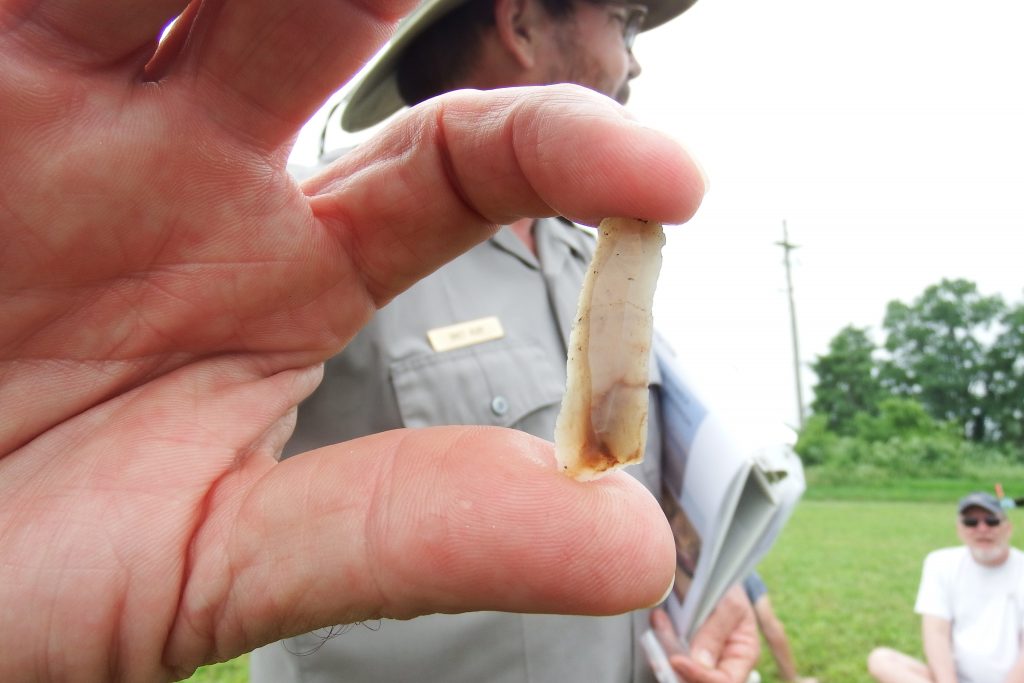
Lamellar bladelet

There was, however, trash in the ovens…and archaeologists were excited to find it! The flint bladelet above was found the same day of our tour, the prismatic cross-section proving that the knife was knocked off a core using a very specialized Hopewell technique. This particular blade never got utilized, but our leader said that similar blades were used to shave hair into elaborate hairstyles. Fashion was a thing in Ohio in 0 BC.

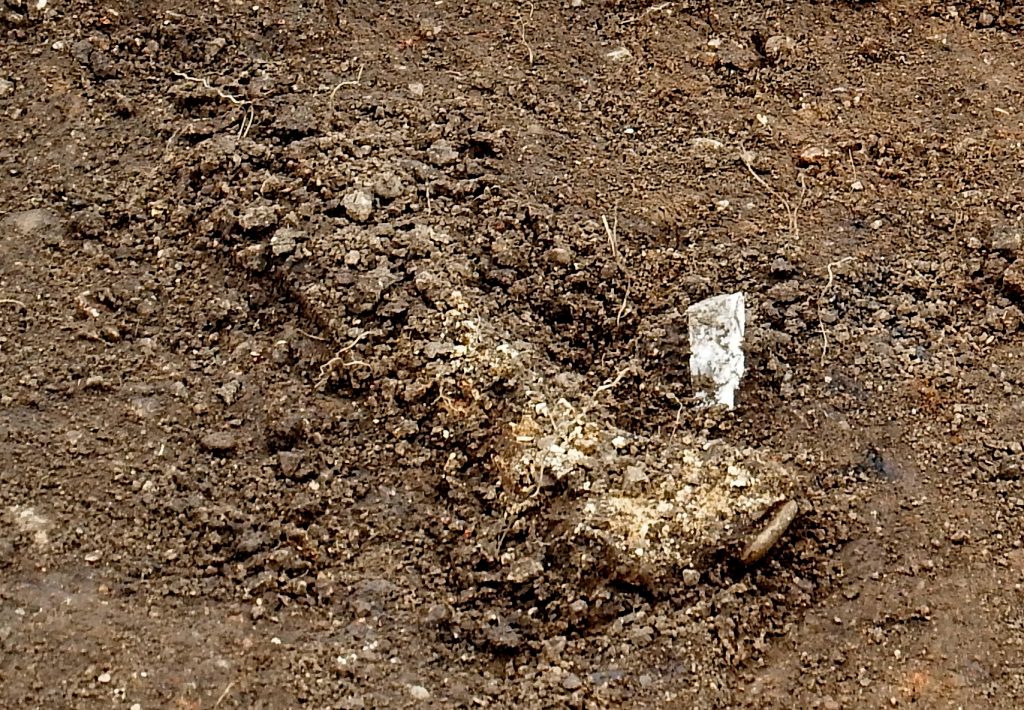
Mica and deer bone

So was art. The reflective shard on the other side of the deer bone in the image above is a chip of mica that might have been discarded while making ceremonial objects like images of birds and hands. Mica isn’t commonly found in Ohio, however, so this shiny rock would have been carried in from the mountains of North and South Carolina.

How did mica — and other distantly sourced materials like shells and obsidian — make its way to Chillicothe? I’d always understood that the Hopewell people had a farflung trade network. But Dr. Ruby made the excellent point that materials clearly moved to Ohio, but none seemed to make their way back out. Wouldn’t trade result in Ohio flint and other materials being discovered in North and South Carolina (among other places)?

Instead, our guide suggested two hypotheses for how this mica arrived in the Hopewell epicenter. Possibly Hopewell people went on long journeys, bringing home materials like mica to be incorporated into their ceremonial sites. Or perhaps Native Americans from other parts of the continent traveled to Chillicothe just like my husband and I did, bringing gifts of their local mica in exchange for viewing the sun through Hopeton’s quarter-mile earthen tunnel.

Archaeology sifter

There’s so much more to share (like wood-henges purposefully dismantled and mounded over to hold power in the earth). But I’ll end with one last factoid:

  • The clear quartz crystals sometimes found at Hopewell sites were tied as the hardest materials in the Hopewell world. What was the other material in first place? Beaver teeth!

Okay, now back to work on my novel. Olivia was in quite a bind when last I visited her. I guess I’d better help her out.

Animism and petroglyphs

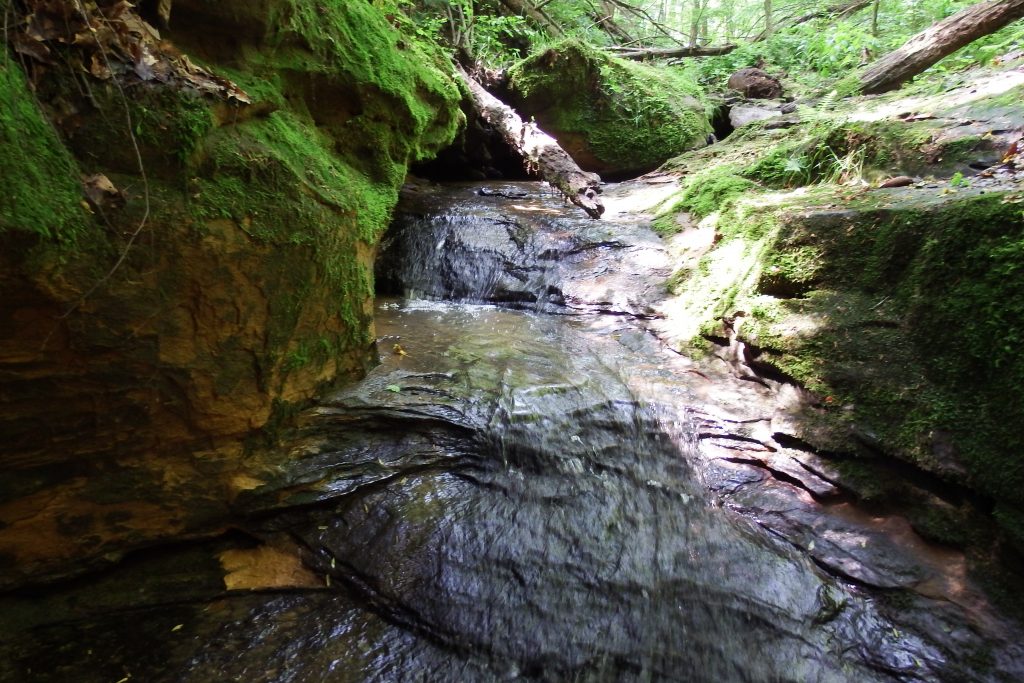
Waterfall

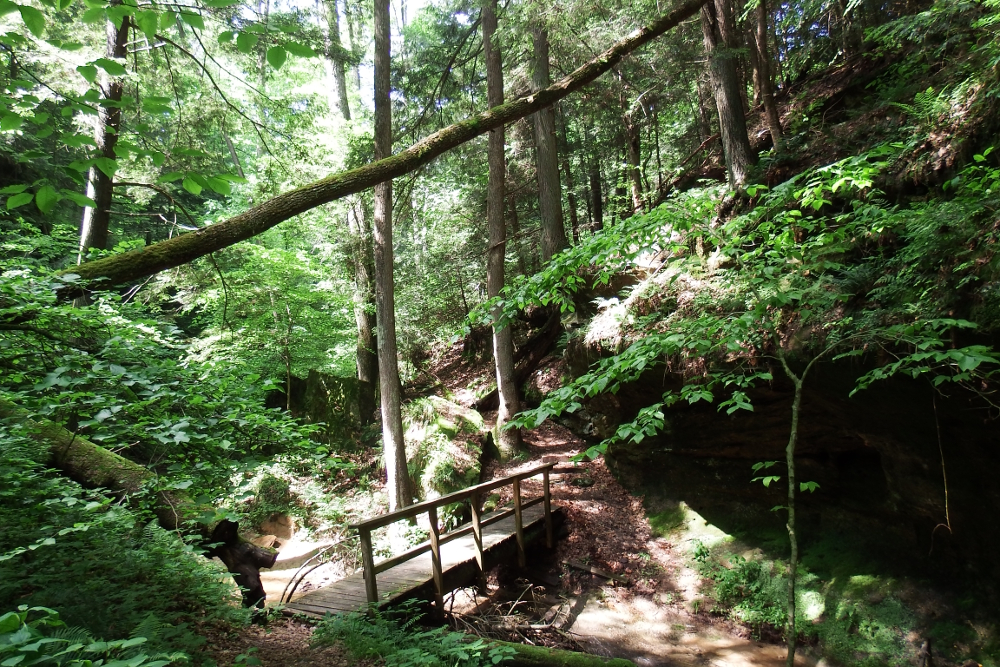
I dropped by Leo petroglyph again Saturday, this time with enough leeway so I could walk the nearby trail.

Leo Petroglyph nature trail

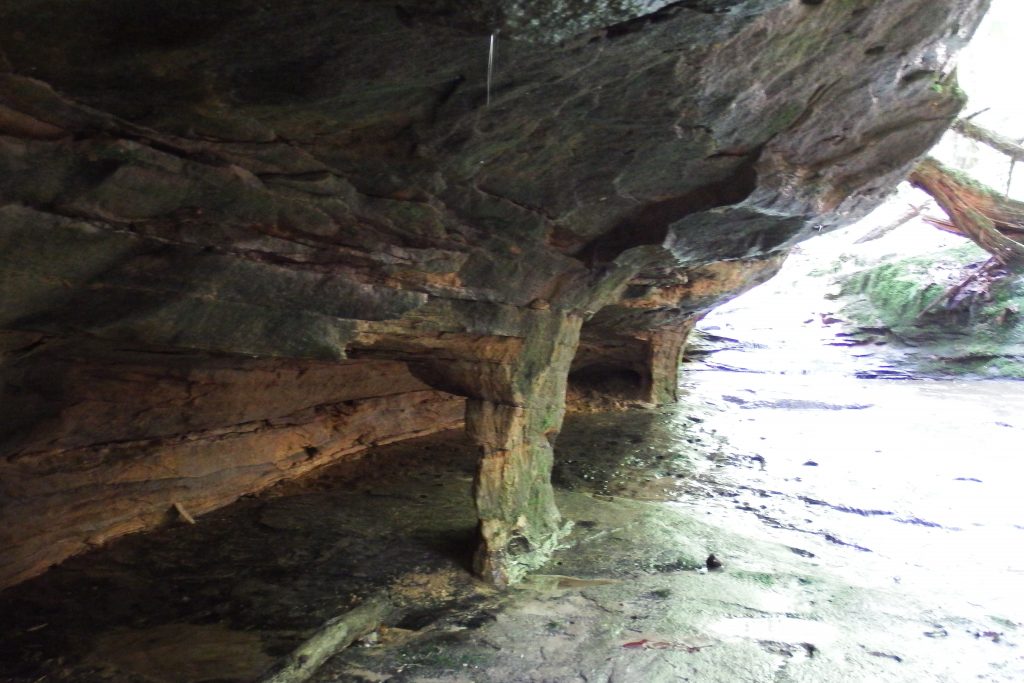
Just below the petroglyph, a stream runs through a stunning gorge full of fascinating rock formations, lichens, mosses, and liverworts.

Rock pillar

Which got me thinking — are all of our landscapes as breathtaking when left to their own devices? Or were Native Americans purposefully setting their constructions alongside beauty the same way we erect informational signs at overlooks within national parks?

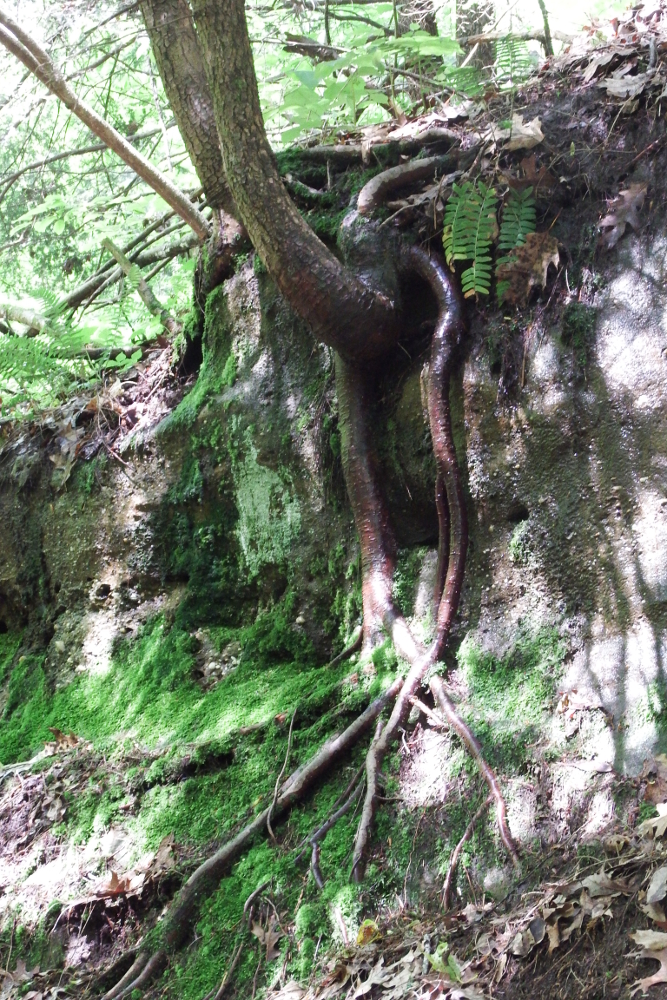
Tree on rock

Animism is the belief — widespread among many native religions — that every tree, rock, and place contains a spiritual essence. Assuming that the people who created Leo petroglyph ascribed to this belief, doesn’t it make sense that they would use their mounds, effigies, and petroglyphs to call out the existing power/beauty of natural spots?

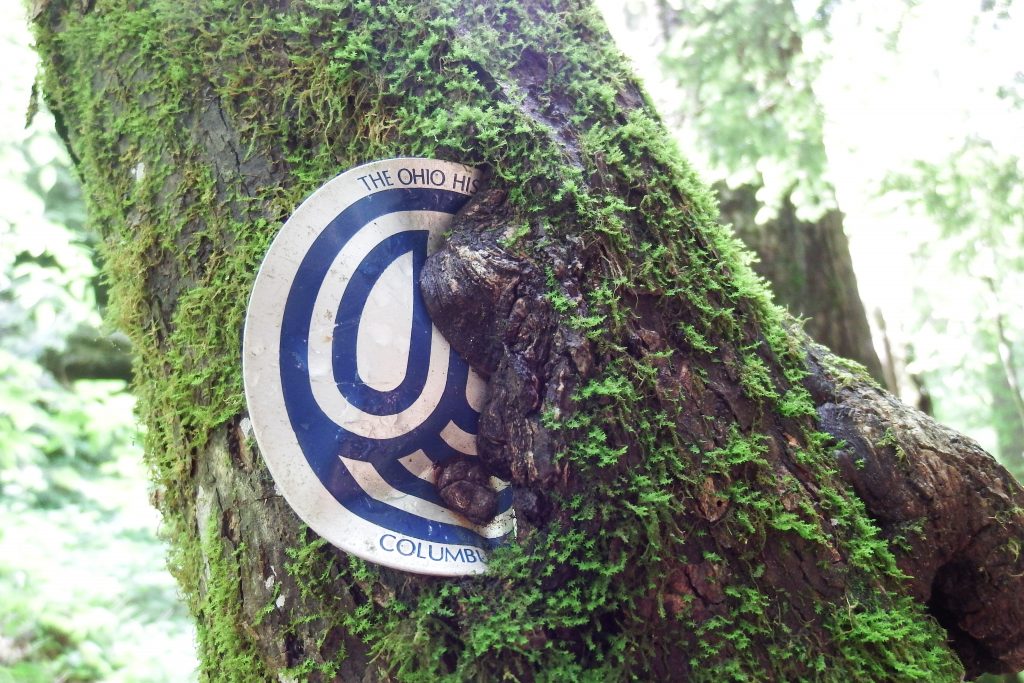
Tree eating sign

When considered this way, our obsession with preserving mounds is a bit like aliens coming to earth, blasting the Grand Canyon, then turning nearby signage into protected monuments. It’s possible we’re missing the point….

Fort Ancient musings

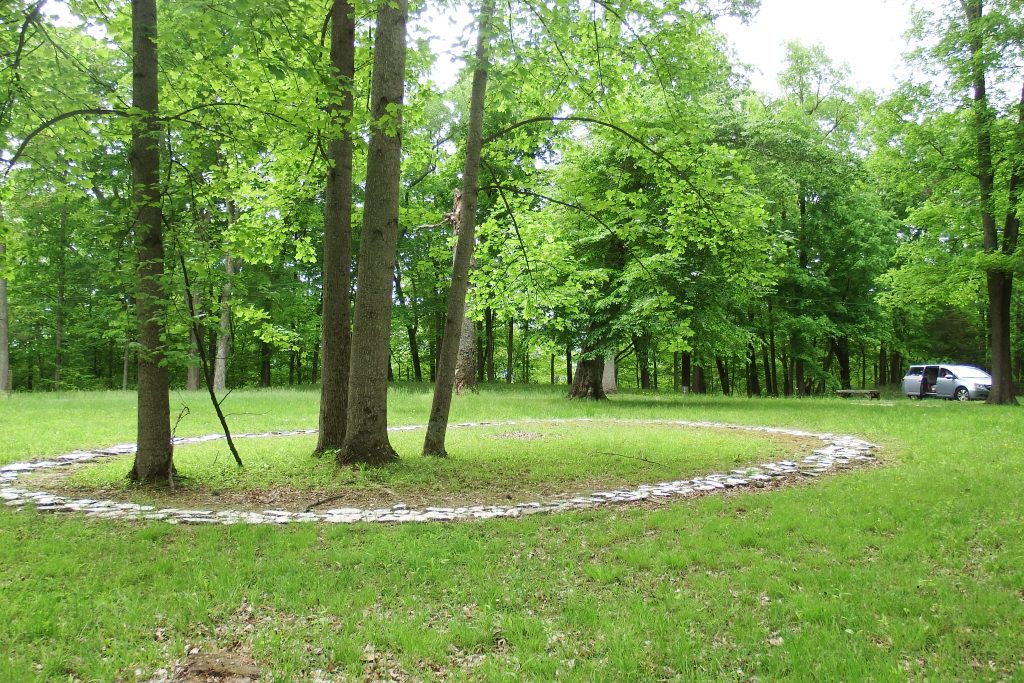
Limestone circle

My husband, my mothers-in-law, and I spent an illuminating afternoon at Fort Ancient yesterday. Unfortunately, our brains grew saturated before we made it halfway through the museum, and we didn’t get to spend nearly enough time walking through the astonishing earthworks either. But I saw enough to get my mind whirring, which will have to do for now!

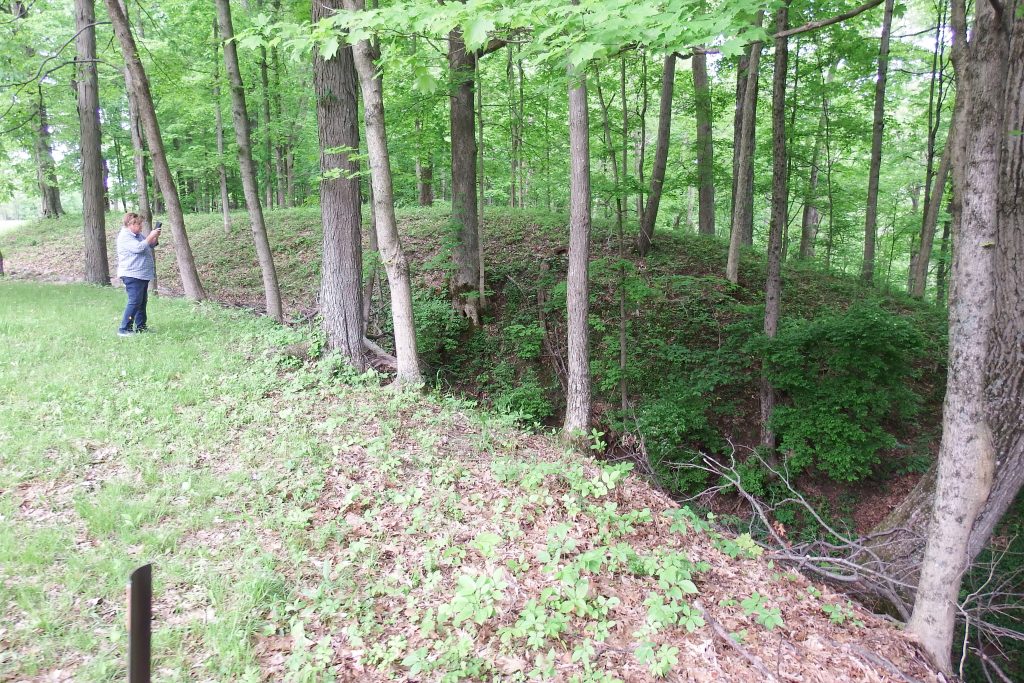
Fort Ancient ravines

This two-thousand-year-old site was created during a 400-year period then was used for another hundred years after that. Up on a bluff above the Little Miami River, the first step in construction involved moving tons of earth to fill in ravines like this one…using hand-woven baskets, elk antlers, deer shoulderblades, clam-shell hoes, and wooden digging sticks.

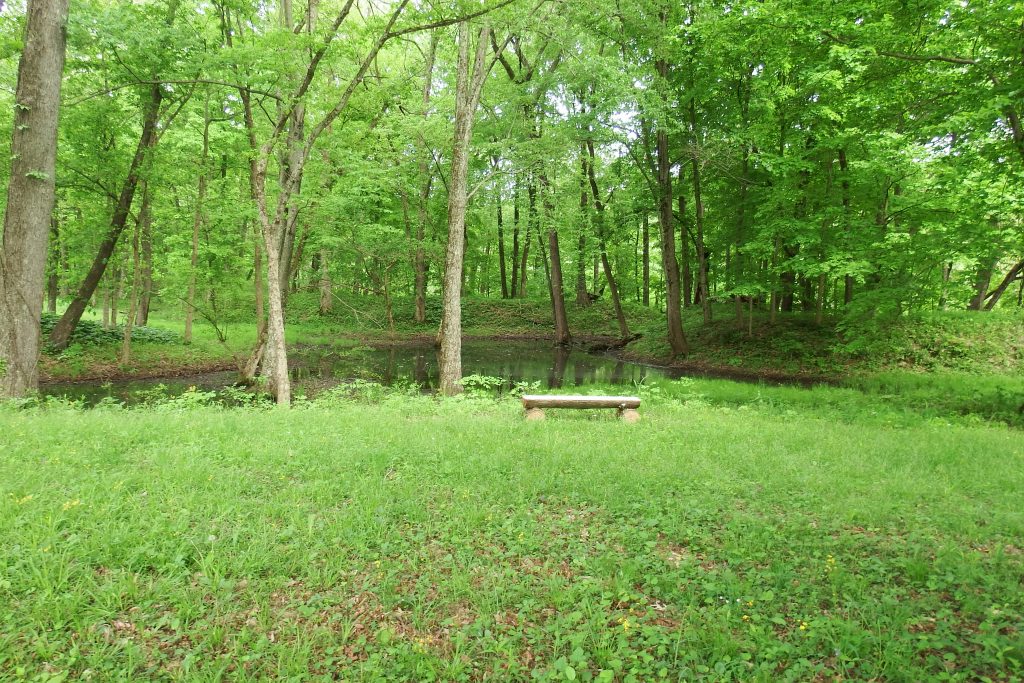
Fort Ancient earthworks

Then a 3.5-mile-long undulating curve of wall was created, along with indented ponds on the inside. To give you an idea of the scale of this endeavor, the amount of earth moved at the Fort Ancient site amounted to 221,000 full-size pickup-truck loads. If construction was ongoing throughout all four seasons every day of the 400 years in question, that amounts to 1.5 pickup-truck loads moved daily. A serious undertaking for a society in which people lived in small family groups!

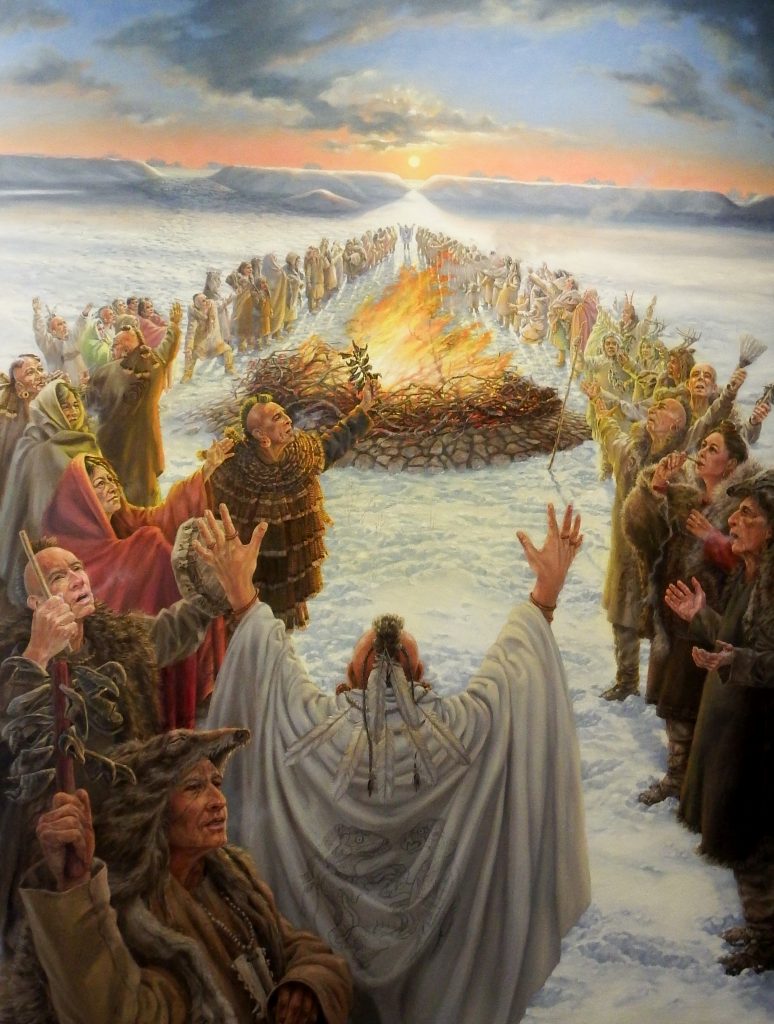
Fire mound ceremony

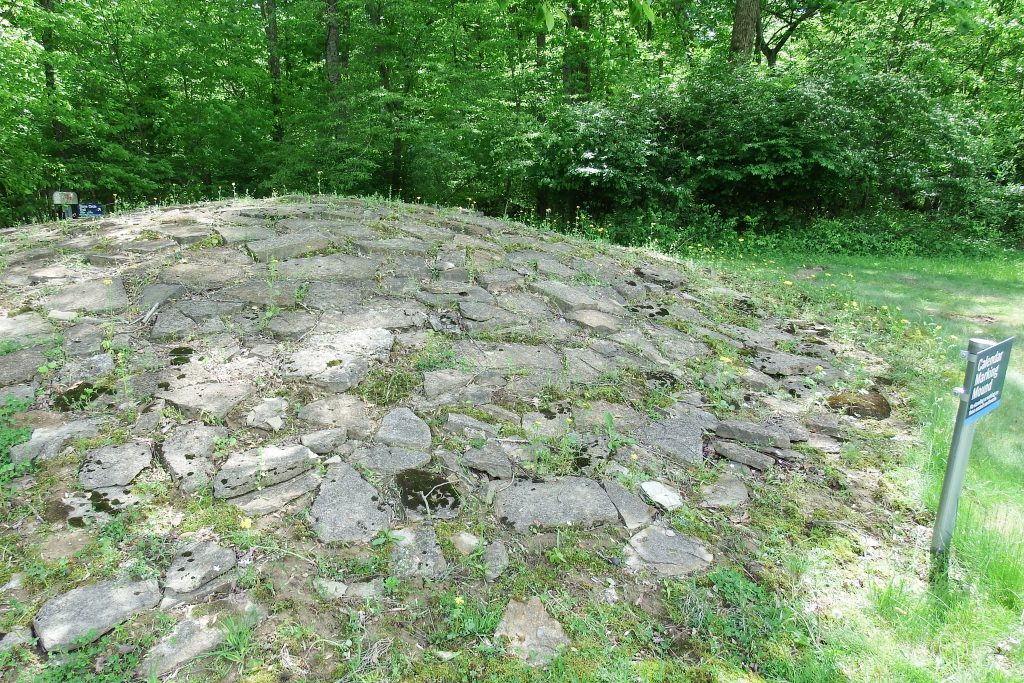
Early European settlers assumed these walls were fortresses, but scientists now think they may have been sites of religious ceremonies, athletic competitions, or other cultural events. The Calendar Mounds and the newly discovered Moorehead Circle are evidence of one potential use.

Calendar mound

Used in conjunction with intentional gaps in the encircling earthworks, the Calendar Mounds line up with sunrise at the solstices and with various astronomical events. Archaeological evidence suggests that the Fort Ancient people built bonfires at the site of these mounds, perhaps to create balance with the rising sun. The Moorehead Circle was a woodhenge (like Stonehenge, but built out of wooden posts) that may have had a similar function.

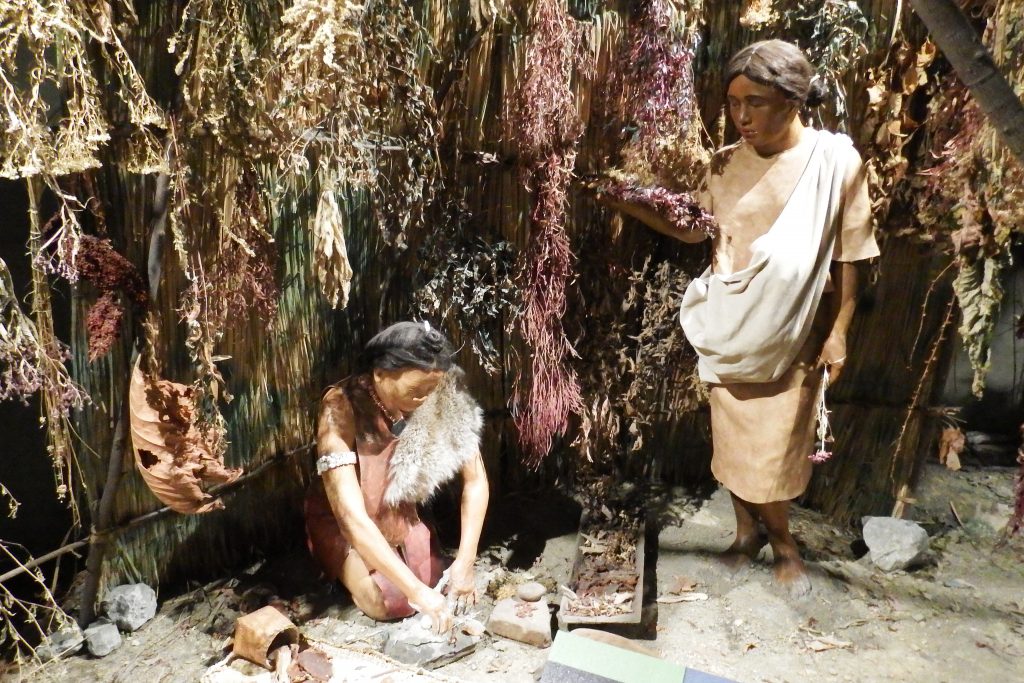
Shaman

Unfortunately, everything we decipher about two-thousand-year-old people who left no written record is guesswork. Could the Fort Ancient earthworks relate to earlier evidence of shamanism in which bear and wolf skulls were carved into ceremonial masks? Were the ponds part of the ceremony or simply inevitable depressions that resulted from moving so much earth? How many people came to Fort Ancient, how often, and why? Why do Fort Ancient’s earthworks take on such an organic shape while contemporaneous sites in valleys enclose perfect circles and squares?

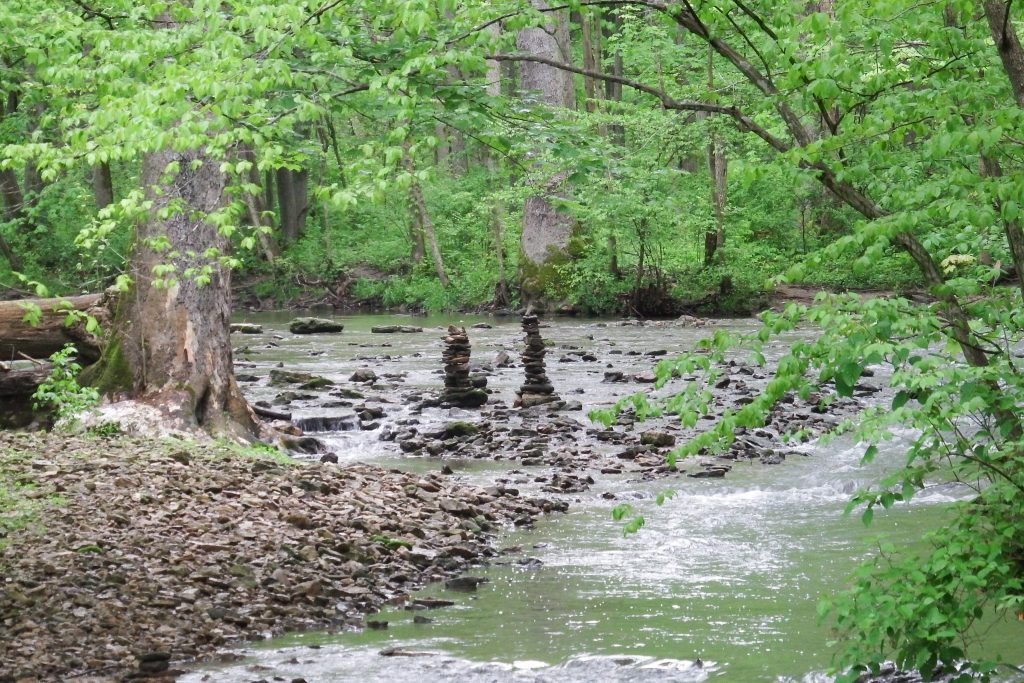
Cairns

It’s easy to ascribe deep spiritual significance to people we will never meet or know. But walking through a different park the next day and coming across modern cairns created by bored college students, I had to wonder how much of the stunning Fort Ancient earthworks is mystical…and how much is simply the result of humans with time on their hands wanting to leave their mark on the landscape.

After all, hunter-gatherers tend to have more leisure time than the average modern American. Without television and facebook to fill that time, did Fort Ancient people naturally gravitate toward building undulating walls and limestone-capped mounds?

Unfortunately, we will likely never know. Still, the Fort Ancient earthworks is well worth a visit…or two, or three!

« Older posts

© 2026 Aimee Easterling

Theme by Anders NorenUp ↑